Key Takeaways
Legs up the wall is one of the simplest, most effective ways to activate your body's relaxation response before bed.
- The pose activates the parasympathetic nervous system, which lowers heart rate, reduces cortisol, and signals the body that it's time to sleep.
- Elevating your legs improves venous and lymphatic circulation, reducing the swelling and fatigue that build up after long days on your feet or at a desk.
- Studies show over 55% of regular yoga practitioners report improved sleep, with poses like this one consistently linked to better sleep quality and reduced insomnia symptoms.
- The pose requires no equipment, no yoga experience, and only 5 to 20 minutes to produce measurable relaxation benefits.
- Pairing legs up the wall with a cool sleep environment gives your body two of its strongest wind-down cues at the same time.
For thousands of years, yoga has built a reputation for reducing stress, improving flexibility, and supporting recovery. But not all poses are worth your time before bed.
Legs up the wall is the exception. It's one of the most accessible postures in yoga, takes no equipment, and directly targets the nervous system response that makes falling asleep harder than it should be. Five to twenty minutes is enough to feel the difference.
Here's what it does, how to do it right, and who should skip it.
The Two-Minute Wind-Down That Actually Works
The pose calms your nervous system. Chilipad 2.0 locks in your perfect sleep temperature from 55°F to 115°F. Together, they build a wind-down routine that actually helps you fall asleep faster and stay asleep longer.
What is Legs Up the Wall?
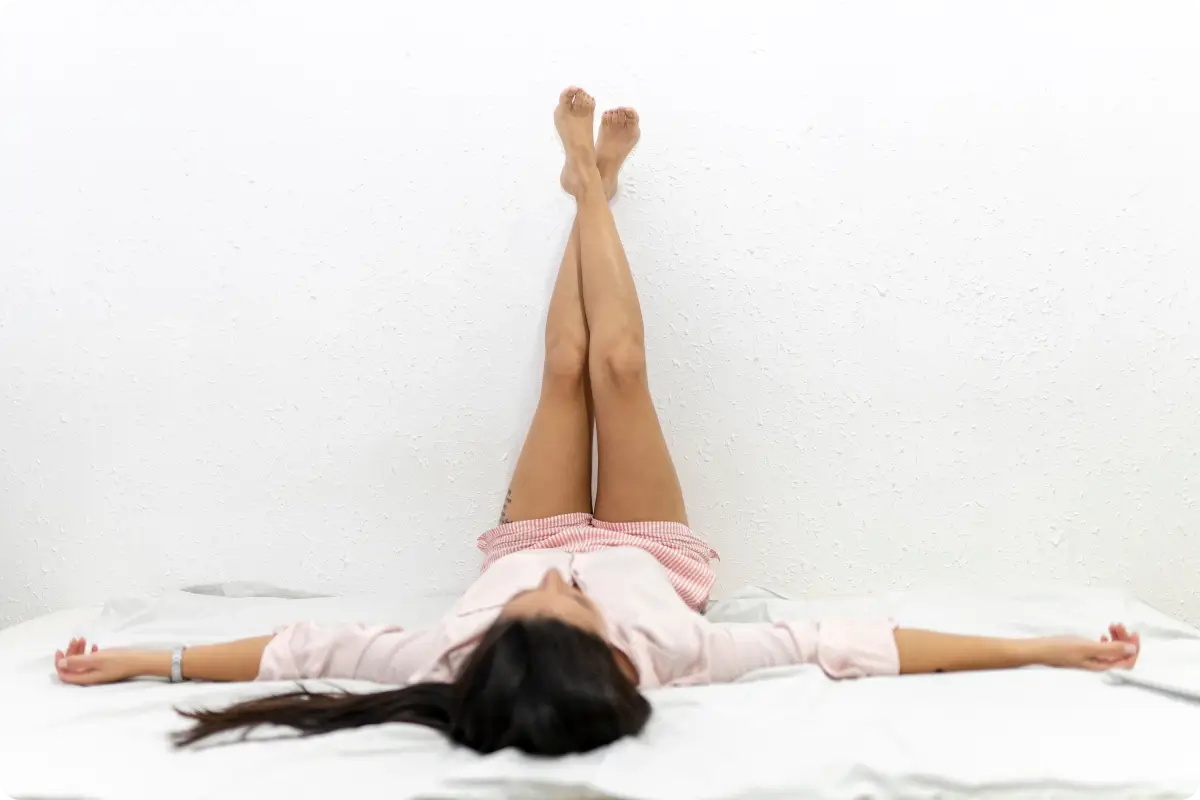
Legs up the wall, known as Viparita Karani in Sanskrit, is a restorative inversion. You lie on your back with your legs elevated against a wall, hips close to the baseboard, arms relaxed at your sides.
It's not a stretch in the traditional sense. The goal is stillness and circulation, not flexibility. The wall does the work. Your job is to stop holding tension.
What It Does to Your Body
The benefits aren't incidental. The position itself triggers a specific set of physiological responses that make it useful for sleep.
Here are just a few benefits of legs up the wall.
Activates the Parasympathetic Nervous System
This is the part of your nervous system that counteracts stress. When you hold this pose and focus on slow breathing, your heart rate drops, cortisol decreases, and your body shifts out of the alert state that makes falling asleep difficult.
Improves Circulation
Elevating your legs above heart level helps blood flow and lymphatic fluid move back toward the core more efficiently. For anyone who sits or stands for long stretches during the day, this can noticeably reduce leg heaviness and swelling within minutes.
Reduces Physical Tension
The lower back, hamstrings, and hips passively release when your legs are supported by the wall. You're not actively stretching anything. The position itself creates the release.
Supports Deeper Breathing
Lying flat with legs elevated naturally opens the chest and makes diaphragmatic breathing easier. Slow, deep breathing in this position reinforces the response and helps quiet mental activity before sleep.
Legs Up The Wall Pose: Get Started
- Sit with your right side against the wall, knees bent, feet drawn in close.
- As you lie back on a floor or yoga mat, swing your legs up the wall. Your hips should be close to the wall but don't need to touch it. Head and torso stay flat on the floor.
- Let your arms rest at your sides, palms facing up.
- Close your eyes. Breathe slowly.
- Hold for 5 to 20 minutes. Start shorter and build duration as the pose becomes comfortable.
- To come out, bend your knees, roll to one side, then sit up slowly.
If your lower back feels strained, place a folded blanket or place a bolster under your hips. This small adjustment takes pressure off the lumbar spine, making the pose more sustainable for longer holds.
Common Mistakes
- Tensing the legs. The wall is doing the holding. Your legs don't need to do anything. If you notice tension creeping in, consciously let the legs go heavy against the wall.
- Hips too far from the wall. The closer your hips are to the wall, the more effectively the pose works. If the angle feels uncomfortable, back off slightly, but don't let the distance get wide enough to flatten the inversion effect.
- Skipping props. A blanket under the hips is not a crutch. It's a practical adjustment that makes the pose more effective for most people, particularly anyone with tight hamstrings or lower back sensitivity.
Variation of Legs Up the Wall Pose
The base pose works. These variations make it work better for your specific situation.
Butterfly Variation.
Bend your knees and bring the soles of your feet together, letting your knees fall open to the sides. This adds a passive hip opener without requiring any active effort.
Thread the Needle
Cross one ankle over the opposite knee and let gravity create a gentle stretch in the hip and piriformis. Hold for several breaths, then switch sides.
Elevated Hips
Place a block or bolster under your hips before raising your legs. This deepens the inversion angle and increases the intensity of the lower back and hamstring release.
Pregnancy Modification
Elevate the upper body rather than lying fully flat. Always check with a healthcare provider before attempting any inversion during pregnancy.
Who Should Skip It
Legs up the wall is safe for most people, but not everyone. Avoid this pose or check with a doctor first if you have:
- Uncontrolled high blood pressure. Inversions increase pressure in the head and eyes, which can be problematic for anyone with unmanaged hypertension.
- Glaucoma. Elevated intraocular pressure is a real risk with inverted positions.
- Serious back or neck issues. Any inversion can aggravate existing spinal problems if done without proper guidance.
- Late-stage pregnancy. Consult your provider before attempting.
Add Legs Up The Wall Pose to Your Bedtime Routine
This regular yoga practice works best when it becomes a consistent signal to your nervous system that the day is ending. A few ways to make it stick.
- Pair it with your other wind-down habits. Do it after dimming the lights, before you get into bed. The sequence matters. Your body learns to associate the pose with sleep preparation.
- Keep the room cool. Your core body temperature needs to drop to initiate deep sleep. Doing this pose in a cool room gives your body two simultaneous wind-down cues: the parasympathetic activation from the pose and the temperature drop that your circadian rhythm is already wired to respond to. A bed cooling system like the Chilipad takes care of the temperature side automatically, so your body gets both signals every night without thinking about it.
- Stay off your phone. The pose loses most of its value if you're scrolling while your legs are up. Eyes closed, slow breathing. That's the point.
- Be consistent. Five minutes every night beats twenty minutes twice a week. The nervous system responds to repetition. The more consistently you do this at the same time each evening, the faster your body learns to use it as a sleep cue.
Frequently Asked Questions
How Long Should You Hold Legs Up the Wall for Sleep Benefits?
Is Legs Up the Wall Safe for People With High Blood Pressure?
How Does Legs Up the Wall Compare to Other Pre-Sleep Yoga Poses?
Can You Do Legs Up the Wall Every Night?
Does the Pose Work Better With Breathwork?
Disclaimer: This blog is for informational purposes only and is not a substitute for professional medical advice, diagnosis, or treatment. Always talk to your healthcare provider about your symptoms, conditions, or treatment options.