

Key Takeaways
Fragmented sleep happens when your rest is repeatedly interrupted, preventing your brain and body from reaching the deep stages needed for real recovery.
- Fragmented sleep reduces time spent in deep and REM sleep, leaving you feeling tired, unfocused, and mentally foggy even after a full night in bed.
- Common causes include stress, anxiety, sleep apnea, environmental noise, temperature discomfort, and late-night phone use that keeps the brain alert.
- Repeated nighttime awakenings raise cortisol levels, interfere with memory consolidation, and place added strain on immune and cardiovascular health.
- Improving sleep consistency, calming bedtime routines, and creating a cool, quiet bedroom can help reduce nighttime disruptions.
- If frequent awakenings affect daytime energy, mood, or performance, it may signal an underlying sleep issue worth discussing with a sleep professional.
Most people need around seven hours of sleep a night to function well. Fragmented sleep can quietly prevent that, even when total time in bed looks adequate.
It is estimated that 50 to 70 million Americans are affected by sleep disorders and poor sleep hygiene, both of which commonly show up as fragmented sleep. [1]
Understanding what fragmented sleep is and what causes it is the first step toward fixing it.
What is Fragmented Sleep
Fragmented sleep is what happens when your sleep gets interrupted over and over, often without you ever knowing it. You might not remember a single one of those wake-ups, but your body does.
Each interruption resets the clock on deep sleep and REM, the stages where real recovery happens, so your brain never gets to finish the job.
Think of it like trying to watch a movie while the screen keeps cutting out. Even if you technically watched the whole thing, you missed the parts that mattered most.
People experiencing fragmented sleep often feel tired and only partially alert during the day, even after spending what looks like enough time in bed. The hours were there. The continuity was not.
Say Goodbye to Sleep Fragmentation and Restless Nights
Waking up at 2 AM should not be your normal. The Chilipad 2.0 keeps your bed at your ideal temperature all night so your sleep stays deep, continuous, and actually restorative.

Common Signs and Symptoms of Fragmented Sleep
The clearest sign of fragmented sleep is waking up during the night, usually more than once, which cuts into your total sleep time even if you do not get out of bed.
This can leave you feeling tired and groggy during the day, even if you were technically in bed long enough.
Sleep Tip: Keep a sleep journal if you notice frequent nighttime awakenings. Tracking when they happen helps identify what is interrupting your sleep, and having that record is useful if you see a doctor.
Fragmented sleep does more than cause tiredness. It can drain your energy, hurt productivity, and affect your overall health. You might also notice increased irritability, mood swings, or anxiety.
Cognitive effects show up too. Many people with fragmented sleep find it harder to focus, make decisions, or solve problems the next day.
If this sounds like your nights, it is worth doing something about now rather than later. Fragmented sleep tends to get harder to fix the longer it sticks around.
What Causes Fragmented Sleep?
Fragmented sleep can stem from sleep disorders, daily habits, or your sleep environment. Often it is a combination of all three.
Getting older changes how you sleep, not just how much. Deep sleep naturally takes up less of the night with age, which is part of why fragmented sleep becomes more common as people get older.. [2]
Sleep Disorders
Sleep disorders are among the most common causes of fragmented sleep. Obstructive sleep apnea causes frequent awakenings from repeated airway obstructions, often without the person being aware it is happening.
Insomnia is another major contributor, causing both difficulty falling asleep and frequent awakenings throughout the night.
Anxiety and depression are closely linked to fragmented sleep, and addressing these conditions often reduces nighttime interruptions as a secondary benefit.
Periodic limb movement disorder, which causes involuntary leg movements during sleep, also fragments sleep significantly.
Lifestyle Factors
A lot of what disrupts sleep at night actually starts hours earlier, during the day.
Thsi can include irregular sleep schedules, common among shift workers or anyone with inconsistent hours, make it harder to fall asleep and stay asleep, producing broken, restless nights.
That afternoon coffee might not keep you up, but it is still working against you. Caffeine consumed late in the day can cut into your deep sleep even if falling asleep feels totally normal.
Almost everyone does this. You get into bed, pick up your phone "for a minute," and forty-five minutes later you are still scrolling.
That blue light blocks melatonin, the hormone that tells your body it is time to wind down. The result is not just falling asleep later. It is tossing and turning once you finally do.
When these habits stack up, they fragment sleep into pieces too short to provide real recovery.
Environmental Disturbances
It is easy to overlook, but your bedroom itself, the temperature, the light, the noise, plays a bigger role in whether your sleep stays continuous than most people realize.
Noise at night makes it harder to fall asleep and can cause repeated waking throughout the night. Too much light in the bedroom has a similar effect.
And a bedroom that runs too warm fragments sleep by preventing the core temperature drop your body needs to stay in deeper sleep stages.
A dark, quiet, cool bedroom supports longer stretches of uninterrupted sleep.
Blackout curtains and sound machines both help. If sound is part of your strategy, different noise colors serve different purposes:
- Pink Noise: A gentle, balanced sound that feels natural and supports relaxation.
- Brown Noise: A deep, low-frequency sound that some people find grounding and focus-supporting.
- Green Noise: A natural, wave-like sound that mimics outdoor environments.
- White Noise: A consistent, neutral sound that masks distracting background noise.
- Blue Noise: A sharper, higher-pitched sound than white noise, good for masking sudden noises like a slamming door or a car alarm.
Health Consequences
When sleep keeps getting interrupted, your brain feels it first. Memory gets fuzzier, decisions feel harder, and that "why can't I think straight" feeling becomes familiar.
Over time, the physical effects add up too. Fragmented sleep is linked to higher risk of high blood pressure, diabetes, and weight gain. And the connection to depression and anxiety runs both ways.
Bad sleep makes mood worse, and worse mood makes sleep harder. It is a loop that is much easier to break early than late.
Diagnosing Fragmented Sleep
Diagnosing fragmented sleep typically involves a combination of medical consultation and, in some cases, a sleep study.
Medical Consultation
If you are dealing with this regularly, a doctor is a good place to start. Bring your sleep journal if you have one. If you share a bed, ask your partner if they have noticed anything, snoring, restlessness, gasping.
They often see things you cannot. If the basics do not fix it, a sleep specialist can dig deeper.
Polysomnography
If things do not improve, a sleep study might come next. It sounds intense, but it is really just a night where machines track what your brain, body, and breathing are doing while you sleep.
It can catch things like breathing pauses, drops in oxygen, and how often your brain is jolted awake without you knowing.
Some of this can even be done at home now with a simpler at-home test, which is a lot less daunting than spending a night hooked up in a lab.

Proven Tips for Achieving Uninterrupted Sleep
Fragmented sleep is almost never just one problem. It is usually some combination of habits, environment, stress, and occasionally something medical, all working against you at the same time.
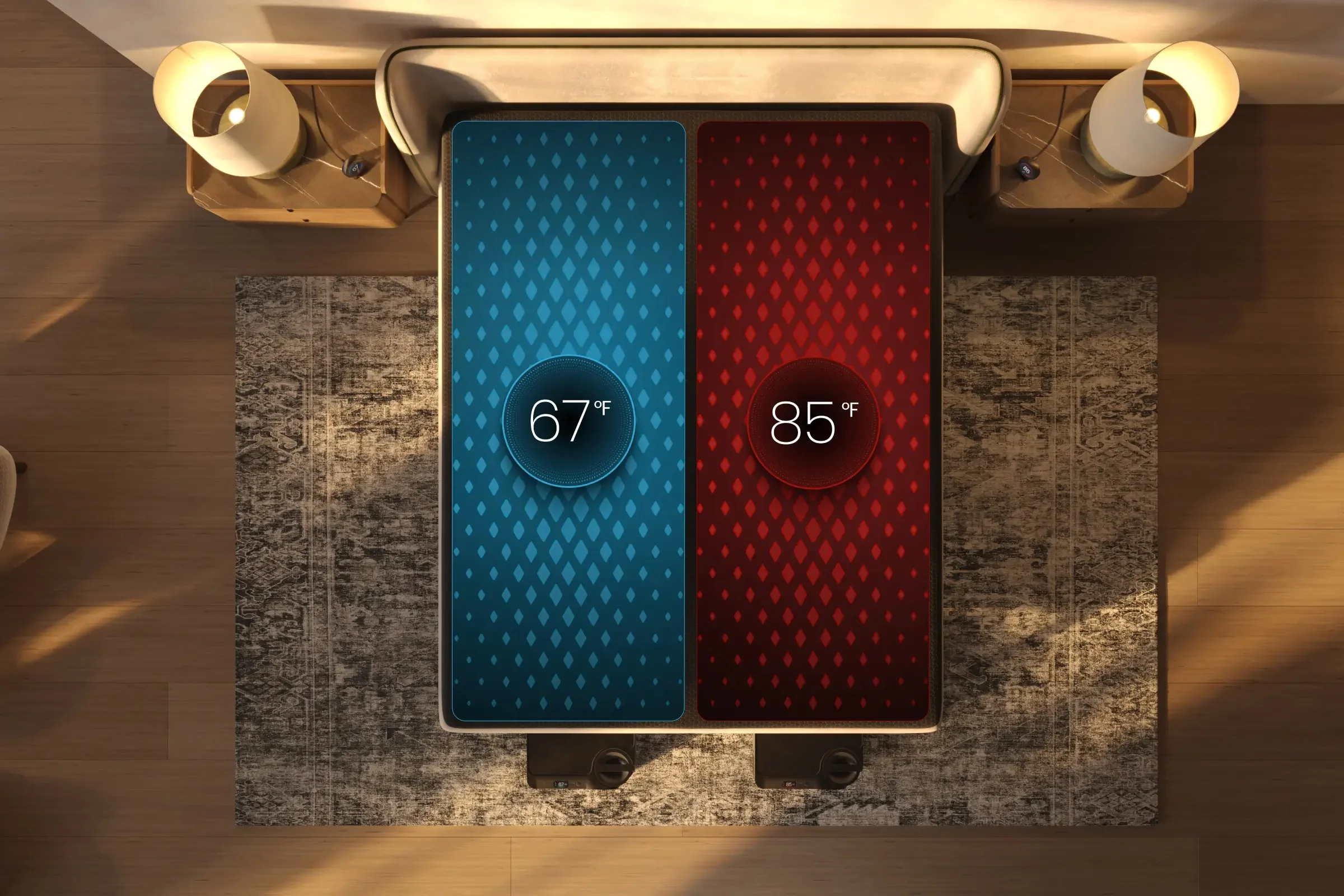
Cool Your Bedroom
Temperature is one of the most common and most fixable causes of fragmented sleep. If you sleep hot, that is not a minor inconvenience. It is often the thing standing between you and continuous rest.
The Chilipad 2.0 was built for exactly this. Water-based cooling circulates through the mattress pad to hold your bed at the exact temperature you set, addressing middle-of-the-night heat spikes before they wake you up.
Your body naturally drops in core temperature as it winds down for sleep. The Chilipad 2.0 works with that process rather than against it, making it easier to fall asleep, stay asleep, and wake up feeling human again.
Want to take your sleep setup further? Check out our tips for designing a bedroom that supports deeper, more restorative rest
Improve Sleep Hygiene
A consistent sleep schedule helps regulate your internal clock and supports more continuous sleep. A calming bedtime routine eases the transition into sleep and reduces the likelihood of fragmented sleep caused by a nervous system that has not had time to wind down.
Reducing screen exposure before bed, along with blackout curtains or a sleep mask, further protects sleep continuity. These comon bedtime routines can create better sleep.
Address Underlying Conditions
Treating conditions like obstructive sleep apnea can significantly reduce fragmented sleep by removing the repeated awakenings caused by breathing interruptions.
For chronic insomnia, cognitive behavioral therapy for insomnia, or CBT-I, is the first-line treatment with long-lasting benefits and no medication required.
Newer treatments including orexin receptor antagonists are also showing promise for managing insomnia that contributes to fragmented sleep.
Make Small Lifestyle Changes
Cutting off or limiting your caffeine after lunch is a simple shift that supports more continuous sleep without requiring a complete routine overhaul.
Going to bed and waking up at the same time every day keeps your internal clock consistent. A relaxing bedtime routine, reading, meditating, or gentle stretching, signals to your brain that it is time to wind down.
Regular exercise, avoiding heavy late-night meals, and managing stress through mindfulness or deep breathing all support more continuous sleep over time.
Manage Stress Before Bed
Stress that builds up during the day often shows up at night as racing thoughts or frequent wake-ups, a direct contributor to fragmented sleep.
Mindfulness meditation, deep breathing exercises, and progressive muscle relaxation all reduce the physiological arousal that fragments sleep. Practiced consistently, even five minutes before bed produces a noticeable difference.
The Bottom Line
Fragmented sleep has real consequences for cognitive function, mood, and physical health. Even one night of disrupted sleep affects how you process the next day.
Most fragmented sleep comes from a combination of factors that are addressable: sleep environment, habits, stress, and sometimes underlying conditions that benefit from medical evaluation.
Start with what you can control directly, particularly sleep temperature and consistency. If fragmented sleep continues despite those changes, a conversation with a doctor or sleep specialist is the right next step.