
Key Takeaways
Loughborough University researchers discovered that cooling the mattress restores sleep quality in hot bedrooms while using a fraction of the power needed for traditional air conditioning.
- Seventeen adults slept in an 86°F bedroom and fell asleep roughly 10 minutes faster using a water-based cooling mattress pad compared to standard sheets.
- Sleeping in a warm room reduced total rest by nearly 28 minutes per night, but cooling the bed brought total sleep time back to normal levels.
- Nighttime wakefulness dropped from a median of 15 minutes down to 5 minutes.
- Sleep satisfaction jumped by 57%, while self-rated sleep quality improved from 2.8 to 3.8 out of 5.
- The active water cooling system used 0.25 kW per night, which equals roughly one-fourth of the energy drawn by a portable air conditioner.
When the Room Gets Hot, Your Bed Is the Problem
Most people open a window. Some point a fan at the ceiling. A few crank an air conditioner they may or may not have.
But a 2026 study published in Building and Environment suggests the room temperature is only part of the picture. Where you actually sleep matters more.
Researchers at Loughborough University recruited 17 healthy adults and put them through three sleep conditions.
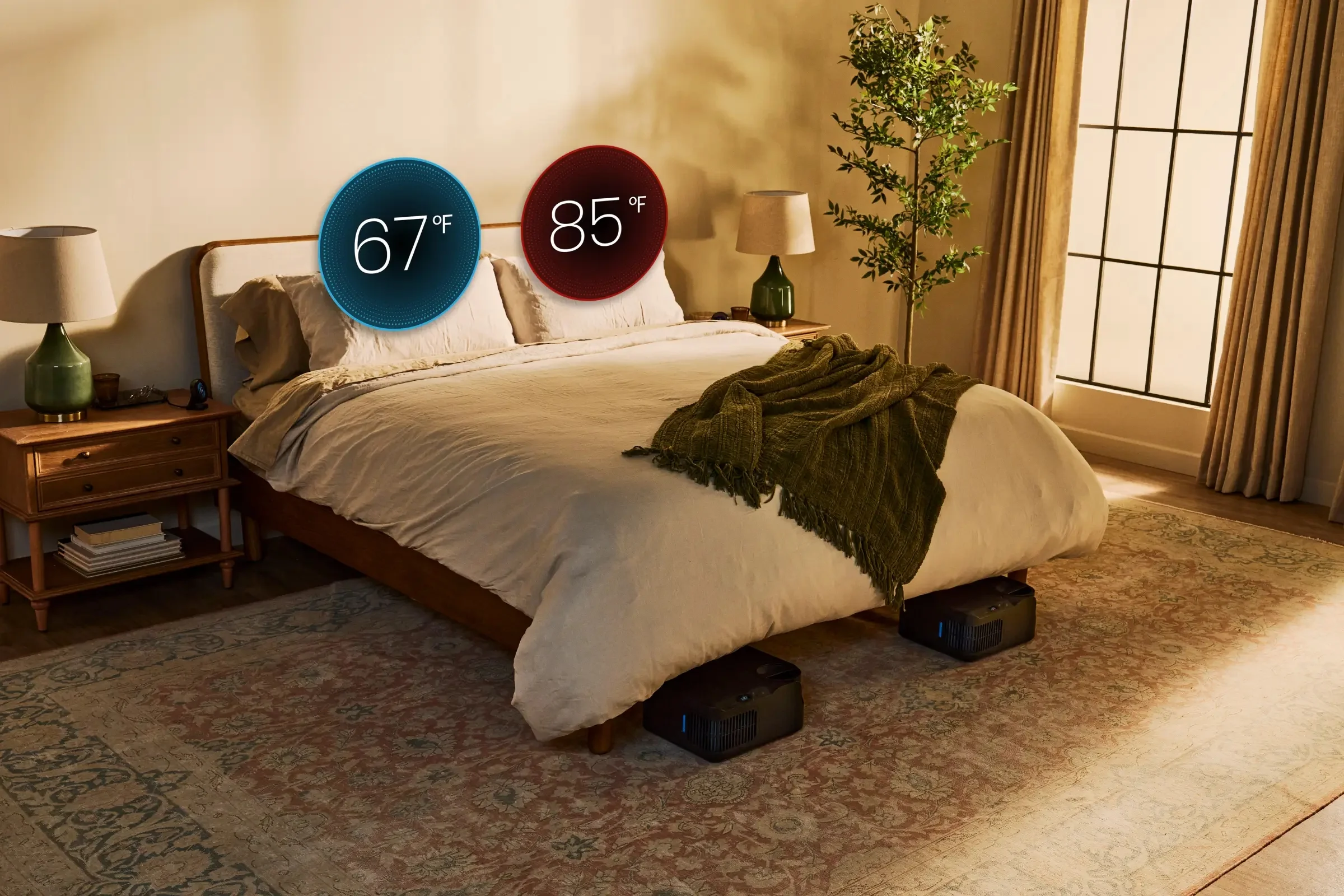
They slept in their own bedroom at normal summer temperatures, a controlled room held at 30°C (86°F) with standard bedding, and that same 86°F (30°C) room with a water-based cooling mattress topper.
The overheated condition hit hard. Participants lost about 28 minutes of total sleep per night compared to their baseline. They took longer to fall asleep. They rated their sleep quality low and woke up feeling worse for it.
Then the Chilipad went on. Same hot room. Same 86°F (30°C) air. Different outcome.
The Science Is In. Cool Your Bed, Not Your Whole Room
A peer-reviewed study found that water-based bed cooling added 19 minutes of sleep, cut time to fall asleep from about 25 minutes to 15, and improved sleep satisfaction by 57% in an 86°F bedroom. Chilipad 2.0 uses the same approach. Your thermostat is not the only answer.
What the Bed Cooling Changed
With the cooling mattress topper running, total sleep time nearly returned to normal levels. Sleep onset latency dropped from about 25 minutes to 15 minutes.
Participants who reported wanting cooler conditions in the hot room shifted to "no change needed" once the bed was cooled.
That shift, from discomfort to neutral, tracks with what sleep researchers call thermal neutrality: the point where your body stops working to regulate temperature and can focus on sleep instead.
Self-reported freshness after waking improved by 44%. Overall sleep satisfaction went up 57%. Time spent awake during the night dropped from a median of 15 minutes to 5 minutes.
The reason comes down to how your body falls asleep. Core body temperature needs to drop slightly at sleep onset.
That process starts at the skin, specifically through heat loss from your hands and feet into the sleep surface. When that surface is already warm, the process slows down.
A water-based bed cooling system solves this by keeping the surface cool enough for heat to keep moving out of the body, which is what lets sleep onset happen faster.
Air Conditioning Is Not the Only Answer
The UK does not have widespread air conditioning in homes, and the study notes this is unlikely to change quickly given energy costs and sustainability targets.
What the research points to instead is targeted bed cooling: addressing the place where heat transfer actually happens during sleep, rather than cooling an entire room.
The cooling mattress topper in the study averaged 0.25 kW of power use per night. A typical portable air conditioner runs closer to 1 kW.
For anyone sleeping in a warm home without AC, or anyone who simply does not want to run AC all night, bed-level cooling is a lower-energy path to the same thermal result.
Don't Take Our Word for It
A peer-reviewed study tested water-based bed cooling (the Chilipad) in a 86°F (30°C) bedroom. Read what the researchers found.
What This Means for Hot Sleepers
You do not need to control the whole room to sleep well in the heat. The study shows the bed microclimate is where sleep thermal comfort is actually made or broken.
A room at 86°F (30°C) with a cooled mattress produced sleep outcomes close to a comfortable baseline bedroom. A room at 86°F (30°C) without one did not.
Chilipad 2.0 operates between 55°F and 115°F and circulates water through the mattress cover all night, which is the same mechanism the study evaluated. The water-based approach maintains consistent cooling without fading the way gel or phase-change materials do.
If your bedroom gets hot in summer, or you are a hot sleeper year-round, the fix may not be the thermostat on the wall.
Frequently Asked Questions
Are Water-Based Bed Cooling Systems Reliable Long Term?
Does a Cooling Mattress Topper Improve Sleep in a Hot Room?
How Much Energy Does Bed Cooling Use Compared to Air Conditioning?
What Temperature Should a Cooling Mattress Topper Be Set To?
Does Room Temperature Still Matter If You Have a Bed Cooler?
Disclaimer: This blog is for informational purposes only and is not a substitute for professional medical advice, diagnosis, or treatment. Always talk to your healthcare provider about your symptoms, conditions, or treatment options.