
Key Takeaways
Jet lag is a temporary sleep and energy disruption caused by traveling across time zones faster than your internal clock can adjust. It affects sleep timing, alertness, digestion, and mood until your circadian rhythm realigns.
- Jet lag occurs when your circadian rhythm is out of sync with a new time zone, leading to fatigue, headaches, and mood changes.
- Eastward travel often feels harder than westward trips because it shortens your day and challenges sleep timing.
- Gradually adjusting sleep and wake times before travel can help your body adapt more quickly after landing.
- Natural light exposure—especially in the morning when traveling east—helps reset your internal clock.
- Staying hydrated and limiting alcohol while flying can reduce the intensity of jet lag symptoms.
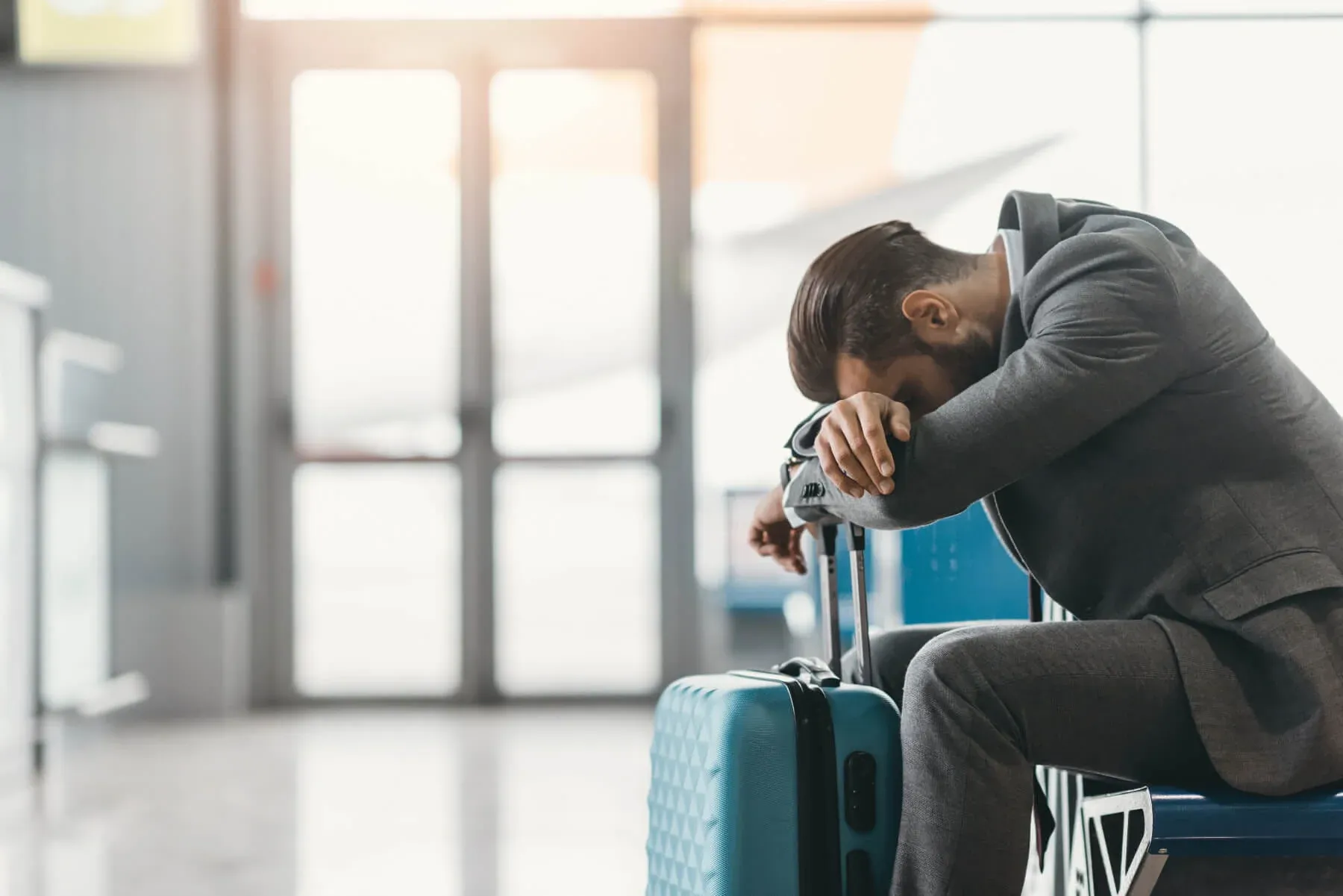
Jet lag is what happens when your internal body clock is out of sync with the local time after crossing multiple time zones.The result? Brain fog, poor sleep, low energy, and that strange feeling that your body is operating in the wrong time zone.If you have ever stepped off a plane feeling disoriented, wide awake at midnight, or exhausted at noon, you have experienced circadian misalignment in action.
Your body runs on a built-in timing system, and it does not instantly reset just because your boarding pass says you are somewhere new.
So, you just landed, your brain feels like fog, and it’s 3:00 AM back home. We’ve been there. The goal is simple: adjust faster, sleep better, and get back to feeling like yourself as quickly as possible.
What is Jet Lag and Why Does it Happen?
Jet lag is what happens when your body clock and the local clock are not on speaking terms.
Your body runs on an internal timing system called your circadian rhythm. Think of it as built in scheduling software.
It controls when you feel alert, when you get sleepy, when hormones rise and fall, and even when your digestion kicks in. Light is the main signal that keeps this system on track.
When you fly across multiple time zones, you arrive somewhere new but your circadian rhythm is still set to your departure city.
If you leave New York at night and land in Paris in the morning, your watch says breakfast, but your brain says bedtime. That mismatch is jet lag.
Why Crossing Time Zones Causes Misalignment
Your circadian rhythm does not instantly reset just because you changed locations. It shifts gradually, usually about one hour per day.
Crossing three, six, or eight time zones in a single flight creates a gap between your internal clock and the local time.
That gap can lead to:
- Daytime fatigue
- Trouble falling asleep at night
- Early wake ups
- Brain fog
- Digestive issues
- Mood changes
Your body is trying to recalibrate, but it needs exposure to the right light at the right time to catch up.
Why Eastbound Travel Usually Feels Worse
Flying east tends to hit harder than flying west. Here is why.
Traveling east requires you to fall asleep earlier than your body wants to. You are essentially shortening your day. Most people naturally adapt more easily to a longer day than a shorter one.
For example, if you fly from Los Angeles to London, you may need to fall asleep six to eight hours earlier than usual.
Your body is not ready for that shift, so you end up wide awake at midnight and exhausted at noon.
Flying west, on the other hand, extends your day. Staying up a little later is typically easier for the brain than forcing an early bedtime.
Bottom Line: Jet lag is circadian misalignment caused by rapid time zone changes. Your body is not broken. It is just temporarily out of sync.
Give it light, time, and the right sleep environment, and it will adjust.
Sleep Study: Roughly 75% of people experience jet lag worse when traveling east compared to traveling west. [1]
Beat Jet Lag by Sleeping Better!
Jet lag can really throw you off. Getting a good night’s sleep before you travel is key! Our Chilipad Dock Pro bed cooling system can help you fall asleep faster and sleep deeper by keeping you at the perfect temperature (between 55-115º).
Understanding the Common Symptoms of Jet Lag
Jet lag is more than just feeling tired. Many travelers experience daytime fatigue, restless sleep, brain fog, headaches, and mood shifts after crossing time zones.
Some feel it immediately, while others sleep fine the first night and struggle in the days that follow.
Symptoms can look different for everyone, especially after long haul or overnight flights. Read our blog to see the full list of jet lag symptoms and how they show up.
Fortunately, the symptoms improve steadily as the body gets used to the new time zone.
Did You Know: 60-70% of long-haul travelers will experience some form of symptoms and overnight travel causes the most sleep loss. [2]
How Long Does it Last?
Jet lag typically lasts one day per time zone crossed. That is the standard rule of thumb used in sleep medicine.
If you cross five time zones, expect about five days for your circadian rhythm to fully recalibrate. Some people adjust faster. Others may need up to a week, especially after long international flights.
Note: Plan for a 'recovery day' for every time zone you cross. Keep in mind that if you're over 60, your internal clock is a bit more sensitive, so give yourself extra grace and a slower first few days to fully bounce back. [3]

What Affects Jet Lag Duration
Several factors influence how long jet lag sticks around:
- Direction of travel: Eastbound trips usually take longer to recover from than westbound travel because you are forcing your body to fall asleep earlier than it wants to.
- Number of time zones crossed: One or two time zones often cause mild symptoms. Five or more can create more noticeable disruption.
- Age and sleep health: Lighter sleepers and older adults may take longer to adjust.
- Pre travel strategies: Gradually shifting sleep, managing light exposure, hydration, and strategic melatonin use can shorten recovery time.
- Sleep environment at your destination: Temperature, light control, and noise matter more than most people realize.
Most travelers start feeling noticeably better within a few days. Your body is not broken. It is recalibrating. Give it consistent light cues, solid sleep conditions, and time, and it will sync back up.
Tips on How to Reduce Jet Lag Before You Travel
- Gradually shift your sleep and wake times
- Plan light exposure based on your destination
- Stay hydrated before and during travel
- Adjust meal timing to match the new time zone
- Use melatonin strategically when appropriate
Don't let a time zone change ruin your first day. Head over to our blog for a full breakdown on how to outsmart jet lag and arrive ready to explore.
Pre-Flight and Post-Fight Checklist
Jet lag does not care about your calendar. This checklist keeps your body clock from falling apart mid-trip.
Pre-Flight Checklist
- Start shifting bedtime and wake time three to five days before departure
- Adjust meal timing toward your destination schedule
- Plan light exposure based on eastbound or westbound travel
- Increase hydration the day before travel
- Pack an eye mask and earplugs to control light and noise
- Consider low-dose melatonin if appropriate and timed to destination bedtime
What to Do During the Flight
- Set your watch to the destination time after boarding
- Drink water regularly and limit alcohol
- Eat lighter meals and avoid heavy late-night foods or snacks
- Dim screens before planned sleep time
- Sleep according to the destination night when possible
- Move every couple of hours to keep circulation steady
Post-Flight Checklist
- Get outside light at the correct time for your travel direction
- Stay awake until local bedtime, even if you feel off
- Keep naps short (limit to 20-30 minutes) and earlier in the day if needed. Helps manage fatigue
- Limit caffeine to the morning and early afternoon
- Keep your sleep environment cool and dark to reduce wake-ups
- Stick to a consistent sleep and wake schedule for several days
By following this roadmap, you're giving your body the best chance to catch up. That means fewer 'zombie mornings' and a lot less time spent wide awake in the dark.
Sync Faster with Smart Travel Apps
If you want to treat jet lag with data rather than guesswork, let an app do the heavy lifting.
Tools like Timeshifter and Entrain build custom protocols based on your flight, destination, and unique "chronotype."
Instead of scrolling through random advice at the gate, you get a precise schedule for light exposure, sleep, and melatonin.
Whether you’re traveling for a high-stakes meeting or a podium finish, these apps use circadian science to dial in your timing so you can perform the moment you land.