
Key Takeaways
Men experience night sweats when internal triggers like low testosterone, sleep apnea, or infections disrupt the hypothalamus’s ability to regulate temperature. These biological factors are often exacerbated by external heat-trappers like memory foam mattresses, alcohol consumption, or intense evening workouts, which prevent the body from shedding heat during deep sleep.
- Hormone changes, including low testosterone, can disrupt temperature control and trigger excessive sweating during sleep.
- Some medications, such as antidepressants and steroids, can affect how the body manages heat and lead to night sweats.
- Ongoing or severe night sweats may signal underlying health concerns like infections, thyroid conditions, or other medical issues that should be discussed with a doctor.
- Lifestyle factors including alcohol use, spicy foods, stress, and an overly warm bedroom are common non medical causes of night sweats.
- Cooling strategies such as breathable bedding and temperature controlled mattress toppers can help reduce heat buildup and improve sleep comfort.
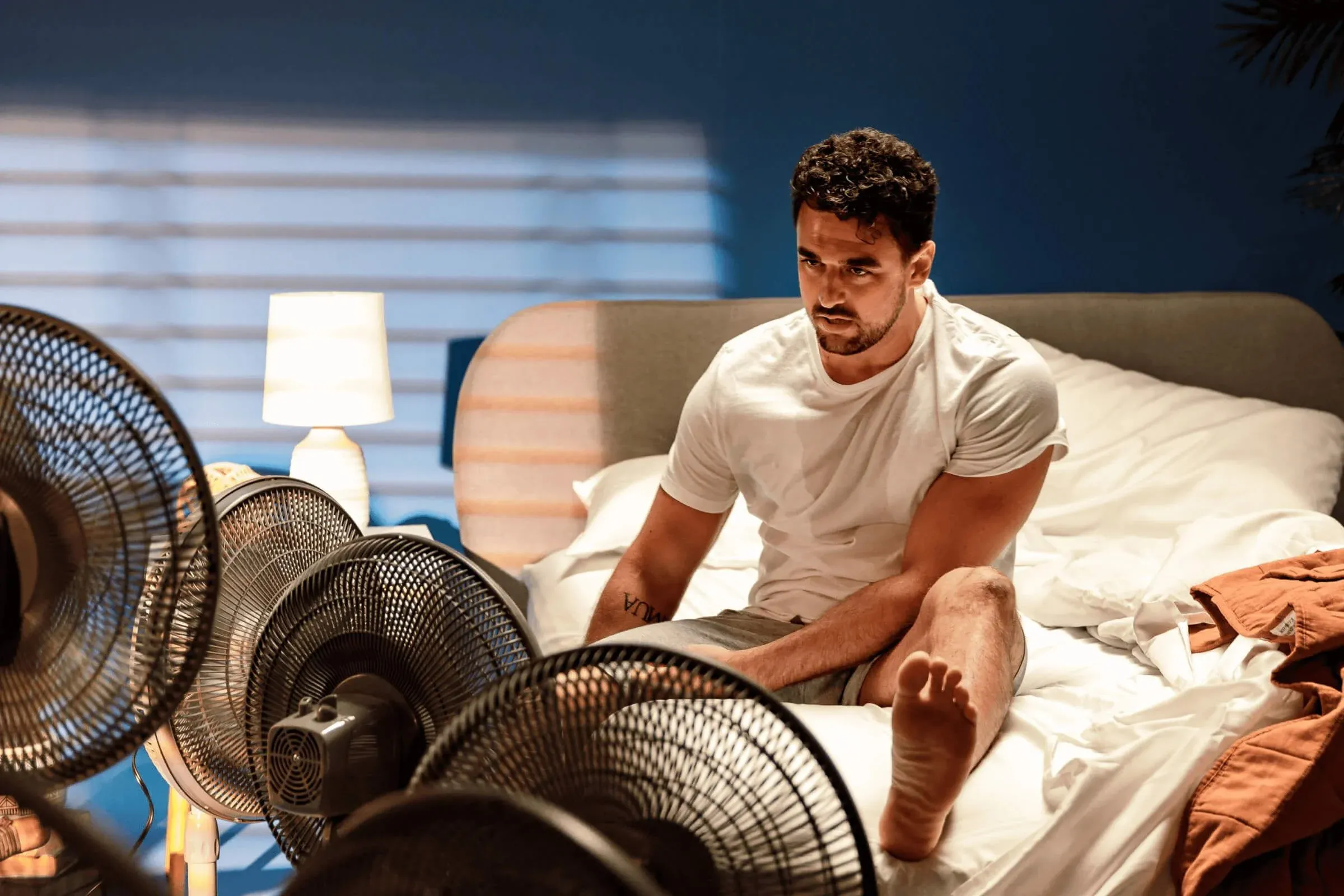
Experiencing night sweats in men naturally can be unsettling and downright frustrating. Waking up in a pool of sweat, your sheets soaked, and your sleep disrupted is not just uncomfortable—it’s a signal that something deeper might be happening.
Men can experience night sweats, which can have various causes, from hormonal shifts to bothersome infections. Practical, natural strategies can help manage night sweats in men.
Below, we’ll highlight a few simple lifestyle adjustments, cooling sleep solutions, and a calmer bedtime routine that promotes more restful sleep.
Understanding Night Sweats in Men
Night sweats happen when you wake up soaked in sweat—sometimes enough to drench your pajamas and sheets. While they can be harmless, they’re not something to ignore.
Night sweats may be your body’s way of flagging an underlying issue. In fact, studies show that up to 41% of adults visiting primary care centers report experiencing night sweats, with the highest rates seen in people between the ages of 41 and 55. [1]
While night sweats can affect anyone, they are a common symptom that does not always indicate a serious health issue.
Understanding the nature of night sweats can help diagnose potential health problems and find effective solutions.
Did You Know: Both men and women can experience night sweats due to various reasons, including infections and stress.
Approximately 38% of men over 45 years old have low testosterone levels that may cause symptoms like night sweats. [2]
Healthcare providers use a systematic approach to diagnosing night sweats, including asking detailed medical history questions, performing physical examinations, and ordering relevant tests.
The severity of the condition can vary widely, with some men experiencing only mild sweating while others endure extreme sweating that disrupts their sleep and daily lives.
Despite their common occurrence, causes can indicate underlying health conditions that should be addressed.
Excessive Sweating at Night
Night sweats, which can seriously disrupt your sleep and leave you feeling exhausted, have a variety of underlying causes.
Here are some common significant contributors:
- Increased stress and anxiety levels can heighten the responsiveness of sweat glands.
- Physical activities, especially those performed close to bedtime.
- Certain infections, whether bacterial or viral, are known to cause excessive nighttime sweating.
The Ultimate Night Sweat Fix
Men, it’s time to stop surviving the night and start recovering. Ditch the midnight wake-ups and take total command of your sleep climate with the Chilipad.
What Causes Night Sweats in Men
Men may experience night sweats less frequently than women, mainly due to hormonal differences.
However, various physiological changes and underlying health issues can still trigger night sweats in men.
Night sweats causes in men include:
- Low testosterone levels
- Anxiety disorders
- Sleep apnea
- Infections
- Hyperthyroidism
Now that you know the usual suspects behind night sweats in men, let’s go a layer deeper to understand why they happen.
Can Low Testosterone (Low-T) Cause Night Sweats in Men?
Yes. Low testosterone disrupts the body’s internal thermostat, leading to hot flashes and sweating similar to menopause.
Approximately 38% of men over 45 experience these shifts.
Symptoms associated with low testosterone levels can include:
- Low libido
- Enlarged male breasts
- Depression
- Trouble concentrating
- Decreased muscular strength
- Lower muscle mass and increased body fat
- Loss of body and facial hair
Men with low testosterone may also experience hot flashes and mood changes, further contributing to night sweats. Fortunately, restoring testosterone levels can greatly diminish those intense nights of sweating and improve health.
Addressing low testosterone can help minimize night sweats in men naturally, especially through dietary changes and exercise.
Related: Ready to naturally boost your testosterone levels? Discover the power of your plate! Take a look at some of the best foods that can help increase testosterone naturally and revitalize your energy.

How Does Stress and Anxiety Trigger Nighttime Sweating?
Anxiety activates the sympathetic nervous system, releasing cortisol and adrenaline. This “fight-or-flight” state raises core temperature and heart rate, leading to cold sweats during sleep.
When you’re feeling anxious or stressed, your body goes into overdrive. This can make your sweat glands work harder, even while you’re sleeping.
So, if you’re dealing with a lot of stress or anxiety, it’s not surprising that you might wake up drenched in sweat, further exacerbating your anxiety and disrupting your sleep patterns.
Engaging in exercises that help lower stress and anxiety can be beneficial before bedtime. Consider trying activities like breathing exercises, yoga, or meditation.
They can help reduce night sweats caused by anxiety disorders for some individuals.
Sleeping Tip: Experiment with different relaxation techniques each night to discover what helps you decompress most effectively.
Once you’ve found the one or two that work, make it a regular part of your bedtime routine.
Some items can include light stretching or yoga, listening to soft music or soothing sounds, or disconnecting from all digital devices to read a book or simply sit quietly for a few minutes.
Why Is Sleep Apnea a Common Cause of Night Sweats for Men?
Obstructive sleep apnea (OSA) is a common sleep disorder in which breathing repeatedly stops and starts during sleep.
When breathing stops during an apnea event, the body undergoes a massive stress response. The surge of adrenaline needed to restart breathing often results in a “sweat spike” and heat surge.
Did You Know: An estimated 3% to 7% of Americans have obstructive sleep apnea (OSA), but men are three to five times more likely to develop it than women. [3]That gap comes down to differences in airway anatomy, hormone levels, obesity rates, and other contributing factors.
Men with obstructive sleep apnea may experience night sweats multiple times a week, leading to persistent discomfort and disrupted sleep.
CPAP therapy improves breathing patterns during sleep, helping to prevent the conditions that cause excessive sweating.
How common is sleep apnea among men? It’s relatively common among men, with approximately 25% of men experiencing this condition. [4]
OSA can disrupt sleep, leaving people feeling tired and unrefreshed even after a full night’s rest.
Which Infections Are Linked to Persistent Male Night Sweats?
Bacterial and viral infections (like the flu or more serious conditions like endocarditis) raise the body’s set-point temperature. Sweating occurs as the fever “breaks” and the body attempts to cool back down.
Here’s why: when your body’s fighting off an illness, it releases inflammatory signals that temporarily raise your internal thermostat. First, you feel chills and start shivering to heat up.
Then, once the fever breaks, your body goes into overdrive sweating to cool back down. This hot-cold cycle can repeat multiple times during an infection.
While even mild bugs can cause night sweats, they can also be a red flag for more serious infections like HIV, tuberculosis, endocarditis, or brucellosis.
How Does an Overactive Thyroid Affect Male Body Temperature?
Hyperthyroidism puts the metabolism into overdrive, producing excess “engine heat.” This makes the body extremely sensitive to warm environments, often manifesting as drenching night sweats.
Sweating, and lots of it, even at night. In fact, up to 91% of people with hyperthyroidism deal with night sweats, so if you’re waking up drenched in sweat, your thyroid might be the culprit. [5]
Other symptoms of hyperthyroidism include weight loss, excessive daytime sleepiness, and high blood pressure.
If your doctor thinks hyperthyroidism might be the issue, they’ll probably run some blood tests to check your thyroid hormone levels. The good news? It’s treatable—with options like medication, radioactive iodine, or even surgery.
Once your thyroid’s back in check, those sweaty nights can start to cool off—and you’ll feel way better overall.
Gastroesophageal Reflux Disease
Although research on this connection is limited, gastroesophageal reflux disease (GERD) may be associated with night sweats in men.
Sweating can occur as a response to various stressors, and GERD might trigger night sweats due to the discomfort it causes. Effectively managing GERD symptoms might help alleviate associated night sweats.
Did You Know: Recent case studies have shown that diseases such as GERD [6] (Gastroesophageal reflux disease) can be associated with the rare symptom of night sweating.
Treatment for GERD often includes medications like proton pump inhibitors, which may also reduce night sweating. Not everyone with GERD will experience night sweats.
Which Common Medications List Night Sweats as a Side Effect?
Antidepressants (SSRIs), steroids, and diabetes medications are primary culprits. These drugs can alter neurotransmitters like dopamine that manage your skin’s sweat response.
For men, staying hydrated helps manage night sweats by regulating body temperature.
Drinking cool water throughout the night can help keep body temperature down and alleviate night sweats. Proper hydration is a simple yet effective way to combat night sweats.
Certain medications and lifestyle choices can also cause night sweats. Discussing alternatives with healthcare providers and making healthier lifestyle choices can help reduce night sweats.
Some medications can cause night sweats, such as:
- Steroids (e.g., cortisone, prednisone): Steroids affect the body’s hormonal balance and metabolism, which can lead to various side effects, including increased body temperature and sweating.
- Diabetes Medications: Medications for diabetes can induce night sweats when blood glucose levels fall beneath 70 mg/dL, triggering hypoglycemia. This condition can result in symptoms such as trembling, disorientation, and excessive sweating.
- Antidepressants: Antidepressants may induce night sweats by interfering with dopamine receptors in the brain, potentially resulting in heightened perspiration as a secondary effect.
If you suspect your medication might be behind your night sweats, don’t play guessing games, talk to your doctor. Never stop or adjust a prescribed dose without medical guidance. It’s important to get professional advice before making any changes.
A study revealed that around 29 percent of individuals on antidepressants have reported night sweats as a side effect. [7] These medications can lead to increased sweating at night, causing discomfort and disrupted sleep.
Meals and Diet
Your diet can affect your sleep, including whether you wake up drenched in sweat. Eating processed foods, sugary drinks, and unhealthy fats can throw your body’s systems off balance.
This can lead to weight gain, worsen sleep apnea, and increase the likelihood of night sweats.
Focusing on a healthy diet rich in fruits, vegetables, and lean protein can help regulate your body temperature and improve your overall sleep quality.
Ready to kickstart your mornings? Read our blog that highlights healthy breakfast ideas to fuel your day and keep you feeling great.
Exercise and High-Intensity Workout
Exercising can make you sweat, but can it trigger sweating long after you’ve finished? A prominent study indicated that intense physical activity boosts your metabolism for several hours afterward. [8]
It is proposed that your metabolism might continue to cause sweating even once your heart rate has normalized.
Some health professionals argue that your metabolic rate drops as your heart rate decreases, typically remaining elevated for about an hour post-exercise.
Pay attention to any unusual sweating later in the day or during the night when you work out.
Observing this pattern, following vigorous exercise sessions, can help you pinpoint the cause and modify your workout routine so that you remain cool and comfortable throughout your sleep.
How Men Can Stop Night Sweats for Good
Waking up hot and drenched in sweat is a very uncomfortable and frustrating experience for most men, but relief is possible.
We’ve written a blog that highlights how simple changes to your sleep environment, clothing choices, adding a cooling mattress pad, and pre-bedtime routine can make a big difference.
Learn more about how men can stop their night sweats and start sleeping better.
When to Consult a Doctor
Please contact your doctor or a health care professional and seek medical attention if you’re concerned about night sweats or any other sleep challenges. Your physician may want to recommend further examination or prescribe medications.
Other symptoms may include the following:
- Fever
- Mood Changes
- Sleep Disturbances
- Excessive daytime fatigue or sleepiness and weakness
- Weight loss unrelated to diet or lifestyle changes
If you’re encountering any of these symptoms, it’s important to consult your doctor. They could be indicative of underlying health conditions that require professional attention.
Final Thought
If you have persistent night sweats, you’re not alone. Sweating is a fairly common issue in males while they sleep, and there are several reasons for it.
Fortunately, it’s possible to find relief from those annoying and uncomfortable symptoms. Identifying the source of your night sweats and finding a resolution may be discovered without medical help.
However, if your attempts to reduce them are ineffective, consult your physician to ensure there is not a more serious health problem.