Key Takeaways
Water based bed cooling systems actively regulate sleep temperature all night, while gel mattress toppers provide temporary cooling that fades as heat builds up.
- Cooling gel mattress toppers work by absorbing body heat. They stop working once the gel is saturated, which often happens within the first hour or two of sleep.
- Water-based cooling pads circulate temperature-controlled water through a pad all night. The cooling is active and continuous.
- Gel toppers are less expensive upfront but do not address the second half of the night, when your core temperature naturally rises and sleep quality often dips.
- Water-based systems like Chilipad let you set an exact temperature, so your body gets consistent cooling or warming throughout the night.
- If you wake up hot in the early morning or share a bed with someone who runs at a different temperature, a gel topper is unlikely to solve the problem.
Short Answer
A cooling gel mattress topper absorbs heat passively and may feel cool for part of the night, but the cooling effect fades once the gel reaches body temperature. A water-based cooling pad like Chilipad circulates temperature-controlled water under you all night, providing consistent, adjustable cooling from the time you get in bed until your alarm goes off.
If you sleep hot, you have probably looked at cooling mattress toppers. Most of what you find falls into two categories: gel foam and water-based mattress pads. They both carry the word "cooling," but they work in completely different ways.
Gel absorbs heat. Water-based systems remove it.
That difference matters more than the marketing suggests. A gel topper can feel cool when you first get in bed.
A water-based cooling pad stays cool all night because it is constantly circulating cooled water underneath you. By the time you are in your deepest sleep stages, those two products are doing very different things.
How Does a Cooling Gel Mattress Topper Work?
Gel foam toppers use phase change material or gel infusions to absorb heat as you sleep.
The cooling comes from the material itself, not from any active mechanism. When you lie down, the gel pulls heat away from your skin because it starts below your body temperature. That initial contact can feel noticeably cool.
The problem is that this process is passive and finite. Once the gel reaches equilibrium with your body temperature, it stops absorbing heat. Depending on how warm you run, that can happen within 30 minutes to a couple of hours.
A few things affect how long gel cooling lasts:
- Room temperature (hotter rooms speed up saturation)
- How much body heat you generate during sleep
- The density and quality of the foam base
- Whether you move around or stay in one spot
After that point, a gel topper behaves like any other foam layer. It may even trap some heat, since foam itself is an insulator.
Gel Toppers vs Water-Based Cooling: No Contest
Better sleep needs more than a passive fix. Chilipad 2.0 uses active water-based cooling to keep your bed at the exact temperature you set, all night long, not just for the first few hours.
How Does a Water-Based Cooling Mattress Pad Work?
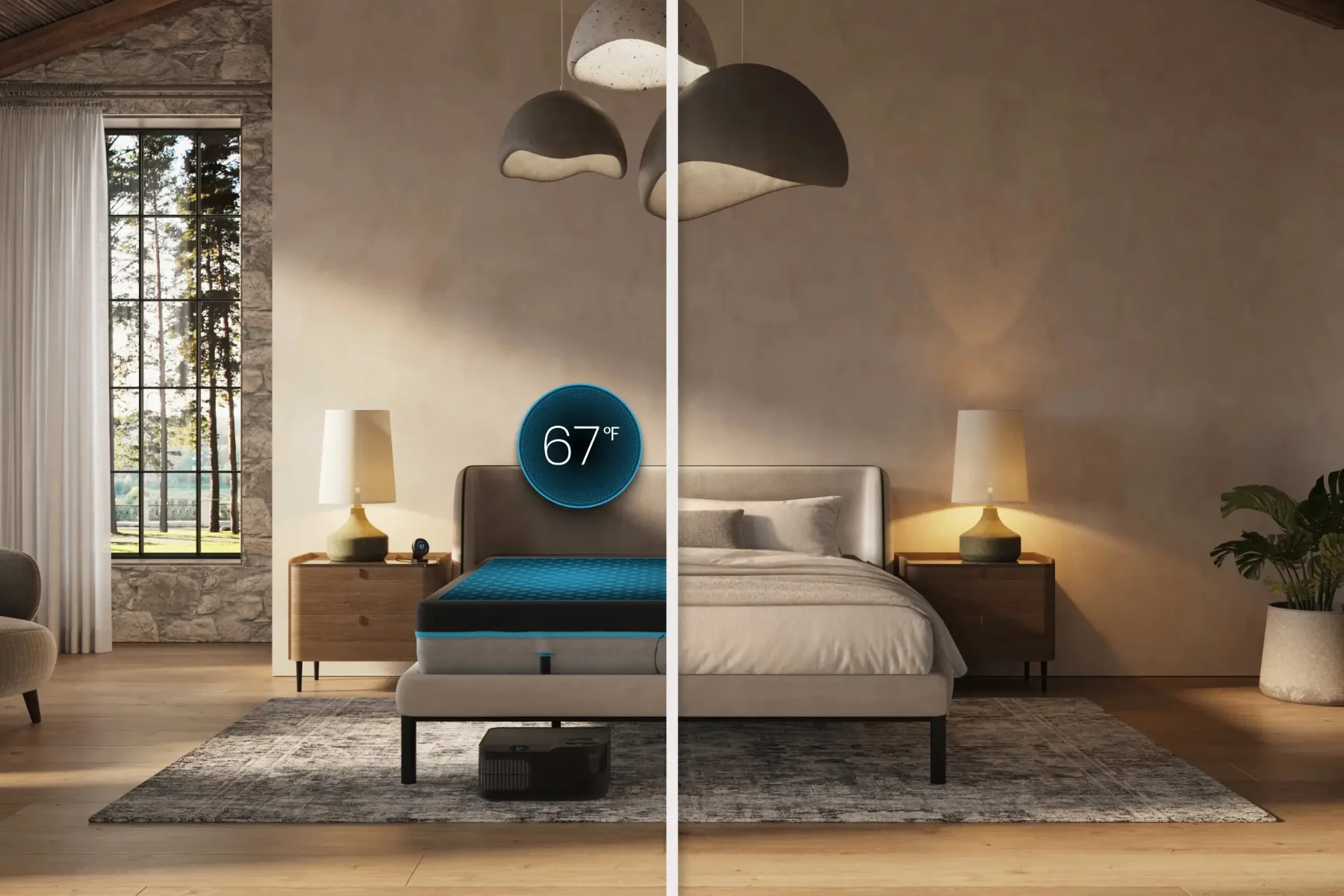
Water-based cooling pads actively circulate temperature-controlled water through channels in a thin pad that sits on your mattress.
You connect the pad to a small bedside unit that heats or cools the water to whatever temperature you set. That water runs continuously through the pad all night. Because it is always moving and always at your target temperature, the cooling does not fade.
The Chilipad system lets you set the temperature anywhere from 55 to 115ºF. Most people who sleep hot land somewhere between 60 and 72 degrees for their pad setting.
But, the bed temperature ranges from person to person. The unit runs quietly in the background and maintains that temperature throughout the night.
Because the system is adjustable in real time, it can also help in winter. If you get cold toward morning, you can set a warmer temperature.
A heating and cooling mattress pad replaces the need to adjust blankets, change your thermostat, or compromise with a partner who runs at a different temperature.
Gel Topper vs. Water Cooling Pad: A Direct Comparison
The main differences come down to how long the cooling lasts and how much control you have over it.
Cooling Method
Gel toppers use passive heat absorption. Water pads use active temperature-controlled circulation. One relies on the material reaching a threshold before it stops working. The other runs on a loop, so it never reaches that threshold.
Duration of Cooling
Gel can feel cool for the first part of the night. Once the material saturates, the cooling effect is gone. Water-based cooling runs all night, including during the light-to-deep sleep transitions in the second half of the night when your core temperature naturally rises.
Temperature
Control Gel toppers have no adjustable settings. You get whatever the material provides, which is limited to the ambient temperature of the room.
Water-based pads let you dial in an exact temperature, adjust it from an app or the unit itself, and change it whenever your needs change.
Partner Compatibility
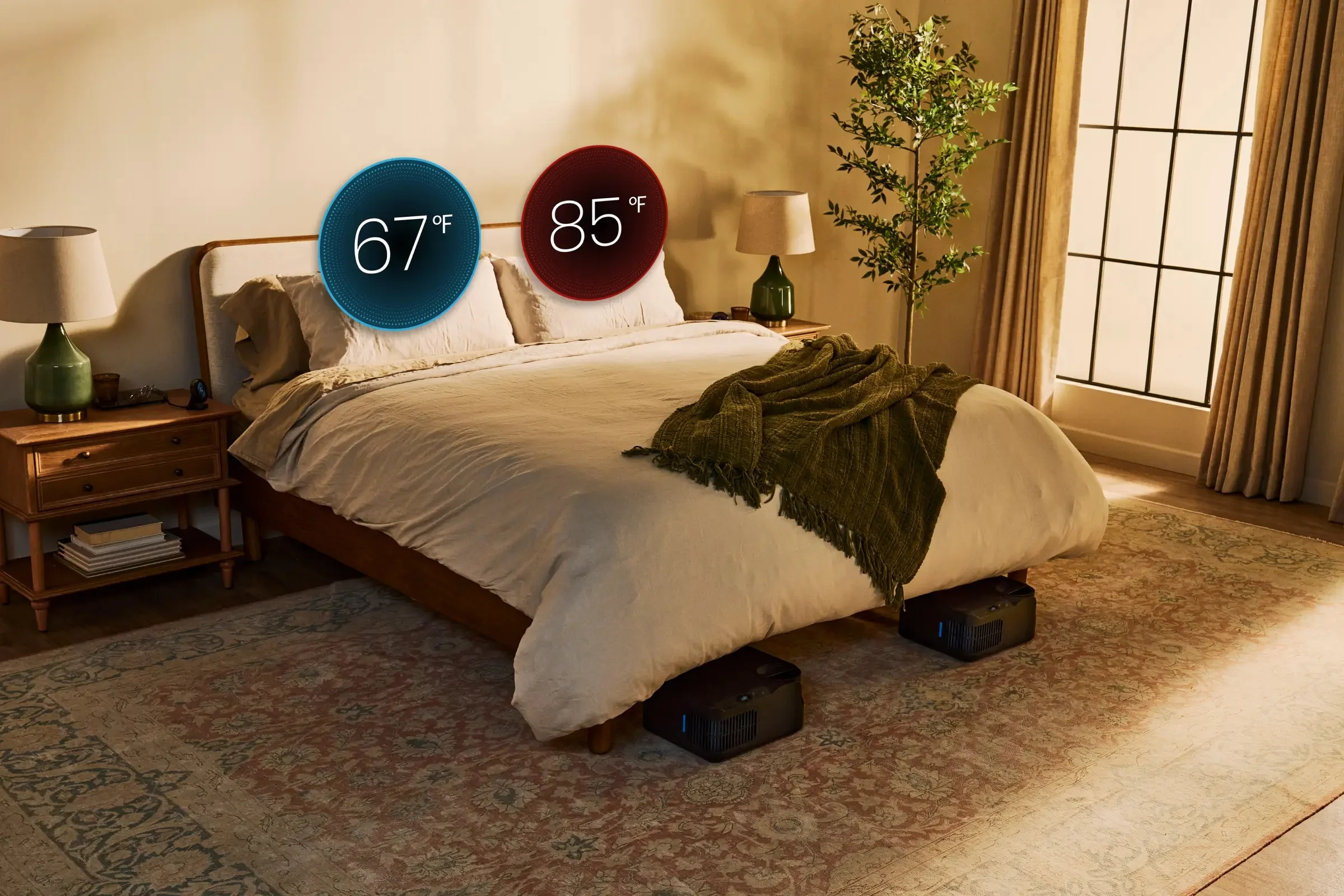
Gel toppers sit under both people. If one partner sleeps hot and the other sleeps cold, there is no way to address both at once. Some water-based systems allow dual-zone control, so each side of the bed runs at a different temperature.
Here are a few tips to help couples sleep better when sharing a bed.
Price
Cooling gel mattress toppers are less expensive. A quality gel foam topper runs between $50 and $300 depending on thickness and brand. Water-based systems like Chilipad start at a higher price point because they include the control unit and the cooling pad.
For people who have tried multiple cheaper solutions without success, the step up in price often comes with a step up in results.
Maintenance
Gel toppers can be spot cleaned or, depending on the cover, machine washed. Water-based pads require occasional cleaning of the water reservoir and tube system, typically with a cleaning solution every few weeks.
Neither is complicated, but the water system does need some upkeep.
Why the Second Half of the Night Matters
Most people who sleep hot wake up in the early morning hours, not right after falling asleep.
Your core body temperature follows a natural cycle. It drops in the evening as you get sleepy. It reaches its lowest point in the middle of the night. Then it starts rising again in the early morning hours. That rise is when a lot of hot sleepers wake up.
A gel topper that has already saturated is not doing anything during that second half. A water-based cooling mattress pad is still running at your set temperature, counteracting the natural rise and keeping the sleep environment stable.
This is also why gel toppers tend to work better for people who run slightly warm but do not have serious issues with overheating, while water-based cooling is often the better fit for people who consistently wake up hot or cannot stay asleep through the night.
Cooling Mattress Pads for Hot Flashes and Night Sweats
People dealing with hot flashes or night sweats need cooling that responds to their body, not cooling that has already given up by the time the worst of it hits.
Hot flashes can raise skin temperature sharply and last several minutes. That kind of temperature surge is exactly what a saturated gel topper cannot handle. By the time a hot flash occurs, the gel is already running at body temperature.
The best cooling mattress pad for hot flashes is one that actively pulls heat away rather than waiting to absorb it. Water circulation keeps the pad surface cool regardless of what your body temperature is doing.
Many people who use Chilipad for hot flashes say the cooler surface gives the body somewhere to shed heat quickly. That can shorten how long each episode feels.
A water-based system also lets you lower the temperature further in the moment if needed, rather than being stuck with whatever the material can manage.
Who Should Get a Cooling Gel Topper vs. a Water Cooling Pad?
The answer depends on how hot you sleep and whether the issue is the start of the night or all of it.
A Cooling Gel Mattress Topper May Work If:
- You sleep slightly warm but do not wake up sweating
- Your biggest complaint is that your mattress traps too much heat when you first get in bed
- You are looking for a low-cost first step before committing to an active cooling system
- You sleep in a cool room where the gel has a longer window before it saturates
A Water-Based Cooling Pad Is Worth Considering If:
- You wake up hot in the early morning hours
- You have tried gel toppers and still sleep hot
- You or your partner deals with night sweats or hot flashes
- You want precise temperature control instead of guessing
- Your partner and you run at different temperatures
- You want a bed system that also warms in winter

How Chilipad Compares to a Gel Topper
Chilipad is a water-based bed cooling system that sits on top of your mattress under your sheets.
The pad is thin and soft, so it does not change how your mattress feels. The control unit sits on your nightstand and runs water at whatever temperature you set, from 55 to 115 degrees Fahrenheit. Most people who sleep hot set it between 62 and 70 degrees and leave it.
The difference people notice most compared to a gel topper is what happens after the first hour. Gel has done most of its cooling work by then. Chilipad is still running at the same temperature it started at.
There is also no guessing. A gel topper does not tell you how warm or cool it is. Chilipad lets you set a specific temperature and adjust it until you find what works for your body.
Some people run it warmer in the winter and cooler in the summer. Some people run it the same setting year-round.
For people who share a bed, the dual-zone option means each side of the mattress runs at a different setting. One partner can be at 65 degrees while the other runs at 72. That is not possible with any foam or gel product.
The Bottom Line
Gel toppers and water cooling pads both market themselves as cooling solutions, but they are solving different problems with different tools.
A cooling gel mattress topper is a passive product. It absorbs heat until it cannot absorb any more, and then it stops. That works well enough for people who run slightly warm and want something affordable to try first.
A water-based cooling pad is an active product. It pulls heat away from your body continuously and maintains a set temperature all night. That is a meaningful difference if you wake up hot, deal with night sweats, or have already tried gel and are still not sleeping well.
If the goal is to cool down the first few minutes after you get in bed, a gel topper may do the job.