Key Takeaways
Wellness trends are shifting toward smarter tools, better recovery, and a more connected view of health.
- Sleep technology is becoming more intelligent, with AI powered tools like non wearable sleep trackers and temperature controlled systems helping people improve rest and recovery.
- Cold exposure practices such as cold plunges and cryotherapy are growing in popularity for supporting muscle recovery, reducing inflammation, and improving sleep quality.
- Red light therapy continues to gain attention for its potential to support melatonin production, calm the nervous system, and promote more restful sleep.
- Personal health tracking, including heart rate variability and circadian aligned routines, is making wellness more data driven and individualized.
- Sleep is now viewed as part of whole body wellness, closely connected to mental clarity, physical performance, and long term health.
Sleep has always been at the center of what we do at Chilipad. Not because it is a trend, but because it is the variable that connects everything else.
Recovery, performance, mood, focus, and long-term health all trace back to the quality of what happens at night.
As we move through 2026, wellness is finally catching up to what the sleep science has been saying for years.
Personalization is replacing one-size-fits-all advice. Prevention is replacing reactive care. And the tools available to support better sleep, better recovery, and better daily performance are more accessible than they have ever been.
Whether you train hard, track everything, or just want to wake up feeling rested for once, this year's health and wellness trends are worth paying attention to.
Here is what is shaping 2026 and where sleep fits into all of it.
The Sleep Trend That's Actually Worth It
No gimmicks, no subscriptions, no hype. Chilipad 2.0 puts you in control of your sleep temperature from 55°F to 115°F so you fall asleep faster, stay asleep longer, and wake up feeling like yourself again.
Wearables and AI
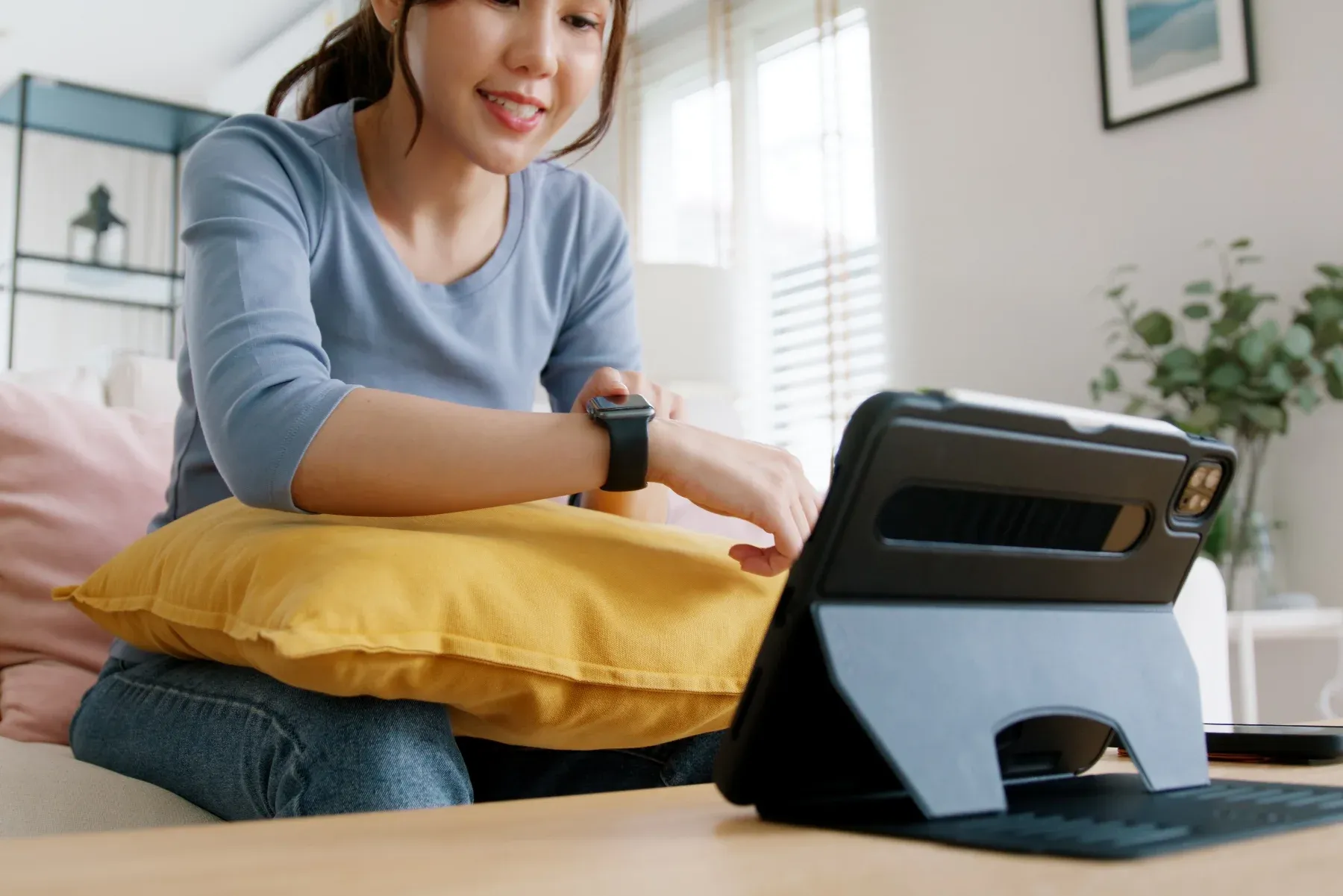
We have come a long way from step counts. The technology on your wrist now tracks heart rate variability, blood oxygen, sleep stages, skin temperature, and stress responses in real time.
The data is no longer just numbers. It is feedback your body has been trying to give you that you finally have a way to read.
Think about what it means for your watch to flag that your recovery is low before you even feel it. Instead of pushing through a hard session and wondering why you feel worse afterward, you get a signal to back off.
Instead of a generic "time to move" reminder, you get a recommendation calibrated to where your body actually is that day. More than 60% of wearable users report staying on top of their health goals more consistently with real-time data than without it. [1]
Whether it is a ring, a watch, or a chest sensor, the shift toward personalized daily guidance is one of the most meaningful changes in how people approach health in 2026.
Worth Noting: The best wearables are not the ones with the most features. They are the ones that help you listen to your body more clearly and act on what you hear.
Biofeedback
Biofeedback used to mean electrodes in a clinical setting. In 2026 it means a ring on your finger tracking your skin temperature. A wearable monitoring your heart rate variability between meetings.
An app showing you that your stress response is elevated before you have consciously registered it yourself. The tools changed. The principle is the same.
That shift matters. For most people, the gap between how they feel and what is actually happening in their body is significant.
Biofeedback closes that gap. When you can see that your breathing has gone shallow, your cortisol indicators are spiking, or your recovery score is low, you have something to act on rather than just a vague sense that something is off.
A quick breathing reset during a stressful call. A glass of water before the afternoon slump hits. An earlier bedtime on a night when your body is clearly still running from yesterday's session.
These are not big interventions. They are small course corrections made possible by real-time data that did not exist in a consumer format five years ago.
The goal is not to become obsessed with metrics. It is to make recovery part of the day rather than something you save for the weekend.
Sleep Trackers
There is a difference between knowing you slept eight hours and knowing why those eight hours left you exhausted. That is the gap sleep technology is closing in 2026.
Advanced sleep trackers now monitor sleep stages, heart rate variability, blood oxygen, skin temperature, and room conditions throughout the night.
The data tells you not just how long you slept but which stages you actually hit, how many times you woke, and what environmental factors may have disrupted your recovery.
Smart mattresses adjust firmness and temperature in real time based on sleep stage data. Circadian lighting systems mimic the natural progression of sunlight to support your body clock from morning through evening.
AI-based sleep coaching platforms now analyze weeks of data to surface patterns that a single night's report would never reveal.
Research shows that improving your sleep environment, temperature, light, and noise combined, can improve overall sleep performance by up to 30%. [2]
That number is not driven by a single intervention. It is the compounding effect of multiple environmental variables being addressed at the same time.
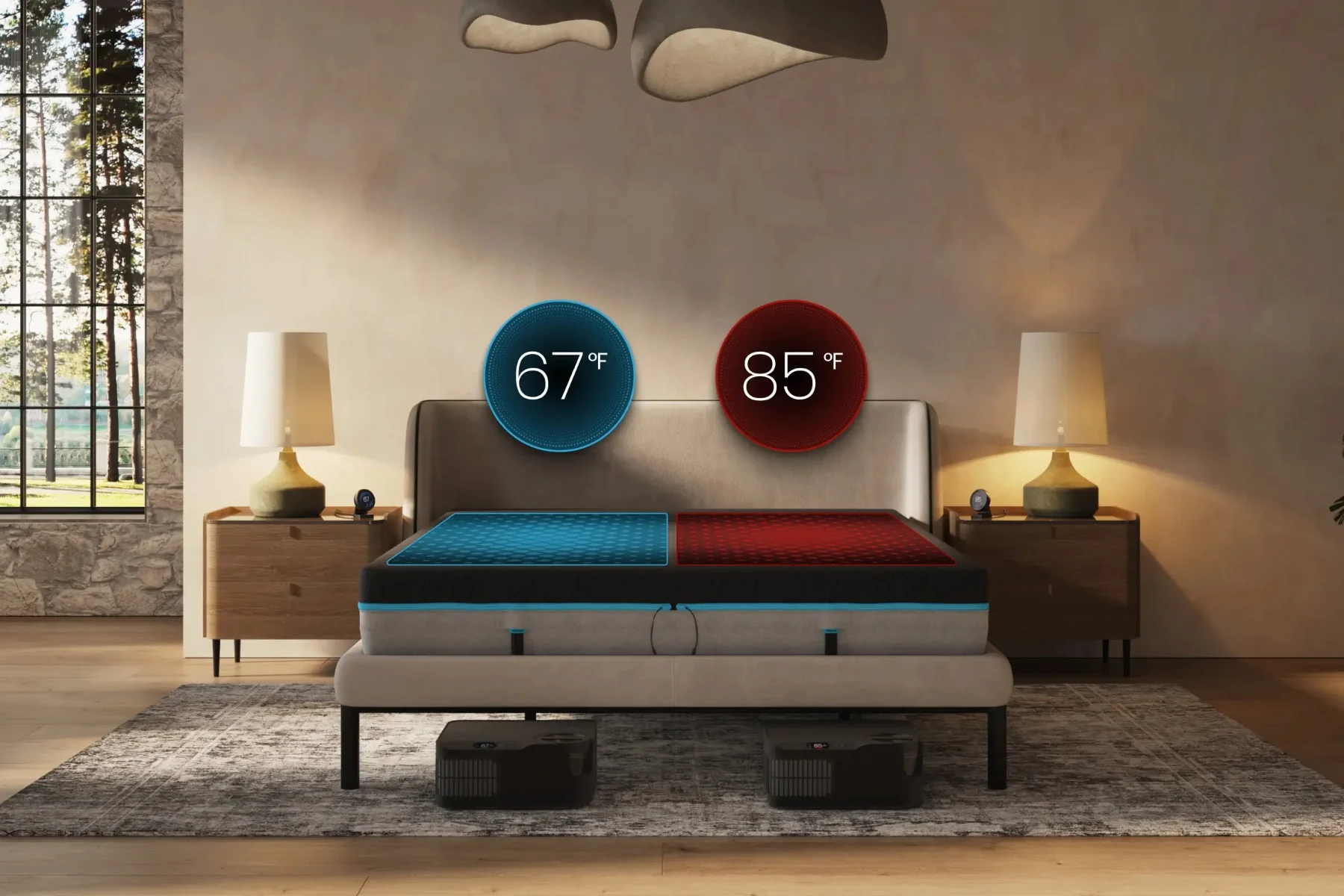
Bed Sleep Temperaure
Most of us have spent nights flipping the pillow to find the cold side, kicking off the covers, or waking up at 3 AM overheated for no obvious reason.
There is actually a biological reason for all of it. Your core body temperature needs to drop by one to two degrees to enter and sustain deep sleep.
A bed that is even a few degrees too warm keeps your brain in lighter, more restless sleep stages without you realizing it.
In 2026 the focus has shifted from enduring the night to actively managing your sleep climate. The Chilipad 2.0 regulates your bed surface temperature precisely, all night, on each side independently.
Instead of cooling the air around you, it targets the surface you are actually sleeping on, which is where your body's heat exchange happens.
Couples particularly benefit from this. One partner who runs hot and one who runs cold no longer have to compromise. Each side of the bed can be set independently between 55 and 115 degrees Fahrenheit.
Dial in the temperature that works for your body and your sleep environment finally starts working with your biology instead of against it.
Sleep Recommendations
Data is only useful if it changes what you do. That is the gap AI sleep coaching is closing in 2026.
These systems have moved beyond showing you a graph. They now learn your specific patterns over time and translate them into actionable guidance.
When to start winding down based on your schedule and recovery data. What room temperature your body tends to sleep best at. What wake window to target so you come out of a lighter sleep stage rather than deep sleep.
The difference between a generic sleep tip and a recommendation calibrated to your data is the difference between advice that sounds right and advice that actually works.
For someone who consistently runs warm, an AI platform recommending a cooler sleep surface is not a guess. It is a pattern identified across weeks of nights.
When your data tells you that you sleep better at 64º, you can set your Chilipad to 64º and hold it there all night without relying on a room thermostat that serves the whole house.
The recommendation means something when you have a system that can actually execute it.
Wellness Tools Work Together
Most people know the tired but wired feeling. Physical energy is at zero but your mind is still running through everything you did not finish today and everything waiting for you tomorrow.
That gap between physical exhaustion and mental calm is where sleep problems live.
One of the most meaningful shifts in 2026 is that wellness tools are finally talking to each other. Instead of a separate app for sleep, another for stress, and a wearable that does not connect to either, these platforms are sharing data and acting on it together.
Think of it as a handoff. Your wearable notices your heart rate is elevated after a long day. It passes that signal to your stress management app, which queues a five-minute breathing session.
By the time you get into bed, your nervous system has already started coming down, rather than trying to make that transition the moment your head hits the pillow.
Mental calm and physical rest are not separate goals. They are the same goal approached from two directions. The tools that recognize this and work in coordination are the ones producing results in 2026.
Consistency Is Still the Most Powerful Tool You Have
Every tracker, AI coach, and temperature-controlled sleep system in 2026 works better when it has something solid to build on. The technology is the engine. Your daily routine is the road.
The American Academy of Sleep Medicine is consistent on this point: advanced tools work best when they support a strong behavioral foundation, not when they replace one. [3]
That means treating your sleep and wake times like a non-negotiable commitment. It means keeping your bedroom cool, dark, and quiet not because it is old advice but because it works.
A tracker can tell you how you slept. Your habits are what actually change it.
Combining consistent fundamentals with today's best tools is not about optimizing every variable. It is about building a system where the technology and the behavior reinforce each other. That is when the results compound.
Inside-Out Health
The dominant shift in preventive health in 2026 is simple: stop waiting for symptoms and start looking earlier. Full-body imaging, microbiome testing, and advanced blood panels have made it possible to identify imbalances before they become problems that are harder to fix.
Microbiome testing is one of the more accessible entry points. A gut health analysis can reveal why energy is inconsistent, why mood dips at predictable times, or why inflammation markers are elevated, details that a standard annual physical rarely surfaces.
That level of specificity turns a vague sense that something is off into an actionable plan with targeted interventions rather than generic supplement stacks.
The sleep connection here is direct. The gut-brain axis is a two-way communication system between your microbiome and your central nervous system.
An imbalanced microbiome affects serotonin production, cortisol regulation, and sleep architecture. Research increasingly points to gut health as an underrecognized driver of sleep disruption, particularly in people who sleep poorly despite doing everything else right.
Precision nutrition takes this further. Rather than general dietary guidelines, personalized nutrition strategies are built around your specific blood markers, microbiome composition, and metabolic response.
The result is dietary guidance that is actually calibrated to your body rather than a population average.
Mental Health
Mental health and physical health are no longer treated as separate categories in 2026. The research connecting stress and emotional regulation to sleep, recovery, and long-term health has made that separation hard to defend.
The tools reflect this. Meditation apps now adjust session length and style based on how you are actually feeling rather than playing a generic track.
For people who lie awake with a racing mind, digital CBT-I has become one of the most accessible and evidence-backed interventions available.
It addresses the thought patterns driving chronic insomnia, not just the symptoms, and studies consistently show it outperforms sleep medication for long-term outcomes.
Wearables are adding real-time stress indicators and guided breathing prompts that give people a way to intervene before a wound-up evening becomes a bad night.
Mental calm and sleep are the same goal approached from two directions. Addressing one without the other is why a lot of wellness routines plateau.
Support That's Always Within Reach
Access to mental health support has historically been limited by cost, availability, and the friction of asking for help in the first place. That is changing.
Virtual therapy platforms now connect people with licensed therapists within days rather than weeks. Mood tracking apps create a private daily log that makes it easier to spot patterns and bring something concrete to a session rather than trying to reconstruct how the last month felt.
Some platforms now offer asynchronous messaging with therapists, which removes the scheduling barrier entirely.
The result is that mental health support is becoming something people use proactively rather than waiting until things are bad enough to force the issue. That shift matters as much as any specific tool.
Apply This Year's Health Breakthroughs
- Start with one wearable. Pick a device built for the outcome you care most about. Sleep tracking, HRV monitoring, and stress indicators all serve different goals. One focused tool used consistently beats three that you check occasionally.
- Test your sleep environment. Try a cooler room temperature, a sound source, or a temperature-regulated sleep surface for two weeks and track how you feel. Small environmental changes compound faster than most people expect.
- Use tech to reinforce the basics. Wearables and apps work best when they support consistent sleep timing, regular movement, and balanced nutrition, not when they replace them.
- Look inside before symptoms appear. Microbiome testing or a full-panel blood draw can surface imbalances that a standard physical misses. Worth doing once as a baseline even if nothing feels wrong.
- Address the mental side directly. Download a CBT-I or meditation app and use it for five minutes before bed every night for two weeks. The consistency matters more than the duration.
The Bottom Line
The health and wellness innovations of 2026 are not about chasing the next gadget. They represent a genuine shift in how people understand and act on what their bodies need, from reactive care to proactive, personalized daily decisions.
Whether you are dialing in your sleep temperature with Chilipad 2.0, using AI coaching to build a wind-down routine that actually works, or running your first microbiome test to understand what your gut is telling you, the goal is the same.
Stop guessing. Start knowing.
The best tools in 2026 do not replace the fundamentals. They make the fundamentals easier to maintain consistently. A consistent sleep schedule still matters more than any tracker.
A cool, dark bedroom still outperforms any supplement. Real food still beats any personalized nutrition app used in isolation.
What technology does is close the gap between knowing what to do and actually doing it. That is worth paying attention to.