
Key Takeaways
Better sleep starts with consistent habits that support your body clock, energy levels, and nighttime wind-down. Small changes add up faster than most people expect.
- Keeping a consistent sleep and wake schedule, including weekends, is the single most impactful thing you can do to regulate your internal clock and improve sleep quality.
- Morning exercise supports deeper, longer sleep by raising body temperature earlier in the day and reinforcing healthy circadian timing.
- Eating a balanced diet with adequate protein, fiber, and whole foods supports steadier energy and better sleep. High-carbohydrate meals eaten close to bedtime increase nighttime waking.
- Limiting caffeine after 2 PM and cutting alcohol within three hours of bedtime removes two of the most common and fixable causes of fragmented sleep.
- A cool, dark, quiet bedroom combined with a consistent wind-down routine gives your body the environmental and behavioral cues it needs to fall asleep faster and stay asleep longer.
Most people know they should sleep better. Fewer people have actually built the habits that make it happen consistently.
This isn't a list of things to try once. These are 13 adjustments that hold up over time. Some produce results within a few days.
Others take a few weeks to settle in. All of them are worth doing.
Temperature Is the One Sleep Tip Most People Skip
Our bed cooling system helps you stay cool, stay asleep, and wake up feeling refreshed. Program your sleep temperature to 55–115 ° for deeper sleep, fewer night sweats, and comfort that actually lasts.
Keep a Consistent Sleep Schedule
Your body runs a circadian rhythm, a roughly 24-hour internal clock that governs sleep timing, hormone release, and metabolism. Consistency is what keeps it accurate.
Make sure to try to go to bed and wake up at the same time each day. This means every day, including weekends. When that becomes a habit, you fall asleep faster, wake up less often, and feel more rested at a predictable hour.
If you're not asleep within 20 minutes, get up. Leave the bedroom and do something low-stimulation until you feel genuinely tired. Reading or calm music works.
Lying in bed awake trains your brain to associate the bed with wakefulness, which is the opposite of what you want. Sleeping in on weekends feels like recovery. What it actually does is shift your rhythm one to two hours later.
This makes Sunday night harder to fall asleep and Monday morning worse. Do it consistently, and you're running a mild version of jet lag on yourself every week.
Exercise in the Morning
Exercise is one of the most reliable ways to improve sleep quality. Timing matters.
A study from Appalachian State University tracked three groups exercising at 7 AM, 1 PM, and 7 PM, three days per week. Participants who exercised in the morning spent 75% more time in deep, restorative sleep than those who exercised later in the day. [1]
The reason is practical. Morning exercise raises your core body temperature early, which then drops over the course of the day.
That evening temperature drop is one of the key signals your body uses to initiate sleep. Evening workouts keep the temperature elevated for four to five hours post-workout and delay that process.
A consistent exercise routine improves sleep quality even on the days you don't work out. [3] Thirty minutes of moderate aerobic activity most days is enough to see the difference
Sleep Tip: If evening is your only option, keep the intensity moderate and finish at least 60 to 90 minutes before bed.

Does Exercise Help You Sleep?
A study published in Sleep Health found that building a consistent exercise routine can improve sleep quality. That resulted in better sleep, which, in turn, supports healthier physical activity levels throughout the day. [3]
Read more about the connection between sleep and exercise.

Eat a Balanced Diet and Time Your Meals
Diet affects sleep through two main pathways: what you eat and when you eat it.
What you eat. High-carbohydrate meals increase nighttime waking and cut into deep sleep quality. [5] Diets built around lean proteins, healthy fats, vegetables, and fiber support steadier blood sugar and better overnight recovery.
A few foods worth knowing. Turkey, eggs, salmon, nuts, and seeds are high in tryptophan, a precursor to serotonin and melatonin.
Leafy greens, nuts, and seeds are good magnesium sources, and low magnesium is consistently linked to poor sleep and nighttime restlessness.
These aren't supplements to chase. They're foods that pull double duty in your diet and your sleep.
When you eat. Finish dinner at least three hours before bed. Lying down with a full stomach increases acid reflux risk and keeps digestion active when your body should be winding down. [4]
Avoid Eating Late at Night
Late-night eating is worth its own mention because it's a different habit from dinner timing. Post-dinner snacking close to bedtime, particularly high-glycemic foods, disrupts sleep architecture even when dinner itself was well-timed.
One exception worth knowing: a study in the American Journal of Clinical Nutrition found that a high-glycemic meal consumed about four hours before bedtime shortened sleep onset time. [6]
If you struggle to fall asleep, an earlier higher-carb dinner may actually help. The key is four hours, not 30 minutes before bed.
Avoid heavy, fatty, or spicy foods in the two hours before bed. These are the most reliable triggers for nighttime heartburn and fragmented sleep.
Need help with your snacking? We’ve included some of the best late-night snacks to help you sleep better.
Cut Caffeine by 2 PM
Caffeine has a half-life of five to seven hours. A 3 PM coffee is still roughly half-strength in your system at 9 or 10 PM. That's enough to delay sleep onset and reduce deep sleep duration even if you fall asleep on time.
A controlled study found that caffeine consumed six hours before bed reduced total sleep time by more than an hour in some participants, with many unaware their sleep was being disrupted. [9]
The American Academy of Sleep Medicine recommends a 2 PM cutoff as a standard baseline. [8]
Don't assume tolerance means immunity. The stimulant effect fades with regular use. The disruption to deep sleep stages doesn't.
Sleeping Tip: Nicotine works the same way. It's a stimulant that delays sleep onset, increases nighttime waking, and reduces total sleep time. Evening nicotine use is a direct line to worse sleep.
Limit Alcohol Before Sleep
Alcohol speeds up sleep onset and disrupts everything that follows. It reduces REM sleep, fragments sleep architecture, and typically causes waking in the second half of the night when blood alcohol levels drop.
A systematic review confirmed that alcohol increases the risk and severity of obstructive sleep apnea by relaxing airway muscles during sleep. [10] The more you drink, the worse the effect.
People who drink to fall asleep are trading sleep onset for sleep quality. They consistently wake up less rested than people who don't drink, regardless of total time in bed.
Cut alcohol at least three hours before bed. If sleep quality is already a problem, cutting it out entirely during the week is one of the fastest changes with a noticeable payoff, usually within the first week.
Get Morning Light Exposure
Getting outside within 30 minutes of waking is one of the most underleveraged sleep improvements available, and it costs nothing.
Natural light exposure in the morning suppresses melatonin, raises cortisol at the right time, and anchors your circadian rhythm to the actual time of day. [11]
That anchor makes it easier to fall asleep at your target time that night. Ten minutes of continuous sun exposure in the morning is enough to produce a measurable effect.
Combining morning light with morning exercise covers two variables at once and is one of the highest-leverage 30-minute habits you can build around sleep.
For people with insomnia, bright light therapy in the morning consistently reduces time to fall asleep and improves sleep maintenance. One study found it reduced sleep onset time by 83% in older adults with sleep maintenance insomnia. [12]
Control Your Bedroom Temperature
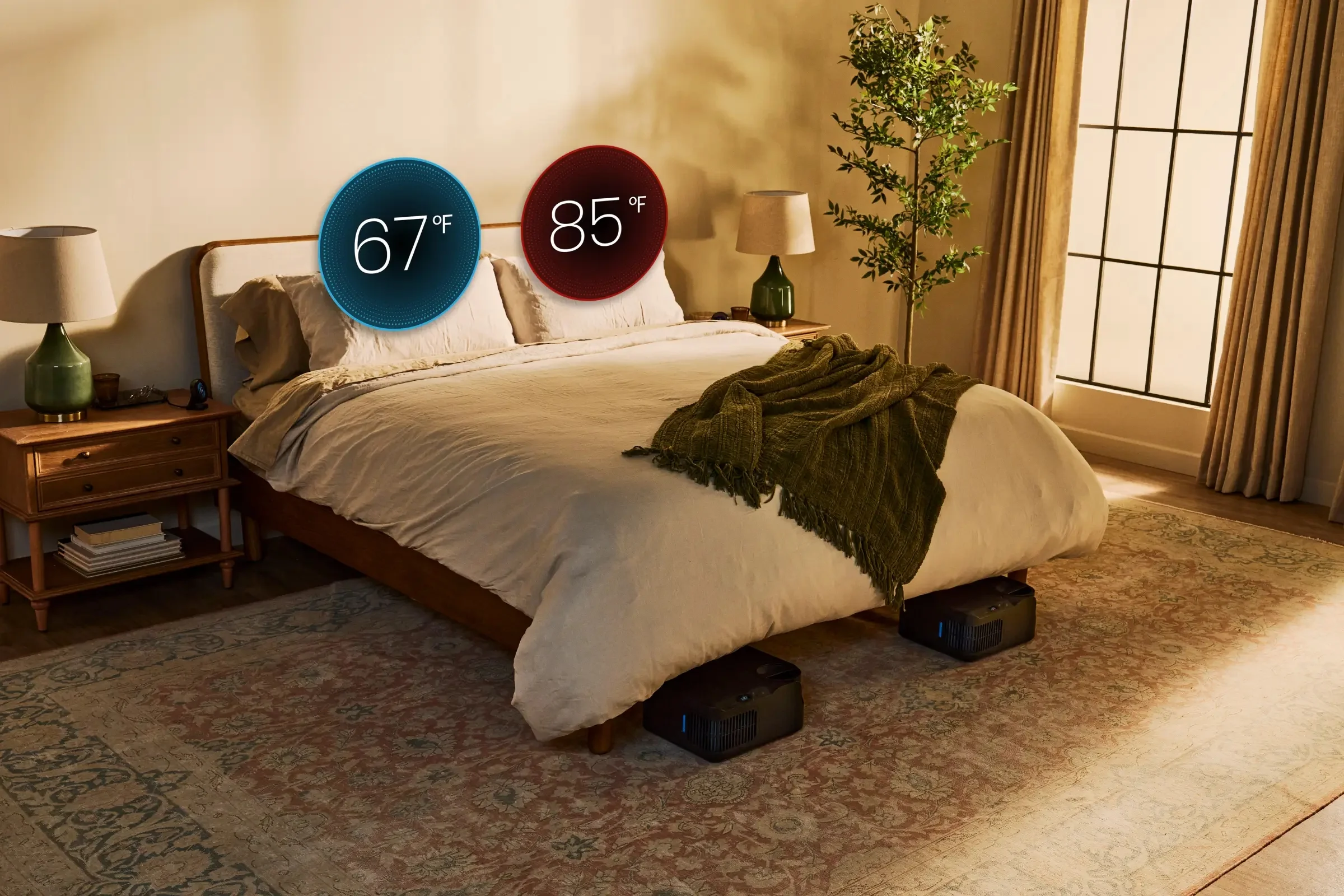
Your core body temperature needs to drop by one to two degrees to initiate and sustain deep sleep. Your bedroom is the most direct lever you have for making that happen, and it's the variable most people haven't fully addressed.
The target sleep temperature range is 65 to 68ºF for most adults. A room that's too warm delays sleep onset, shortens time in deep sleep, and increases nighttime waking.
Most people who sleep hot don't connect the room temperature to the problem because the disruption happens without fully waking them.
Sleep Temperature Tip: Breathable fabrics like cotton and bamboo help regulate surface temperature. Synthetic materials trap heat. If your mattress retains heat, that's worth addressing directly, not just the room thermostat.
The Chilipad 2.0 regulates your bed temperature throughout the night, giving your body the consistent thermal environment it needs to reach deep sleep faster and stay there longer. Way better than a cooling fan!
If you've adjusted everything else and still wake up feeling like something's off, temperature is usually the missing variable.
Cool Sleeping Tip: Avoid synthetic materials (such as foam) that often trap heat and keep your body hot.
Cut Back on Blue Light Exposure
Phones, tablets, computers, and televisions emit blue light that suppresses melatonin and signals the brain to stay alert.
The effect is measurable within 30 to 60 minutes of exposure and can delay sleep onset by one to two hours.
The content matters as much as the light. Social media and news keep your brain in a reactive, alert state that's the opposite of what you need going into sleep.
You can solve the light problem and still wreck your wind-down by reading something that spikes your cortisol.
Simple fixes:
- Cut screens 30 to 60 minutes before bed
- Use blue light-blocking glasses if cutting screens isn't realistic
- Download blue light filter apps for evening device use
- Stop watching TV at least one to two hours before bed
Managing Daytime Naps
Naps aren't automatically bad. Long or poorly timed ones are.
A 20 to 30-minute nap before 3 PM can restore alertness without disrupting nighttime sleep pressure.
Anything longer risks sleep inertia, the heavy grogginess that comes from waking during a deeper sleep stage. Naps taken after 3 PM compete with nighttime sleep drive and make it harder to fall asleep at your target time.
A study on nap frequency found that longer or more frequent naps reduced nighttime sleep depth and altered sleep architecture. [13]
If you're struggling with nighttime sleep, cut naps entirely for two weeks. It's the fastest way to find out if they're the problem.
Nap Tip: Find out which nap is best for your situation.
Build a Restful Sleep Environment
Your bedroom should do one thing well: help you sleep. Every element that works against that is worth fixing.
- Dark. Even low-level light during sleep is linked to increased depressive symptoms and fragmented sleep architecture. [14] Blackout curtains or a sleep mask are worth the investment.
- Quiet. If ambient noise is a problem, white noise or a fan creates a consistent sound environment that masks disruption without becoming a distraction itself.
- Cool. Covered in Tip 8. Worth repeating because it's the most underrated variable in the list.
- Reserved for sleep. Using your bedroom for work, screens, or extended waking activity trains your brain to treat it as an active space. That association takes time to undo. Keep the room for sleep.

Wind Down Before Sleep
Your nervous system needs a transition between the demands of the day and sleep. Without one, you go from full speed to pillow and wonder why your brain won't stop.
A warm bath or shower one to two hours before bed raises surface temperature, which then drops rapidly. That drop mirrors the one your body needs to fall asleep and accelerates the process.
Other approaches that work include light stretching, reading a physical book, journaling, or any low-stimulation activity that serves as a consistent nightly signal. The specifics matter less than the consistency.
Ten minutes of the same routine every night beats a perfect 45-minute routine done twice a week.
If stress and a racing mind are what keep you awake, box breathing, deep breathing, meditation, or Yoga Nidra are worth building in.
They reduce cortisol and lower physiological arousal in ways that make falling asleep less of a fight.
Build Consistent Sleep Hygiene
The 12 tips above aren't independent fixes. They're parts of the same system. That's what sleep hygiene actually means.
Most people who struggle with sleep have one or two variables dialed in and several others quietly working against them.
A cool bedroom doesn't fully compensate for caffeine at 4 PM. A good wind-down routine doesn't fix a schedule that shifts two hours on weekends. The habits interact.
Pick the two or three changes most relevant to where you are right now. Give each one two to three weeks before judging the effect.
Sleep habits take time to stabilize, and the improvements from genuine consistency look different from the improvement of a single good night.
Sleep Hygiene Tip: Looking to improve your sleep hygiene? Take a look at our blog, which highlights the best tips for improving your sleep hygiene.
When to See a Doctor
A bad night here and there is normal. If you're struggling to fall or stay asleep consistently for more than two to three weeks, and the habits above haven't moved it, that's worth a conversation with your doctor.
Loud snoring, gasping during sleep, waking with headaches, or feeling exhausted despite enough hours in bed are not sleep hygiene problems.
They're signs of potential clinical issues like sleep apnea or restless legs syndrome that need evaluation. Behavioral changes won't fix a structural problem.
Long-term insomnia, defined as three months or more, typically responds well to cognitive behavioral therapy for insomnia (CBT-I), which has a stronger evidence base than medication for most people. That's worth knowing before assuming a pill is the next step.
The Bottom Line
Good sleep doesn't happen by accident. It's built. Start with the variables you have the most control over right now: temperature, schedule, and caffeine, and add from there.
Three weeks of consistency will tell you more than any single good night ever could.