
Key Takeaways
Menopause disrupts sleep through hormonal shifts that trigger hot flashes, night sweats, and anxiety. The good news is that targeted lifestyle changes, temperature control, and the right sleep tech can help you take back the night.
- Menopause-related insomnia is driven by declining estrogen and progesterone levels.
- Hot flashes and night sweats are the #1 sleep disruptors during the menopausal transition.
- Your core body temperature needs to drop about 1.8°F to fall and stay asleep.
- Cooling your sleep environment is one of the most effective and immediate fixes.
- The Chilipad gives you precise, personalized temperature control right where it counts: your mattress.
- Persistent insomnia warrants a conversation with your doctor. You have options.
Bad sleep is bad enough on its own. Add fluctuating hormones, random heat waves at 2 a.m., and a brain that won't shut up, and you've got menopause insomnia.
It's one of the most common and least talked about symptoms of the menopausal transition. And if you're in it right now, you already know it's not just a little annoying. It's flat-out exhausting.
Below, the blog highlights what's happening, why it hits so hard, and what you can do about it starting tonight.
The Three Phases of Menopause
Menopause isn't a single moment. It's a process that unfolds over years, and sleep can take a hit at any stage.
Perimenopause
This is the lead-up. Estrogen and progesterone start fluctuating, sometimes wildly. Your cycle gets unpredictable. Hot flashes show up uninvited. Sleep becomes inconsistent. This phase can start in your early 40s and last several years.
Menopause
Menopause is officially marked after 12 consecutive months without a period. Hormone production drops off. The hot flashes, mood shifts, and chronic sleep issues that started in perimenopause often peak here.
Curious about perimenopause vs. menopause? Our blog breaks down what's really different.
Postmenopause
Postmenopause is everything after. For many postmenopausal women, some symptoms ease up. Others, particularly sleep disturbances, can stick around.
Your body has gone through a hormonal overhaul and may need ongoing support to maintain good sleep.
Menopause Insomnia Is Common. Suffering Through It Is Not Required
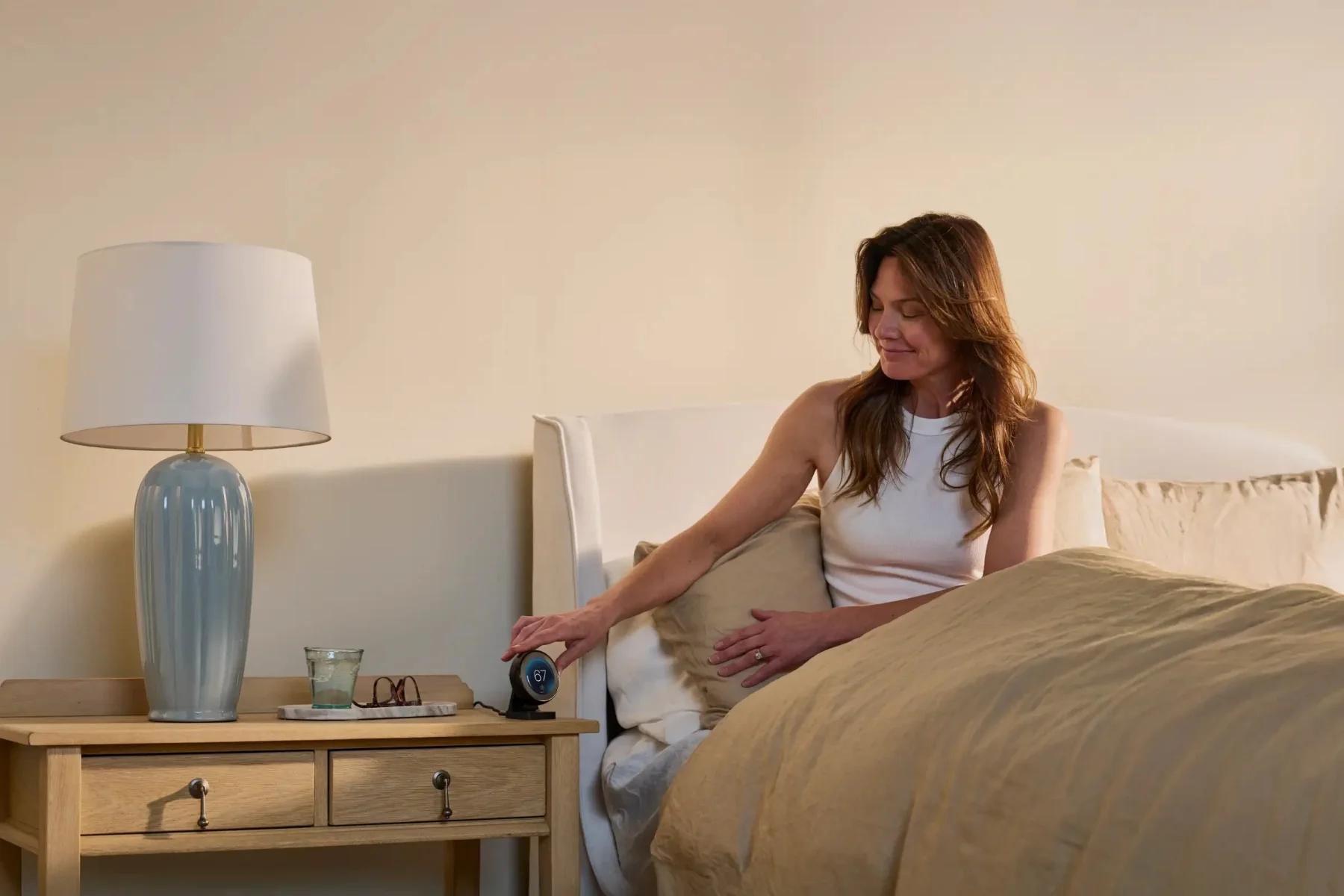
Half of women aged 45 to 64 report sleep disruption from menopause. Chilipad 2.0 gives you control over your sleep temperature all night long. Hot flashes will stop waking you up, and your body finally gets the rest it needs.
What Menopause Insomnia Feels Like
Insomnia means you can't fall asleep, can't stay asleep, or wake up too early and lie there staring at the ceiling until your alarm goes off.
During menopause, hormonal changes make every single one of those scenarios more likely.
Declining estrogen makes your brain more sensitive to temperature shifts. So when your body temperature spikes in the middle of the night, your brain treats it like a five-alarm situation and wakes you up. Repeatedly.
Hormonal shifts also fuel menopause anxiety and mood changes, both of which are excellent at keeping your mind racing well past midnight.
For menopausal women, declining estrogen makes the brain more sensitive to temperature shifts.
The Symptoms of Insomnia
Some of these symptoms you may know too well.
- You have trouble falling asleep. You're physically exhausted. Your brain is still running through tomorrow's to-do list.
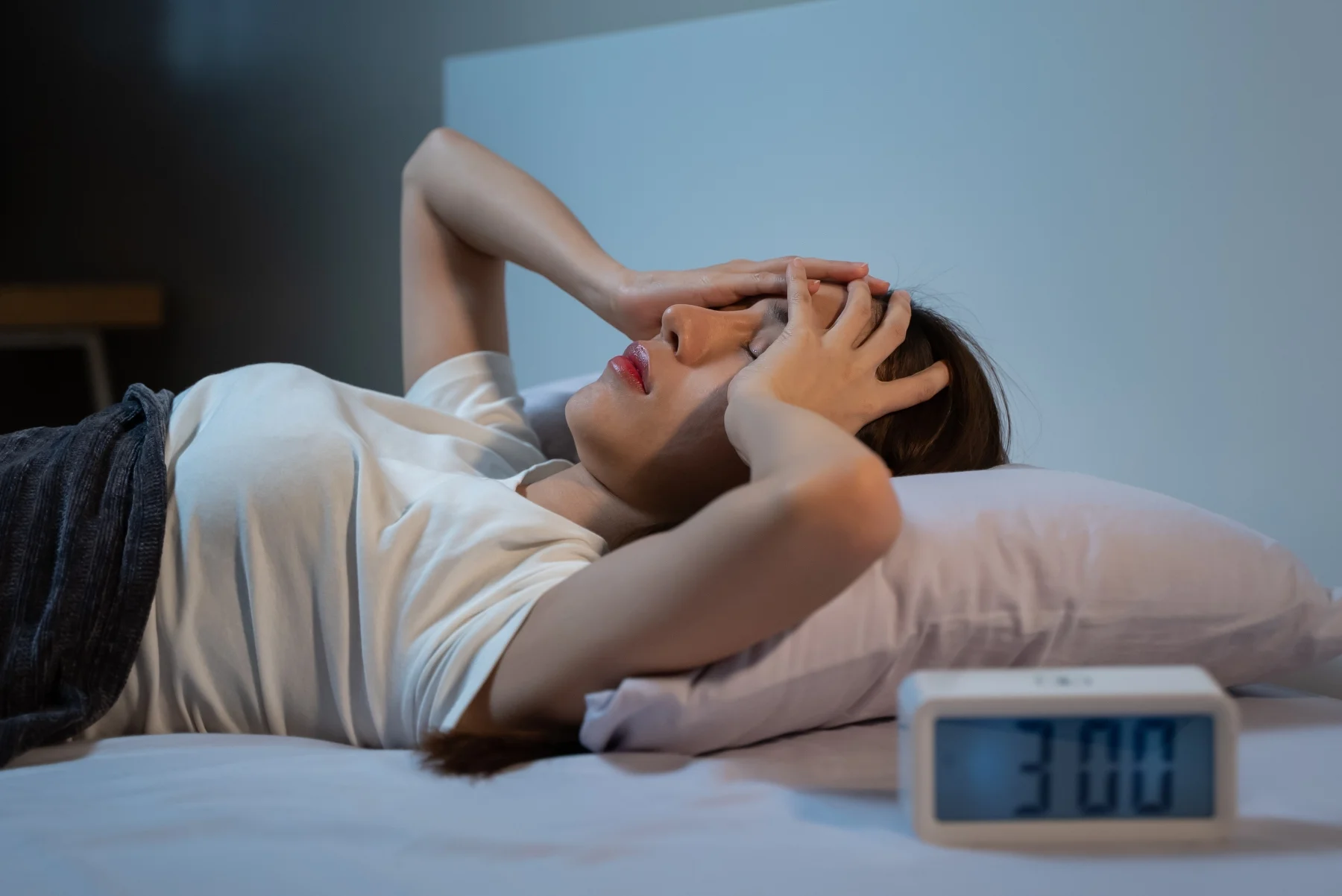
- Waking up multiple times. Hot flashes and night sweats hit you at the most inconvenient time. Usually 2 a.m. and 3:17 a.m.
- Up before your alarm. And not in a refreshed, productive way.
- Sweating through your sheets. You fell asleep fine. Your body had other plans, which results in you waking up.
- Restless Leg Syndrome. That irresistible urge to move your legs right when you're trying to wind down. Hormonal changes during menopause can trigger or worsen RLS, making it even harder to stay still long enough to sleep.
- Morning brain fog. Technically, you slept; just not well. You have difficulty performing tasks.
- Mood swings and short fuses. Sleep deprivation plus hormonal shifts is a volatile combination.
- Anxiety that won't quiet down. Managing menopausal symptoms is stressful. That stress feeds right back into your sleep problems.
How to Fight Back: Sleep Fixes That Work
There's no single fix, but there are several things you can try that may work collectively. Here's a game plan.
Control Your Sleep Temperature
Your body needs to drop its core temperature by about 1.8°F to fall asleep and stay there. That's not a preference. It's biology. Keeping your bedroom between 60°F and 67°F gives you a head start.
But when hot flashes hit, room temperature alone isn't enough.
“I found myself in the shower at 3 am after having to change my pajamas and my sheets wondering if I would ever be able to sleep through the night again. The Chilipad stopped my night sweats in their tracks, the very first night I used it. It is the reason I now work here.” Ana Marie Schick, Resident Sleep Expert and Health Coach at Chilipad
What about a bed fan or overhead bedroom fan? They don't work. Fans do not just move air. They circulate everything in that air. As the blades spin, they pick up and distribute dust, pollen, and pet dander throughout the room. [1]
Meet the Chilipad
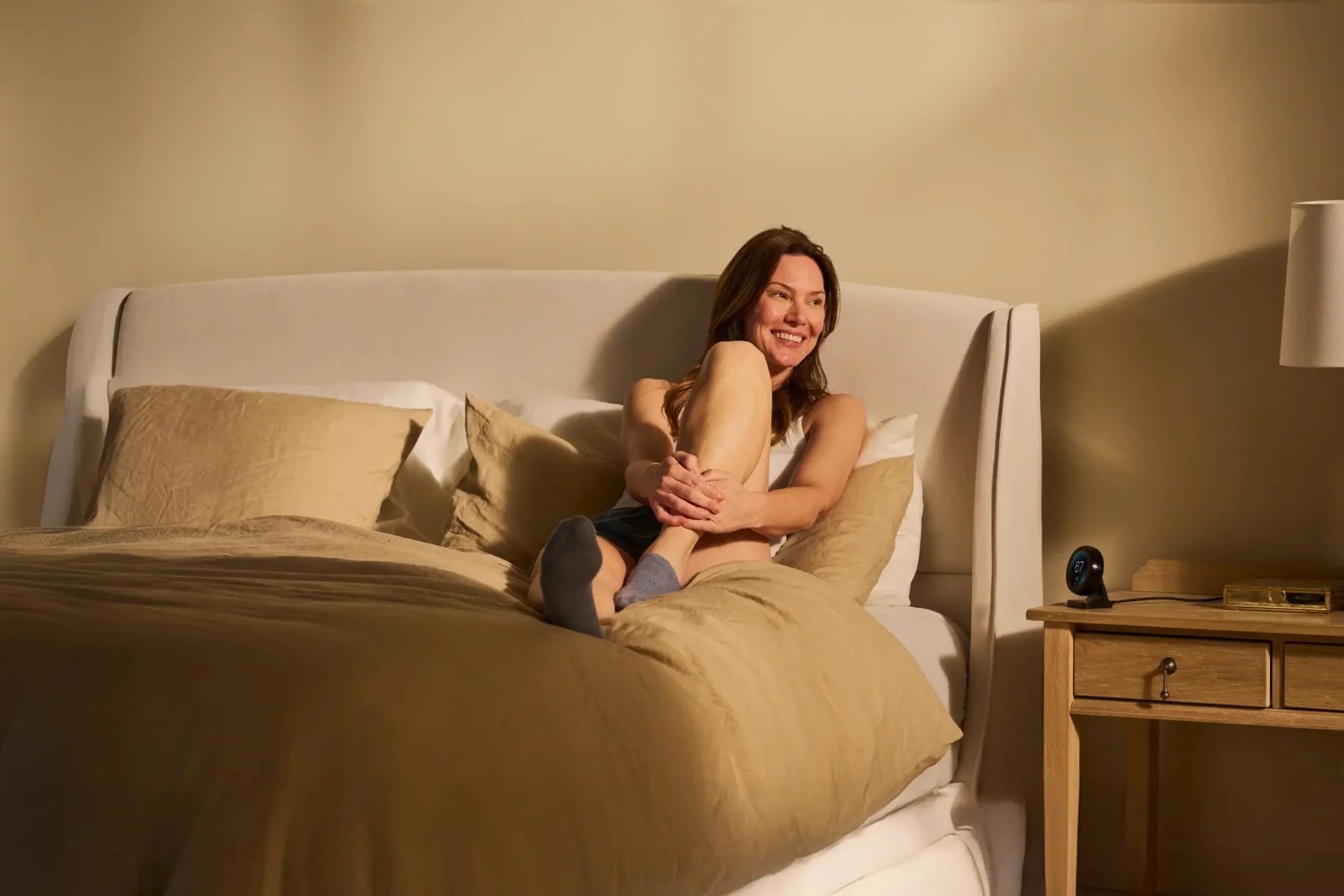
The Chilipad is a temperature-controlled mattress pad that lets you set the exact temperature of your sleep surface. Not the room. Your actual bed.
You can dial it down at night to help your body make that critical temperature drop, and adjust it throughout the night as needed.
For anyone dealing with hot flashes and night sweats, it really helps.
"RELIEF from MENOPAUSAL NIGHT SWEATS! An answer to my prayers! My Chilipad has helped me through menopause. I am able to get a decent night's sleep since I started using it. I would recommend this product to any woman who suffers with nighttime sweats and menopausal hot flashes." Jeanie, Trustpilot Review
Build a Bedtime Wind-Down
Your nervous system needs a signal that sleep is coming. Power down screens an hour before bed. Try reading, light stretching, or a breathing exercise.
Nothing stimulating. The goal is to stop being a person with responsibilities and start being a person who's about to sleep.
Watch What You Eat Before Bed
Heavy meals close to bedtime can cause some havoc when it comes to your sleep. A light snack with magnesium or tryptophan (think a banana, some almonds, or a small bowl of oats) can support sleep rather than work against it.
If hunger's the problem, these healthy late-night snacks can help you sleep better during menopause or any other night.
More and more research is proving that a small, protein-forward pre-sleep fueling can help prevent awakenings due to hunger or under-fueling throughout the day.
Manage Stress Before It Manages You
Anxiety and menopause are a well-documented pair. Mindfulness, deep breathing, and even short meditation sessions before bed can bring your nervous system down enough to let sleep happen. It sounds small. It works.
Navigating Menopause with Dr. Heidi Gastler
Explore our latest blog featuring Dr. Heidi Gastler. We break down Episode 16 of The Rest Factor to bring you expert medical strategies for overcoming sleep challenges during menopause.
Medical Options Are Available
If lifestyle changes aren't cutting it, talk to your doctor. Menopausal hormone therapy, certain supplements, and other sleep-focused treatments can address the hormonal root causes driving your insomnia.
There's no award for toughing it out. Your doctor can help build a plan that's specific to you.
When to Call Your Doctor
If you've been dealing with persistent sleep problems for more than a few weeks and nothing is helping, that's your cue.
A healthcare provider can rule out other underlying causes, including sleep apnea (which becomes more common after menopause), and recommend targeted treatments.
The Bottom Line
Menopausal insomnia is common, disruptive, and very fixable. Hot flashes and night sweats don't have to own your nights. Start with your sleep environment. Get your temperature dialed in. And if the problem runs deeper, get professional support.
You've handled a lot. Getting your sleep back is 100% within reach.
Menopause and Insomnia Frequently Asked Questions
How Common Is Insomnia During Menopause?
Why Does Menopause Cause Insomnia?
Can Cooling Your Bed Actually Help With Menopause Sleep Problems?
When Should I See a Doctor About Menopause Insomnia?
Disclaimer: This blog is for informational purposes only and is not a substitute for professional medical advice, diagnosis, or treatment. Always talk to your healthcare provider about your symptoms, conditions, or treatment options.