

Key Takeaways
Menopause changes how you sleep, but the right habits, environment, and tools can help you rest better through every stage.
- Hormonal shifts during menopause reduce estrogen and progesterone, which directly disrupt sleep quality and increase nighttime awakenings.
- A consistent sleep schedule, a cool bedroom, and breathable bedding are the three most impactful environment changes for menopausal sleep.
- Cooling your sleep surface directly reduces hot flash-related wake-ups more effectively than room cooling alone.
- Caffeine, alcohol, and heavy late meals all worsen menopause sleep disruptions. Cutting them off earlier makes a measurable difference.
- If sleep problems are persistent, a healthcare provider can help with options including HRT, CBT-I, and targeted sleep disorder evaluation.
The Short Answer
Sleeping better during menopause starts with cooling your environment, keeping a consistent schedule, and addressing what's disrupting sleep at the source. Hot flashes and night sweats are the biggest culprits, and they respond directly to bed-level temperature control. Hormonal changes also affect how deeply you sleep, which is why lifestyle habits like cutting caffeine, building a wind-down routine, and managing stress all make a real difference.
Waking up overheated. Tossing and turning at 2 AM. Feeling more exhausted after a full night's sleep than when you went to bed. These are not random.
They are some of the most common sleep disruptions women experience during menopause, and they are directly connected to shifting hormone levels.
If you have poor sleep caused by symptoms. The good news is that better sleep during menopause is possible. Here is what is causing the disruptions and what you can do about it tonight.
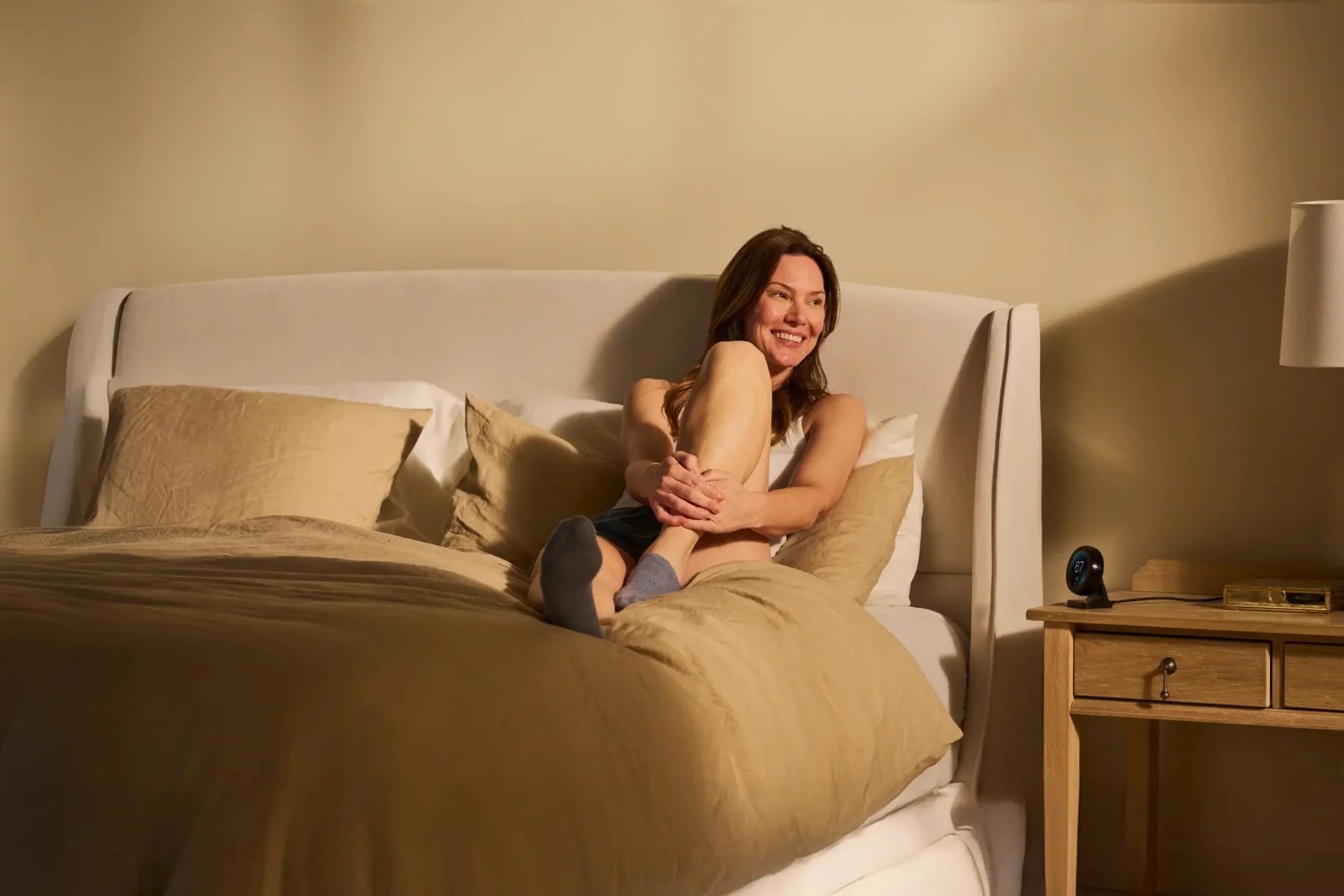
Take the Heat Off Menopause Nights
The Chilipad 2.0 gives you precise bed-level temperature control so you stay cool, sleep deeper, and wake up feeling rested. No more tossing off the covers at 2 AM.
Why Does Menopause Disrupt Sleep?
Menopause can cause poor sleep because of two hormones: estrogen and progesterone. Both drop during menopause, and both play a direct role in how well you sleep. [1]
Estrogen helps regulate your body's core temperature. When it drops, your body loses some of its ability to manage heat, which is why hot flashes and night sweats happen.
Progesterone has a calming, sleep-supporting effect. When that drops too, falling asleep and staying asleep both become harder.
The result is a combination of disruptions that can hit at the same time: difficulty falling asleep, waking up drenched in sweat, and lying awake with a racing mind. Understanding why it's happening makes it easier to address each piece directly.
Addressing sleep disturbances can help improve your sleep.
How Does a Consistent Sleep Schedule Help During Menopause?
A consistent sleep schedule is one of the most effective tools for managing menopause-related sleep problems. Going to bed and waking up at the same time every day, including weekends, helps stabilize your circadian rhythm. [3]
When your schedule is steady, your body knows when to start winding down and when to wake up. That predictability matters more during menopause, when hormonal fluctuations are already making your system less stable.
Skip the weekend sleep-ins when you can. Your energy, mood, and even the timing of hot flashes tend to be more manageable when your sleep timing stays consistent.
Navigating Menopause with Dr. Heidi Gastler
Explore our latest blog featuring Dr. Heidi Gastler. We break down Episode 16 of The Rest Factor to bring you expert medical strategies for overcoming sleep challenges during menopause.
What Sleep Environment Changes Help the Most During Menopause?
Your bedroom setup makes a bigger difference than most people realize. Three changes have the most impact.
What Temperature Should Your Bedroom Be During Menopause?
A bedroom between 65 and 68 degrees Fahrenheit supports the core temperature drop your body needs to fall and stay asleep. During menopause, when hot flashes can spike your temperature suddenly, starting cooler gives your body more room to manage. [4]
Fans help move air but don't actually lower the room temperature. On a warm night, a fan is just moving warm air around. For women dealing with hot flashes and night sweats, direct bed-level cooling is more effective than room cooling alone.
Get a better understanding of water vs. air bed cooling.
How Does the Chilipad 2.0 Help With Menopause Sleep?
The Chilipad 2.0 controls the temperature of the bed by circulating temperature-controlled water through a thin mattress pad, keeping your sleep surface at the exact temperature you set all night.
You can set your side between 55 and 115 degrees Fahrenheit, independent of whatever the room thermostat is set to.
In a clinical study, menopausal women using a bed cooling system reported significant reductions in hot flash-related wake-ups and improved overall sleep. [2]
Cooling the sleep surface directly, rather than just the room, is more effective because that is where your body's heat exchange actually happens during sleep.
What Bedding and Sleepwear Work Best During Menopause?
Breathable, moisture-wicking fabrics make a real difference on nights when you run warm. Look for sheets made from cotton, bamboo, or TENCEL. Choose lightweight pajamas that won't trap heat.
Blackout curtains block light that can disrupt melatonin production. A white noise machine or a colored noise app (pink, brown, or green noise) helps mask sounds that might otherwise pull you out of lighter sleep stages.
How Do You Build a Bedtime Routine That Works During Menopause?
A consistent bedtime routine helps your brain shift into wind-down mode, especially when hormonal fluctuations are keeping your nervous system more reactive than usual.
Start about 30 to 60 minutes before bed. Do something calming and screen-free. Reading, herbal tea (chamomile or peppermint work well), journaling, or a warm bath are all good options.
A warm bath is worth calling out specifically. The drop in body temperature that happens after you get out of the bath mimics the natural cooling your body needs to fall asleep. It signals to your brain that sleep is coming.
Cut off screens at least 30 minutes before bed. Blue light from phones and tablets reduces melatonin production, which is already fluctuating during menopause. Keeping devices out of the bedroom helps.
What Should You Eat and Drink for Better Sleep During Menopause?
What you eat and drink in the hours before bed affects sleep quality more than most people expect, and menopause makes this more pronounced.
Caffeine lingers in your system for five to seven hours. Cutting it off by early afternoon gives your body enough time to clear it before sleep. Switch to herbal teas or decaf in the evening.
Alcohol is worth avoiding close to bed. It may help you fall asleep faster, but it fragments sleep in the second half of the night and can trigger or worsen hot flashes. [5]
Heavy meals close to bedtime raise core body temperature and keep your digestive system active when your body should be winding down.
Lighter evening meals with magnesium-rich foods like leafy greens, nuts, and whole grains support better sleep.
Tryptophan-containing foods like turkey and bananas can also help your body produce melatonin naturally.
Drink water throughout the day but ease off in the two hours before bed to reduce nighttime bathroom trips.

Does Exercise Help with Menopause Sleep Problems?
Yes. Regular exercise is one of the most consistent lifestyle changes linked to better sleep during menopause. [6]
Aim for about 30 minutes of moderate movement most days. Walking, swimming, cycling, and yoga all work well. Exercise reduces stress, supports mood swings stability, and promotes deeper, more restorative sleep.
Avoid high-intensity workouts within 60 to 90 minutes of bed. They raise your heart rate and core temperature in ways that delay sleep onset. Gentle stretching in the evening is fine and can help release tension before bed.
Strength training a few times a week is also worth adding. It supports weight management, helps your body use energy more efficiently, and is linked to better overall sleep quality during menopause.
Do Relaxation Techniques Help With Menopause Sleep?
Yes. Stress and anxiety are major contributors to poor sleep during menopause, and relaxation techniques directly address both. [7]
Deep breathing, meditation, and gentle yoga all help calm your nervous system before bed. Even five to ten minutes consistently done produces a real difference over time.
The 4-7-8 breathing method, breathing in for four counts, holding for seven, and exhaling for eight, activates your body's calming response within minutes. It's a fast, practical tool for nights when your mind won't slow down.
Should You Consider Hormone Replacement Therapy for Sleep?
For some women, HRT is worth considering. It works by replenishing estrogen levels, which can reduce hot flashes, night sweats, and the sleep disruptions they cause. [8]
Many women report better sleep, lower anxiety, and more manageable mood swings with HRT. It is not the right choice for everyone, and the risks and benefits depend on your individual health history.
Talk to your healthcare provider. They can help you weigh the options based on your specific situation.
When Should You See a Doctor About Menopause Sleep Problems?
See a doctor if sleep problems are persistent, worsening, or affecting your daily functioning. A women's health provider can help identify what's driving the disruption and suggest targeted solutions.
Options may include HRT, cognitive behavioral therapy for insomnia (CBT-I), or evaluation for underlying sleep disorders like obstructive sleep apnea and restless legs syndrome. Sleep apnea is underdiagnosed in women and often mistaken for general menopause fatigue.
Getting the right support early is easier than managing compounding sleep debt and its effects on mood swings, focus, and long-term health.
The Bottom Line
Menopause disrupts sleep in real, specific ways. Hot flashes, hormonal shifts, racing thoughts, and temperature dysregulation all hit at once, and they build on each other.
But each one has a practical response. Cool your sleep surface. Keep your schedule consistent. Adjust your evening habits. Manage stress before bed. And if problems persist, get professional support rather than just pushing through.
Better sleep during menopause is possible. The right combination of environment, habits, and support makes a measurable difference.
Frequently Asked Questions
Why Does Menopause Cause Sleep Problems?
What Is the Best Temperature for Sleep During Menopause?
Does the Chilipad 2.0 Help With Hot Flashes at Night?
When Should You See a Doctor About Sleep Problems During Menopause?
Disclaimer: This blog is for informational purposes only and is not a substitute for professional medical advice, diagnosis, or treatment. Always talk to your healthcare provider about your symptoms, conditions, or treatment options.