Key Takeaways
A water-cooled bed outperforms bed air conditioners and bed fans because water pulls heat away from the body about 25 times more efficiently than air, cooling the sleep surface itself to 55°F rather than relying on room temperature.
- Water has higher thermal conductivity than air, meaning it absorbs and removes body heat faster and more efficiently.
- A bed air conditioner or bed fan can only cool a few degrees below room temperature. A water-based system cools the bed directly, so a warm room doesn't set the limit.
- Water-based cooling systems deliver consistent, full-surface temperature control, preventing hot spots that air systems often can't avoid.
- A 2026 peer-reviewed study found a water-based cooling mattress topper added 19 minutes of sleep and helped people fall asleep 10 minutes faster in an overheated bedroom.
- Dual-zone water cooling supports couples with different temperature preferences without compromising comfort.
The Short Answer
Water is roughly 25 times more efficient at conducting heat than air, which gives water-based bed cooling a massive advantage. Air-based fans and cooling blowers are limited by whatever air is circulating in your bedroom, making significant temperature drops impossible. By running water directly through the mattress pad, systems like the Chilipad chill the sleep surface itself, keeping your bed anywhere from 55°F to 115°F all night long.
Is a Bed Air Conditioner or Water Cooling Better?
A water-based bed cooling system cools better than a bed air conditioner or bed fan. Air systems can only drop a few degrees below room temperature, while water-based systems like the Chilipad chill the sleep surface itself, as low as 55°F.
Water also transfers heat about 25 times more efficiently than air, so it pulls body heat away faster and more evenly through the night.
Temperature regulation plays an important role in achieving a great night's sleep. The human body is highly sensitive to temperature changes. Even slight variations can change your sleep quality.
That's why the bed cooling market splits into two camps. Air and water. One blows air under your sheets. The other chills the surface you're lying on. The difference matters more than most product pages admit.
What Is a Bed Air Conditioner?
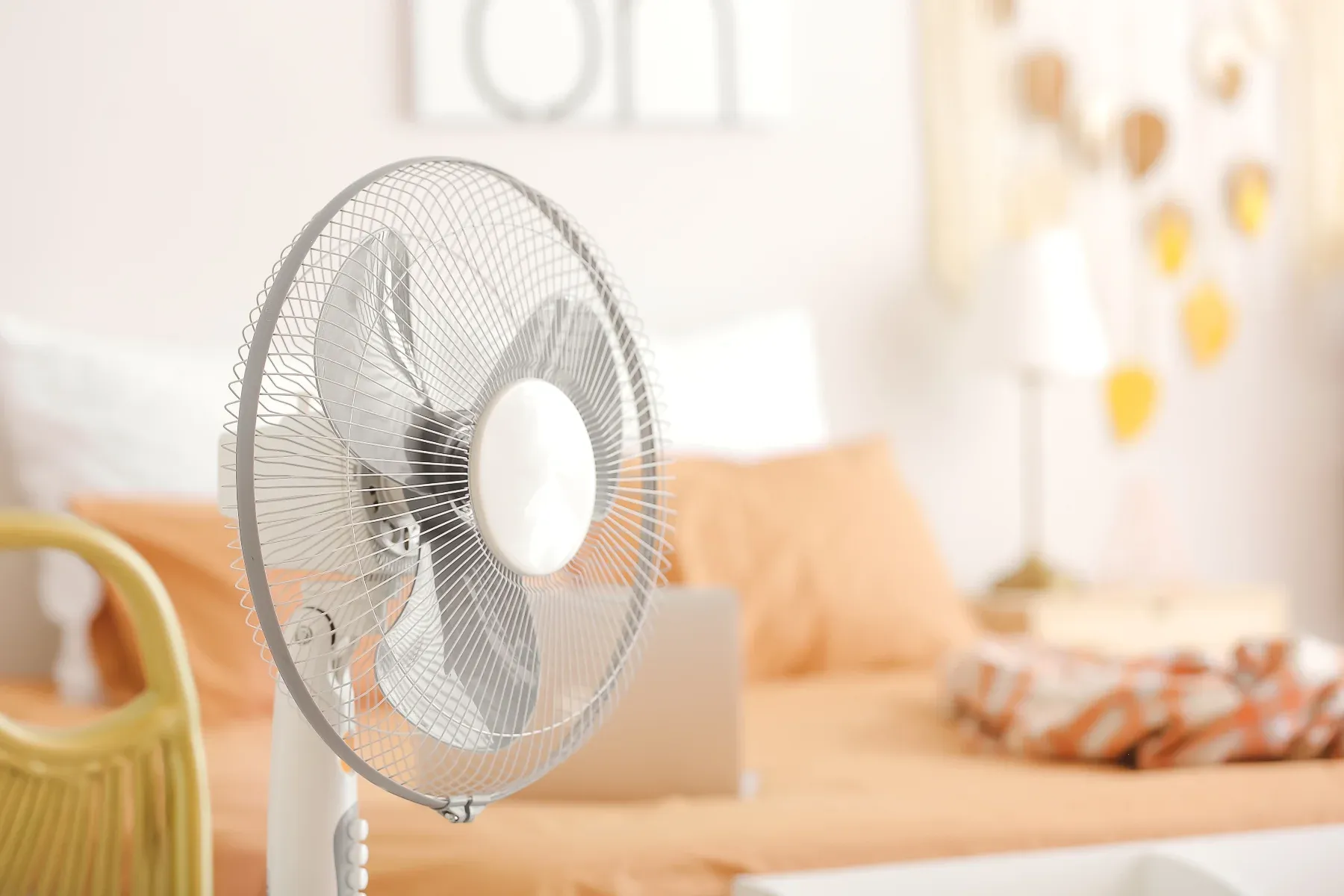
A bed air conditioner is any system that pushes cooled or ambient air into your bed. That includes bed fans, forced-air units like BedJet, and bed AC units that duct air under the covers. Some create a wind-chill effect on the skin, which feels nice for a few minutes.
The catch is physics. Most of these systems don't refrigerate air. They move room-temperature air faster, so if your bedroom is 78°F, that's roughly the air hitting your skin.
An air conditioner for the bed can only work with the air it's given.
Why Does Water Cool a Bed Better Than Air?
Water is a far better heat mover than air. Scientists call this thermal conductivity, and water's is roughly 25 times greater than air's.
According to a resource from the University of Illinois Physics site, water has a thermal conductivity roughly 25 times greater than that of air.
This means that water can absorb and transfer heat much more efficiently than air.
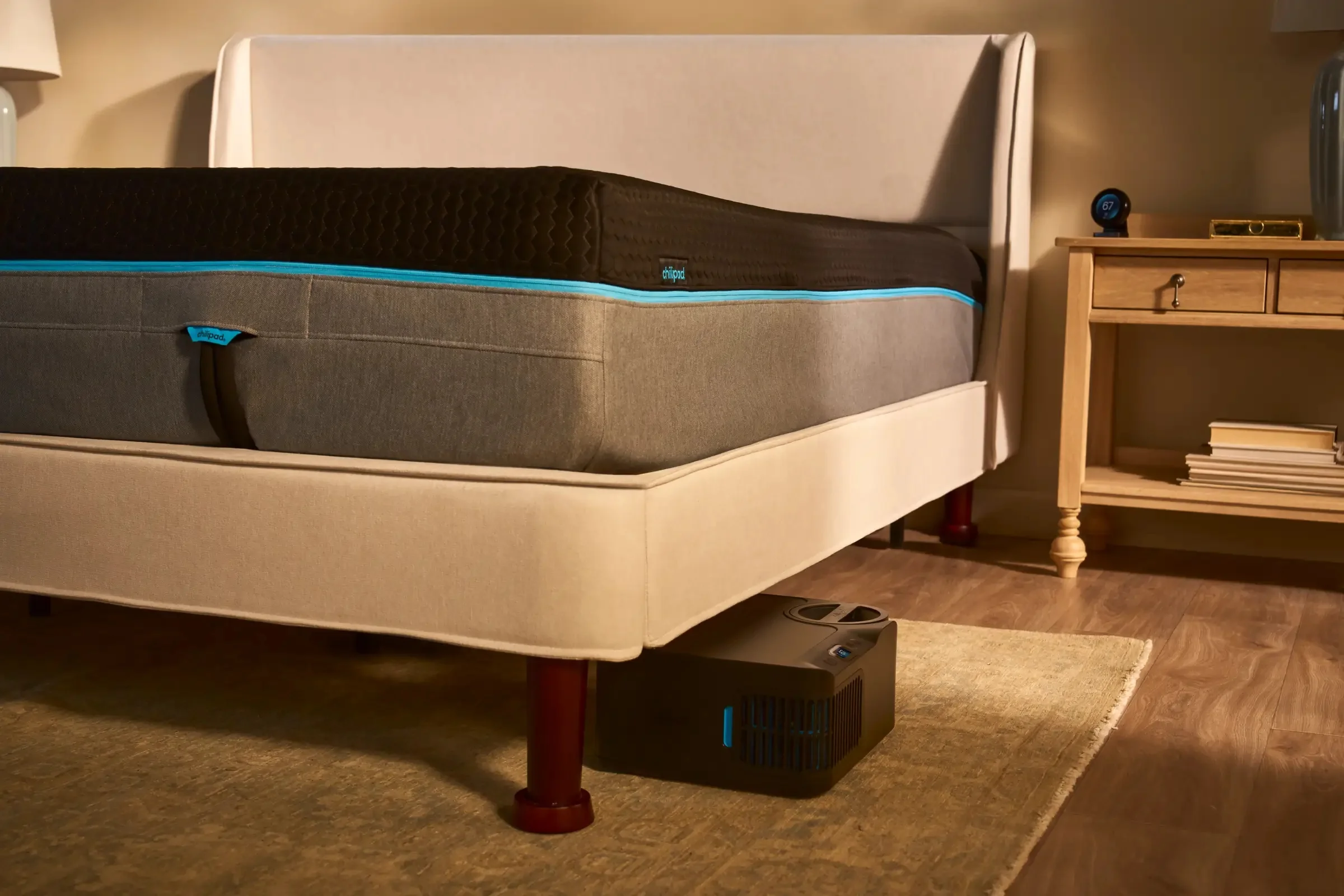
When you lie on a water-cooled mattress topper, the water circulating through the system can quickly absorb excess body heat and disperse it away from your body, maintaining a cooler and more stable sleeping surface.
Ever wonder why 70°F water feels cooler than 70°F air? Water is 800 times denser than air, meaning more molecules are in contact with your skin at any given moment.
This increased molecular contact allows water to pull heat away from your body much faster than air can.
It's the same reason a 70°F pool makes you shiver while a 70°F room feels perfect. Density plus conductivity equals serious heat removal. Your bed can put that physics to work every night.
Water-Based Comfort. Zero Compromises
Chilipad 2.0 circulates temperature-controlled water through a thin mattress pad, cooling or warming your bed from 55°F to 115°F. Control it from the included Chilipad Remote on your nightstand, the app, or the Dock buttons. No subscriptions, no paywalls, and a two-year warranty. Just cold sleep.
What Are the Downsides of Air-Based Bed Cooling?
Air-based bed cooling systems, also called bed fans, often create uneven cooling patterns, leading to hot and cold spots on the bed. This inconsistency can disrupt sleep as the body constantly adjusts to varying temperatures.
There are a few more tradeoffs worth knowing before purchasing a bed cooler:
- Room temperature sets the ceiling. Their reliance on ambient room temperature means they struggle to maintain comfortable temperatures in warm environments, particularly during summer.
- Noise. Fans move air, and moving air makes sound. At higher power settings, some bed fans compete with white noise machines for airtime.
- Floating sheets. Forced air has to go somewhere, so it lifts your bedding. If you like the weight of covers on your body, an air system works against you.
- Blanket interference. Heavy or weighted blankets restrict airflow, which cuts the cooling right when you want cozy and cool at the same time.
Real Sleeper. Real Results - Best investment yet. Terrible night sweats was causing me to have miserable sleep and now I am able to sleep comfortably all night without having to kick off the sheets, change out of my sweaty pajamas, or turn on a fan. Highly recommend. - Michelle L (Trustpilot)
What Does the Research Say About Bed Cooling?
A 2026 study from Loughborough University, published in the peer-reviewed journal Building and Environment, tested a water-based cooling mattress topper in bedrooms heated to 86°F. The results were hard to argue with.
The mattress topper restored total sleep time to normal levels, added an average of 19 minutes of sleep, and helped participants fall asleep 10 minutes faster than standard bedding. [1]
Participants also reported large improvements in comfort and less time spent awake. The researchers concluded that cooling the bed directly is an effective, low-energy alternative to running air conditioning all night. [1]
The broader science backs this up. Research on sleep and temperature shows that heat exposure during the night increases wakefulness and reduces both REM and deep sleep, the stages your body may rely on most for recovery. [2]
Bed Cooling System Comparison: Water vs. Air
Which Bed Cooling System Is Best for Couples?
Water wins here too, and it's not close. Air-based systems tend to blast air in one direction, leaving one side chilly and the other still too warm. This uneven temperature can wake you, or your partner, in the middle of the night.
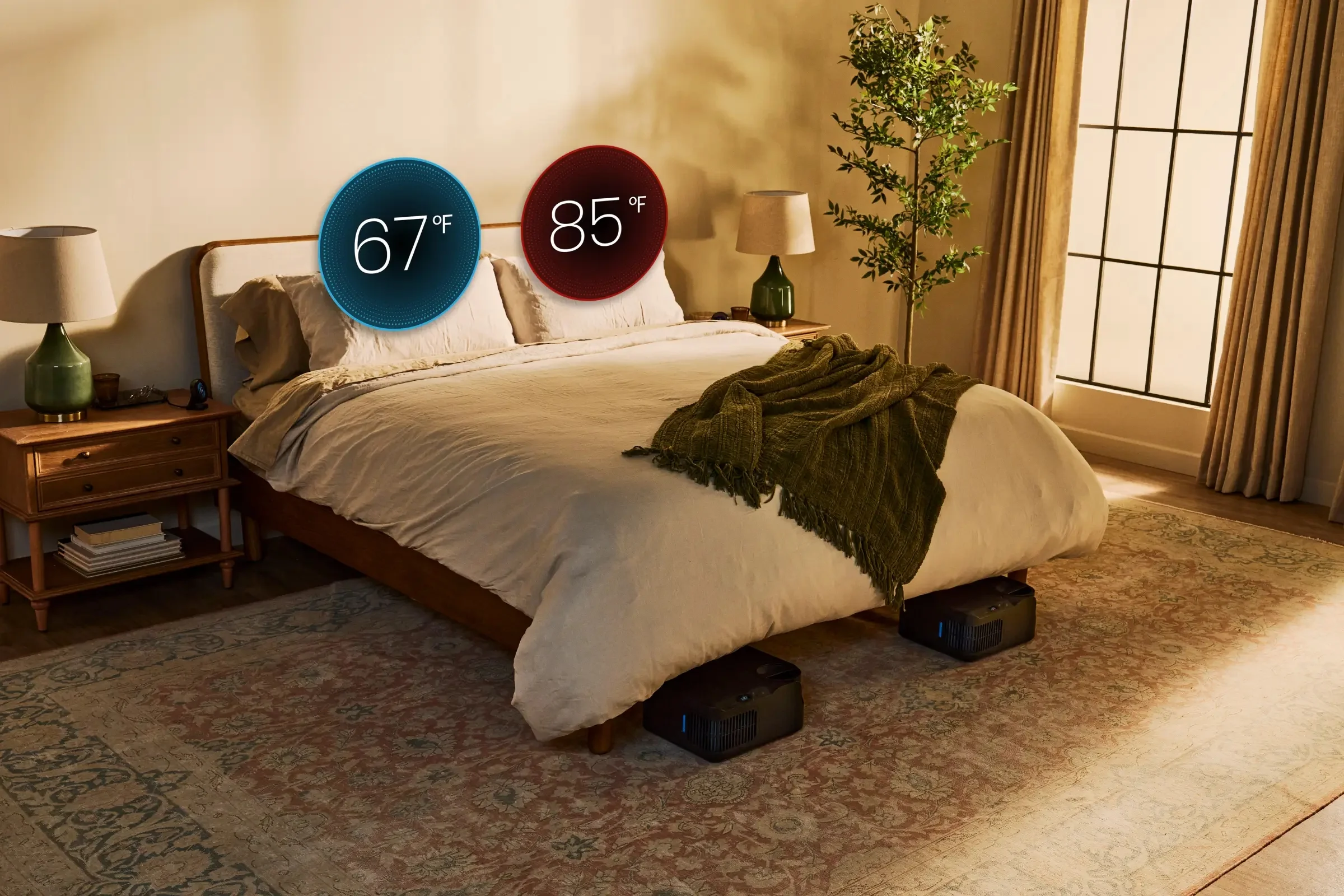
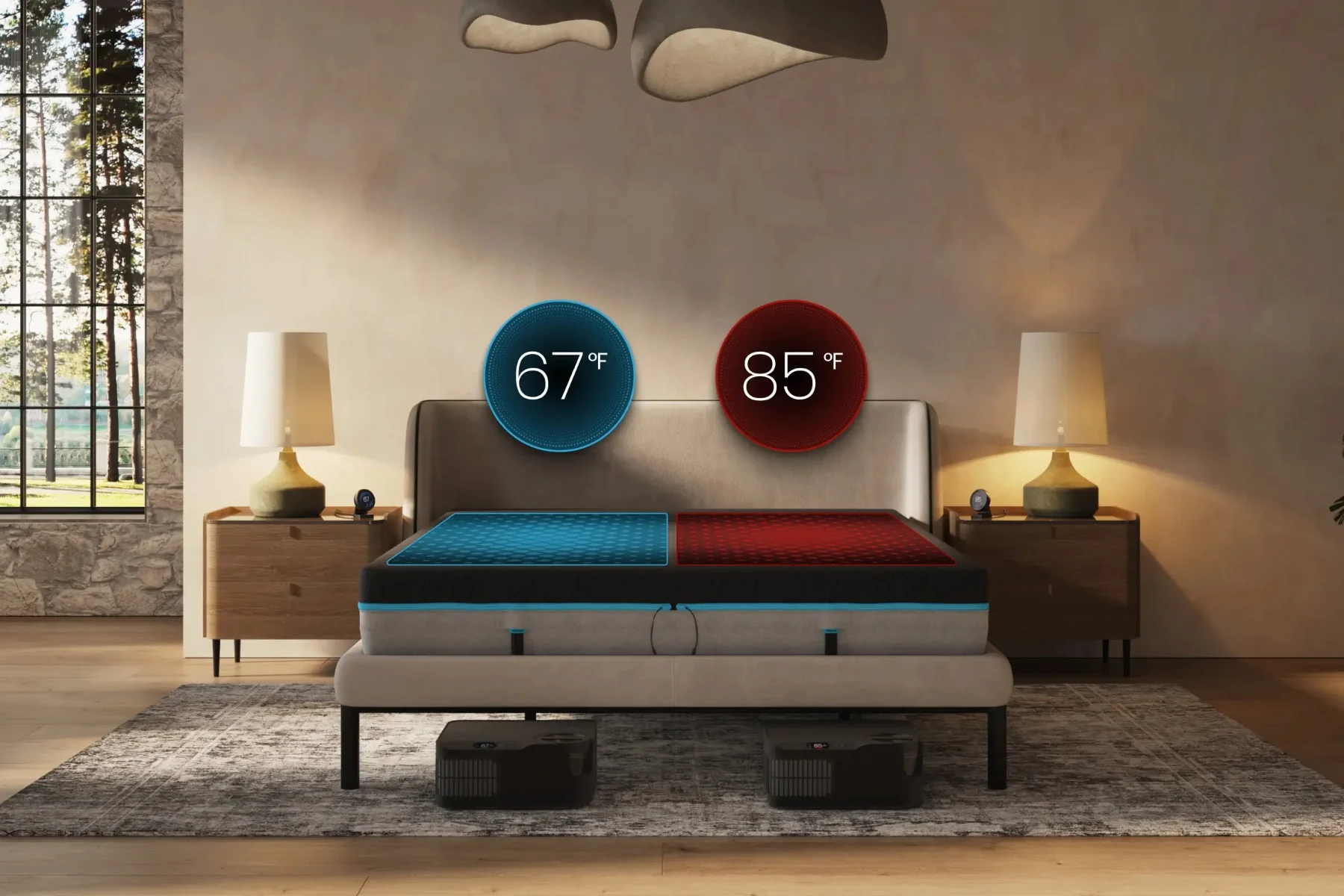
A dual-zone water system gives each sleeper their own setting. One side runs cold, the other runs warm, and nobody negotiates the thermostat at 2 a.m.
Each sleeper can run their preferred setting, cool, warm, or neutral, without affecting the other side.
The Bottom Line
Air-based bed cooling feels like relief. Water-based bed cooling delivers it. Because water moves heat about 25 times better than air and doesn't depend on your room temperature, a water-based bed cooling system keeps your sleep surface cool, even, and quiet all night.
Peer-reviewed research now shows what hot sleepers already suspected. Cooling the bed itself may help you fall asleep faster and stay asleep longer. If your current setup is a fan pointed at the mattress, physics has better options.