Key Takeaways
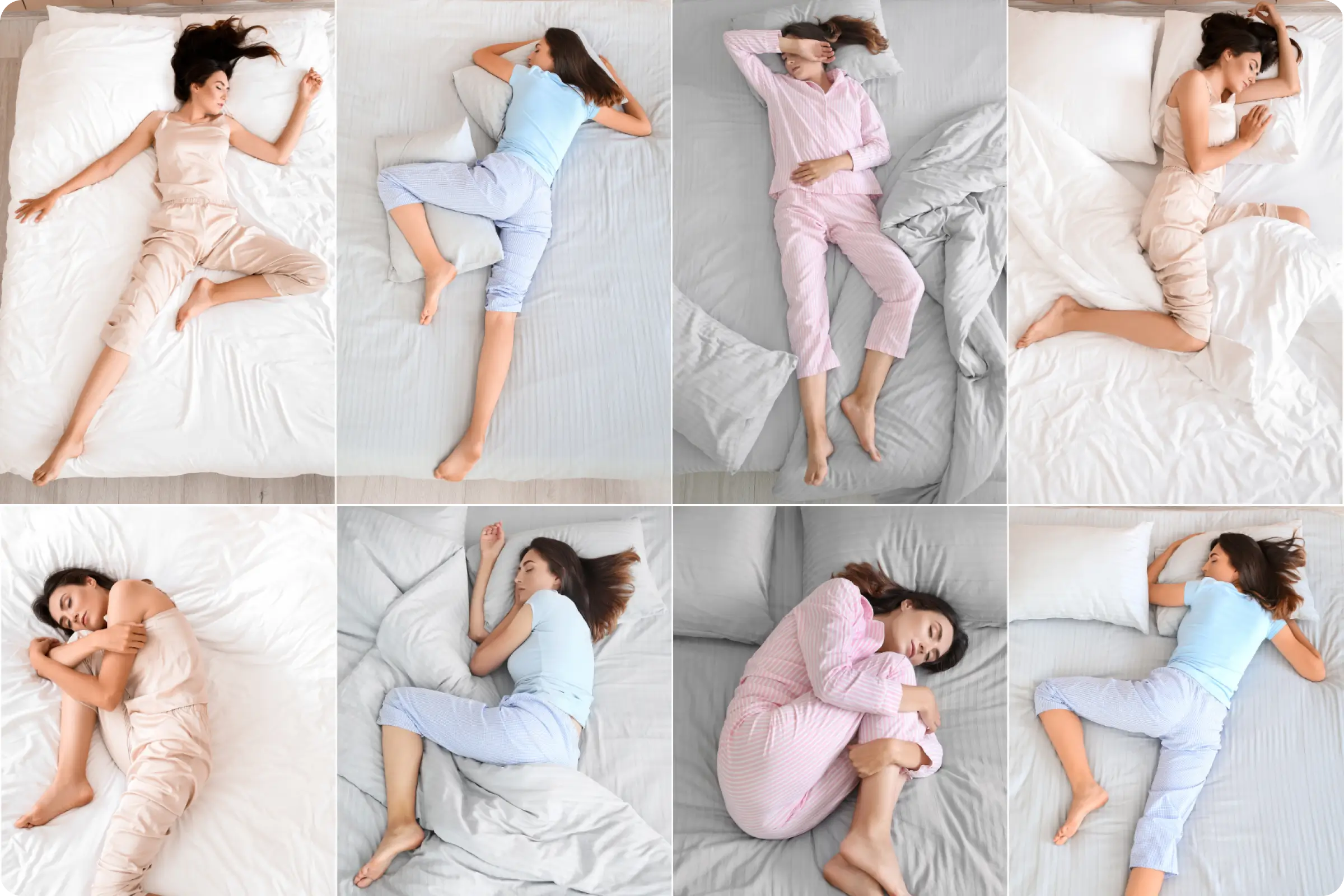
Your sleep position goes beyond just side, back, or stomach. Named styles like the fetal position, log sleeper, soldier, starfish, and freefaller each affect pain levels, breathing, spinal alignment, and overall sleep quality differently.
- Most people settle into one of a handful of named positions. Fetal, starfish, soldier, log, freefaller, or the classic side, back, and stomach styles.
- Side sleeping, especially on your left side, tends to support smoother breathing and digestion. It can help with snoring, acid reflux, and pregnancy comfort.
- Back sleeping positions like the soldier or starfish support healthy spinal alignment, but they may make snoring or sleep apnea worse for some people.
- Stomach sleeping, including the freefaller, might cut down on snoring. It often leads to neck tension or lower back strain from awkward spinal alignment.
- Combination sleepers move throughout the night. That can reduce pressure buildup, but it makes pillow support and consistent temperature control more important.
Short Answer
The most recognizable sleeping position names are fetal, starfish, soldier, log, yearning, and freefaller. Each one describes a specific way the body settles during sleep, and each affects your spine, airway, and joints differently.
The way you sleep affects more than comfort. Your position through the night shapes spinal alignment, breathing patterns, pressure on joints, and how well your body recovers.
Most people have a default position they return to night after night without thinking much about it. Knowing the common sleeping position names and what each one does to your body helps you figure out why you might wake up stiff, sore, or tired even after a full night in bed.
There is no single correct position. The best one depends on your body, your health history, and what you find comfortable. When asked to pick the best sleeping position, the Cleveland Clinic recommended rotating between side and back sleeping as the least stressful option for the spine over time. [2]
People spend roughly a third of their lives asleep. [1] The position you choose for all those hours matters more than most give it credit for.
Side, Back, or Stomach. Chilipad 2.0 Has You Covered
Some sleep positions trap more heat than others. While you work on finding the right position, Chilipad 2.0 handles your bed surface temperature from 55 to 115°F so overheating is never part of the equation.
What Are the Different Sleeping Positions Names
The best sleeping position supports healthy spinal alignment from your hips to your head.
That foundation matters whether you're dealing with shoulder pain, back pain, acid reflux, or just trying to wake up feeling less like you slept on a park bench.
A few simple stretches before bed can help your body settle into whatever position you land on. They also support the deeper sleep stages where recovery happens most.
Below are the different sleeping positions' names, what they look like, and what each one means for how you feel the next morning.

The Fetal Position
The fetal position is the most popular sleep position and one of the easiest on your spine.
UK sleep expert Professor Chris Idzikowski calls it both the most popular and one of the most beneficial positions. It makes sense when you think about it. You spent about nine months curled up that way before you saw daylight.
It works with your body rather than against it. Sleeping on your side with your knees drawn up toward your chest keeps your spine in a relatively natural curve. It can reduce pressure on the lower back and may help cut down on a partner's snoring by keeping airways more open than back sleeping does.
More women than men tend to favor this position. About 41% of people sleep in the fetal position overall, and about 37% consider it the best sleep position. [3]
If the fetal position causes hip discomfort, placing a soft pillow between your knees takes the pressure off without giving up the position entirely.
Benefits:
- Supports natural spinal alignment when you're not curled too tightly
- May reduce snoring and mild sleep apnea by keeping airways more open
- Can ease lower back pressure compared to stomach sleeping
- Recommended as a comfort position during pregnancy [4]
Caution:
- Curling too tightly can strain the neck and upper back
- May cause shoulder or hip stiffness if you stay in one position for hours
- Can restrict deep breathing if you're tucked in too compactly
For more on sleeping comfortably during pregnancy, read the article on how to sleep better when pregnant.

The Starfish Position
The starfish spreads your weight evenly and keeps your spine neutral. The tradeoff is a higher risk of snoring.
If you sleep flat on your back with your arms overhead and legs stretched out to the sides, you're a starfish sleeper. The name is quirky. The position has real benefits.
The starfish can reduce shoulder and lower back pain, protect your neck, and is one of the least likely positions to cause facial wrinkles over time.
The tradeoff is the same one that comes with most back sleeping: a higher chance of snoring and, for some people, worsened sleep apnea. If snoring is a problem, a small pillow under the knees can help reduce lower back pressure and make it easier to shift toward a side position.
About 5% of people choose the starfish as their default sleeping position. [5]
The Yearner Position
The yearner is a side-sleeping position that tends to support better airflow than back sleeping.
The yearner is a side sleeping position where both arms stretch out in front of the body, as if reaching for something. It sits between the fetal position and a fully flat side position.
Because it's still a side position, it tends to keep the airway cleaner. Three reasons:
- Side sleeping keeps the tongue and soft tissues from collapsing backward into the airway
- It can improve airflow compared to lying flat on your back
- It may reduce mild, position-related snoring
The main downside is for people with arthritis, who may wake up with arm or shoulder stiffness after hours in this position. About 13% of people sleep in the yearner position.
The Freefaller Position
The freefaller is rough on your neck and spine. But, it remains one of the most common positions overall.
The freefaller is a stomach sleeping position. The sleeper lies face-down with their head turned to the side and arms wrapped around or tucked under the pillow.
It's considered the second most popular position overall, though about 26% of people also rate it as the worst.
Where It Helps:
- Can reduce snoring compared to back sleeping
- May feel grounding or comforting for some sleepers
- Can help certain people fall asleep faster
Where It Hurts:
- Strains the neck from constant rotation to one side
- Flattens the natural curve of the spine
- Can worsen lower back pain
- Puts added pressure on shoulders and hips
- May cause facial pressure and skin irritation over time
About 17% of people sleep in the freefaller position, while approximately 7% sleep prone on their stomach overall. [6]
The Log Position
The log is a simple side position that reduces arm numbness and supports your airway.
The log is a side sleeping position where the sleeper lies on their side with both arms down close to the body, straight and parallel to the spine. The shape is exactly what the name suggests.
Arms-down positioning means less chance of waking up with numbness in the hands or arms compared to the yearner position. It's also a good choice if snoring is a concern, since it shares the airway benefits of side sleeping.
People with arthritis may find this position causes joint stiffness or discomfort by morning. About 6% of people prefer the log as their default sleeping position.
The Soldier Position
Back sleeping distributes weight evenly, but it raises your snoring risk.
The soldier position is flat on the back with both arms down close to the sides. It's a minimal-movement position that spreads weight evenly across the body.
Is Back Sleeping Best for Spinal Alignment?
Back sleeping is often considered the best position for spinal alignment. It keeps the head, neck, and spine in a neutral position with weight spread evenly. The soldier position does this well when paired with the right pillow height.
Any form of back sleeping raises the chance of snoring and can worsen acid reflux. A small pillow under the knees maintains the natural curve of the lower back and takes some pressure off the lumbar spine.
About 11% of people prefer the soldier position. [7]

Spooning Position
Spooning triggers oxytocin release, which helps both partners fall asleep faster. The catch is that body heat from two people adds up quickly.
Spooning is a side position for two. One person lies behind the other, both facing the same direction, with the person in back holding the person in front close to their body.
Physical closeness stimulates the release of oxytocin, a hormone that reduces stress, promotes bonding, and supports falling asleep faster. [8] Even 10 minutes of closeness can trigger that release.
The practical downside: two people sharing a position throughout the night tend to wake each other up more often through movement, temperature overlap, and the occasional accidental elbow.
Spooning is one of the warmest sleeping positions because two people's body heat adds up fast. The Chilipad 2.0 bed cooling system offers dual-zone temperature control, letting each person manage their side of the bed temperature independently. That helps a lot when spooning gives way to rolling apart by 2 AM.
Sleeping on Your Back
Back sleeping is less common than people think. It's only about 8 to 10% of adults who sleep this way.
Back sleeping can work well for several reasons:
- Reduces sleep wrinkles from face-to-pillow contact
- May relieve sinus buildup when the head is slightly elevated
- Spreads body weight more evenly than side sleeping
- Keeps the head, neck, and spine in a neutral position
- May reduce heartburn and acid reflux with proper elevation
But it comes with real trade-offs:
- Increases the risk of snoring
- Can worsen obstructive sleep apnea
- May not be comfortable for people with lower back pain without a pillow under the knees
Side Sleeping
Side sleeping is the most common position overall, and it has the most research behind it.
About 60% of adults prefer it. [10] The benefits are solid:
- May relieve acid reflux and lower the risk of GERD, particularly on the left side
- Can reduce back and neck pain with proper pillow support
- Reduces snoring and breathing difficulties
- Supports the brain's glymphatic system, which clears waste during sleep [9]
Side sleeping is the default recommendation for most people, most health conditions, and most life stages. That doesn't mean it's without trade-offs. Shoulder and hip pressure are the most common complaints, and both are manageable with the right pillow setup.

Stomach Sleeping
Stomach sleeping is the least recommended position for most people because it puts real strain on the neck and spine.
Fewer than 10% of people sleep primarily on their stomach. It disrupts the spine's neutral alignment and tends to cause neck, back, shoulder, and joint pain from the sustained rotation and compression it creates.
The one consistent benefit: stomach sleeping may reduce snoring and relieve some sleep apnea symptoms by preventing the tongue and soft tissue from falling back into the airway.
If stomach sleeping is your position, skip the thick pillow, or avoid one entirely. A thicker pillow forces the neck into an even more awkward angle, which makes the strain worse.
What the Research Says About Sleep Position
Research consistently links sleep posture to spinal symptoms, but there's no single position that works for everyone.
A 2025 systematic review on sleep posture and back pain found that side sleeping appeared protective against back stiffness and pain in many cases. The evidence wasn't strong enough to make a universal call. [11] The researchers noted there weren't enough high-quality studies to fully answer the question.
What the research does show consistently: there's a real relationship between sleep posture and spinal symptoms. The right position varies by person, health history, and what they're trying to address. [12]
Side sleeping has one clear edge over the others. Research links it to better glymphatic clearance in the brain. The process by which cerebrospinal fluid flushes out metabolic waste during sleep. For that reason alone, it tends to come out slightly ahead when comparing positions head to head.
The Bottom Line
No single sleeping position works for everyone — but side sleeping has the most research behind it and fits the widest range of people.
Now you know the names. Not every position will work for your body. The right one depends on your pain patterns and what helps you stay asleep through the night without waking up sore.
Back sleeping works well for spinal alignment when snoring isn't a factor. Stomach sleeping is the hardest on the neck and spine for most people, but the body tends to make its own choices overnight regardless.
Whatever position you land in, the quality of sleep you get there matters more than the position itself. Shifting a habit that's been forming for years takes time. Pillows are your most practical tool for nudging your body toward a better position gradually rather than forcing an uncomfortable change overnight. [13]
Frequently Asked Questions About Sleep Positions
Which Sleeping Position Is Considered the Healthiest?
What Sleeping Position Helps With Back Pain?
Do Different Sleeping Position Names Mean Different Health Impacts?
What Are the Most Common Sleeping Position Names?
Is It Okay to Sleep in Multiple Positions?
Disclaimer: This blog is for informational purposes only and is not a substitute for professional medical advice, diagnosis, or treatment. Always talk to your healthcare provider about your symptoms, conditions, or treatment options.