
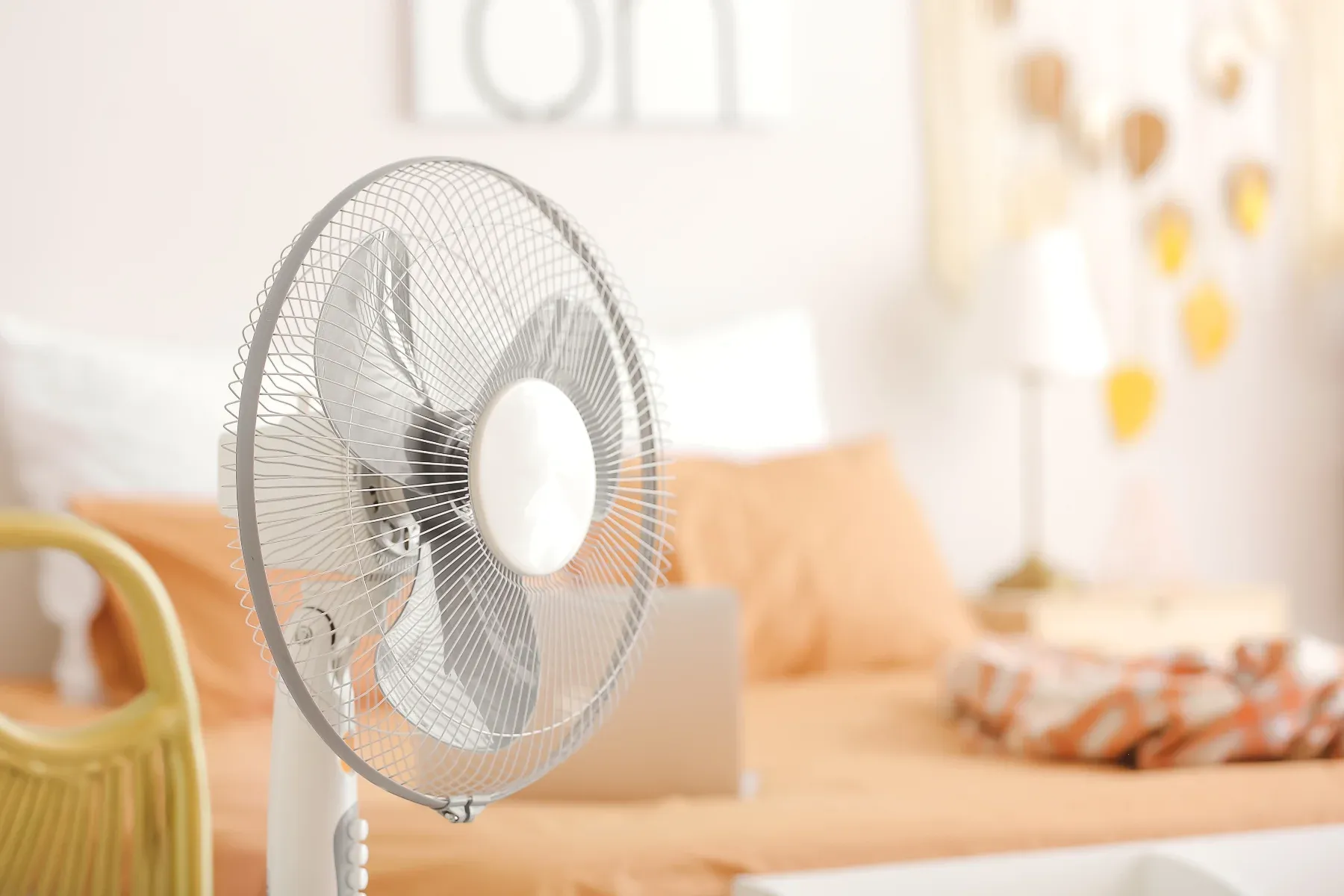
Key Takeaways
Fans feel refreshing in the moment, but they’re not always the best tool for cooler, healthier sleep.
- Fans can move air nicely, but they also stir up dust, dry out your skin and sinuses, and may disrupt your sleep.
- Cooler temperatures support better rest, ideally between 60–68°F. Fans don’t actually cool the room—they just push warm air around.
- Running a fan all night can trigger allergies, cause stiffness, dry out your eyes, or leave you feeling congested by morning.
- Cooling mattress pads and temperature-control bed systems offer a more effective way to stay cool and comfortable through the night.
We all know how uncomfortable it is to try sleeping in a hot, stuffy room. Sleeping in a roasting and stuffy space makes it more difficult to fall asleep, harder to sleep deeper, and impossible to stay comfortable throughout the night.
During hot summer nights, you may consider using a fan instead of relying on air conditioning to help you sleep better. However, a fan might not be the ultimate solution we believe it to be. Despite its apparent simplicity, a fan may not provide the relief we expect.
Quick Fact: Analysis from WebMD suggests the "sweet spot" for restorative sleep is between 65 and 68°F. When your room stays in this range, your body drops to its ideal sleeping temperature much faster. [1]
Here is why your fan might be the reason you’re waking up tired, and how to actually fix your sleep temperature.
Is Sleeping with a Fan on Bad for You?
For most of us, flipping on a fan is a seasonal ritual. It's a simple, harmless way to cope with a heatwave. But while a fan isn't exactly "dangerous," it does come with a hidden list of side effects that can quietly sabotage your sleep quality.
Most of these issues aren't that serious, but they are noticeable enough to explain why you might wake up feeling groggy, congested, or stiff. If you're relying on air movement to stay comfortable, you’re often just trading one discomfort (heat) for another (dryness and allergens).
Expert Insight: If you're looking for true cooling without the side effects of blowing air, our water-based system offers a distinct advantage over air-based competitors like BedJet.
While air-based systems can further dry out your skin and bedroom environment, water-cooled mattress pads regulate your temperature directly through the mattress, offering better efficiency and a much more stable sleep climate.
Cooler Sleeper—No Fans Needed!
If you’re tossing and turning, your mattress is likely too hot. Fix your sleep environment with a Chilipad. It gives you precision control between 55°F and 115°F without the noise of fans or blowing air.
8 Reasons to Think Twice About Sleeping with a Fan
While a fan provides a quick breeze, the trade-off isn't always worth it. From air quality issues to physical discomfort, here are the eight biggest reasons why your fan might be doing more harm than good for your rest.
1. It’s an "Allergy Machine"
Fans don’t just move air; they circulate everything in that air. As the blades spin, they pick up and distribute dust, pollen, and pet dander throughout your room. [2]
If you haven't wiped down your fan blades lately, you’re essentially blowing a concentrated stream of allergens directly toward your face.
This often leads to the "morning trifecta": sneezing, congestion, and itchy eyes.
Sleep Study:A report from the American Academy of Allergy Asthma and Immunology highlighted that seasonal allergies can trigger sleep disorders, ramp up snoring, and tank overall sleep quality.[3]
2. Chronic Sinus Irritation
That constant stream of air is incredibly drying. It evaporates moisture from your nose and throat, which triggers your body to overcompensate by producing excess mucus.
This is why many fan-sleepers wake up feeling "stuffed up" or with a nagging headache.
Pro Tip: If you can't part with your fan, use a humidifier simultaneously to add moisture back into the room.
3. Muscle Stiffness and "Fan Neck"
Have you ever woken up with a stiff neck after a night of cooling off? Concentrated, cool air blowing on one spot for eight hours can cause your muscles to tense up and cramp. This is especially common if the fan is on a high setting and pointed directly at your upper body.
This problem is particularly significant if the fan is positioned close to your face and neck. The constant blast of air can cause the muscles to stiffen up due to prolonged exposure to a cool breeze, waking up feeling sore or with a stiff neck, making it harder to move.
Sleeping Tip: If you aren't ready to ditch the fan yet, try the 'bounce' method: Point the fan toward a wall or the ceiling instead of directly at your bed. This circulates the air throughout the room without the constant, drying blast hitting your skin and muscles.
4. Skin and Eye Dehydration
If you wake up with "tight" skin or red, gritty eyes, your fan is likely the culprit. The constant airflow accelerates moisture loss from your dermis. This is a particular nightmare for contact lens wearers or anyone dealing with eczema or sensitive skin.

5. Increased Congestion
When your throat and nasal passages dry out due to airflow, your breathing becomes less "smooth." This dryness can increase the vibration of tissues in the throat, leading to or worsening snoring—which ruins the sleep quality for both you and your partner.
6. The "White Noise" Trade-off
While some people enjoy the hum of a fan (white noise), even "quiet" models create enough ambient noise (typically 50+ decibels) to disrupt deep sleep cycles.
For sensitive sleepers, these sounds can cause "micro-awakenings" that leave you feeling tired the next morning, even if you don't remember waking up.
Expert Tip: If you’re a light sleeper, you don’t have to choose between staying cool and staying quiet. The Chilipad Dock Pro operates at a whisper-quiet 41–46 decibels.
7. Disturbed Sleep Cycles
Air movement itself can be a physical stimulant. Sudden shifts in air direction or speed (especially from oscillating fans) can pull you out of REM sleep.
In many cases, the tool you’re using to sleep better is actually the thing keeping your brain on high alert.
8. Fans Don’t Cool the Room
This is the biggest misconception: Fans cool people, not rooms. They create a "wind-chill effect" on your skin, but they don't lower the actual ambient temperature of the space.
In extreme summer heat, a fan just pushes warm air around, offering a psychological Band-Aid rather than a real thermal solution.
Smarter Ways to Stay Cool
If you want to stop "circulating" the problem and start solving it, you need to address your bed temperature, not just the air around you.
Unlike air-based systems (like the BedJet) which can be noisy and drying, the Chilipad uses water-based technology to regulate your sleep surface.
- Precision Control: Adjust your bed
- Total Silence: The Dock Pro operates at a whisper-quiet 41-46 decibels.
- No Dry Air: Since it cools your mattress—not your face—you won't wake up with dry eyes or a sore throat.
More Tips for a Cooler Night
- Use linen or bamboo sheets instead of synthetic blends.
- A lukewarm shower 60 minutes before bed helps your core temperature drop naturally.
- Drink water throughout the evening so you aren't "drying out" overnight.
- Keep your bedroom dark during the day to prevent the "greenhouse effect."
Staying cool is about more than just a fan. It’s about optimizing your entire sleep environment. Read our blog to find tips and strategies for staying cool at night.
Final Thought
A fan is a cheap fix, but it isn't a "sleep optimization" tool. If you’re tired of the dry eyes, allergies, and middle-of-the-night heatwaves, it’s time to look at your sleep environment differently.
True comfort comes from regulating your body’s temperature, not just blowing dust around the room.