Key Takeaways
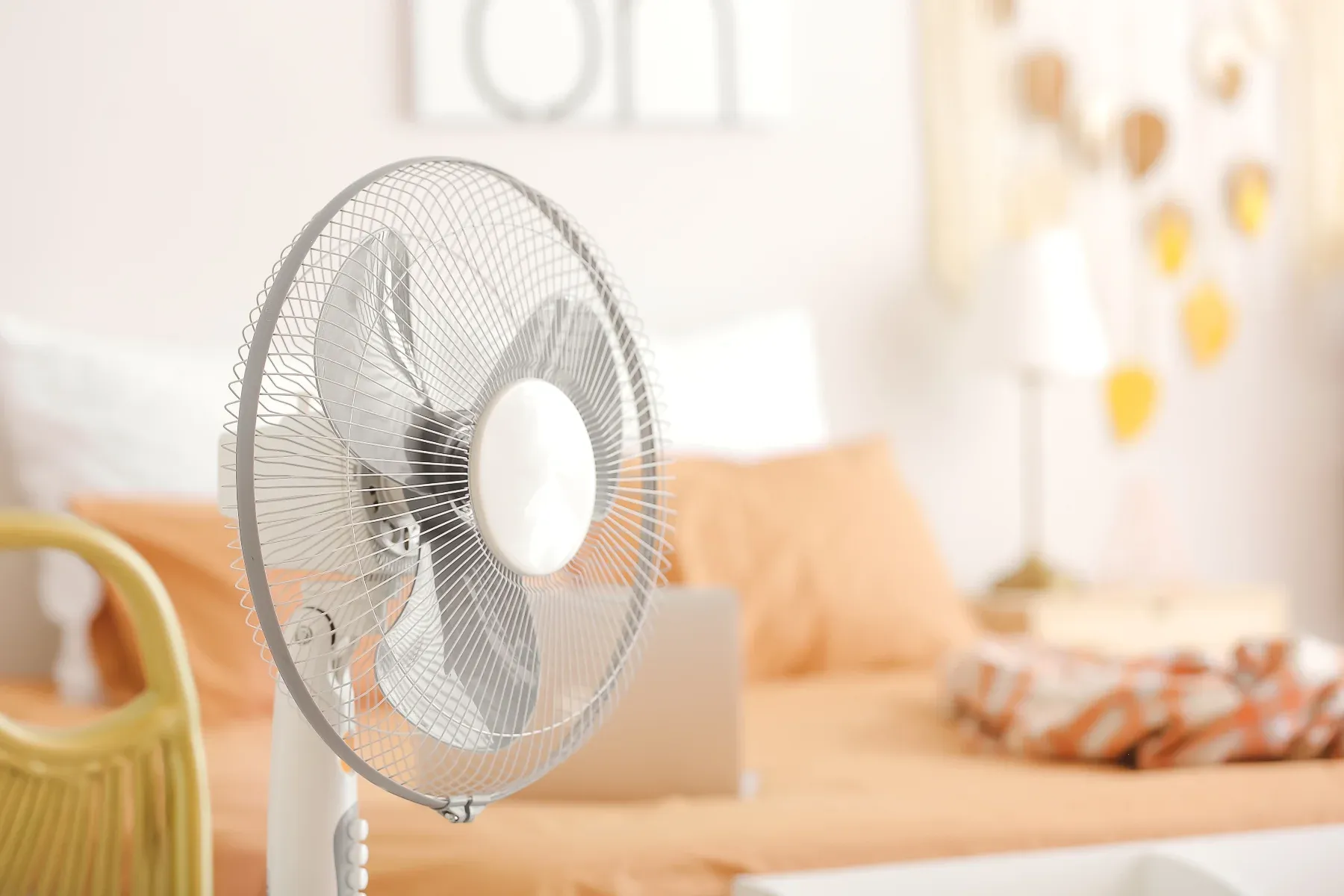
Fans feel refreshing in the moment, but they are not always the best tool for a cooler, healthier sleep environment.
- Fans move air, but they also stir up dust, dry out your skin and sinuses, and can disrupt your sleep in ways you might not connect to the fan until morning.
- Cooler temperatures improve sleep quality, ideally between 60 and 68 degrees Fahrenheit. Fans do not cool the room. They push warm air around.
- The side effects of sleeping with a fan on you include worsened allergies, a sore throat by morning, muscle stiffness, dry eyes, and increased congestion.
- Cooling mattress pads and temperature-control bed systems offer a more direct way to stay cool without the downsides that come with blowing air.
The Short Answer
Sleeping with a fan on is not dangerous, but it comes with real trade-offs. Fans move air around without actually cooling the room, and overnight airflow dries out your throat and sinuses, stirs up allergens, and can cause muscle stiffness by morning. For people who sleep hot, the more direct fix is cooling the sleep surface itself, not the air around it.
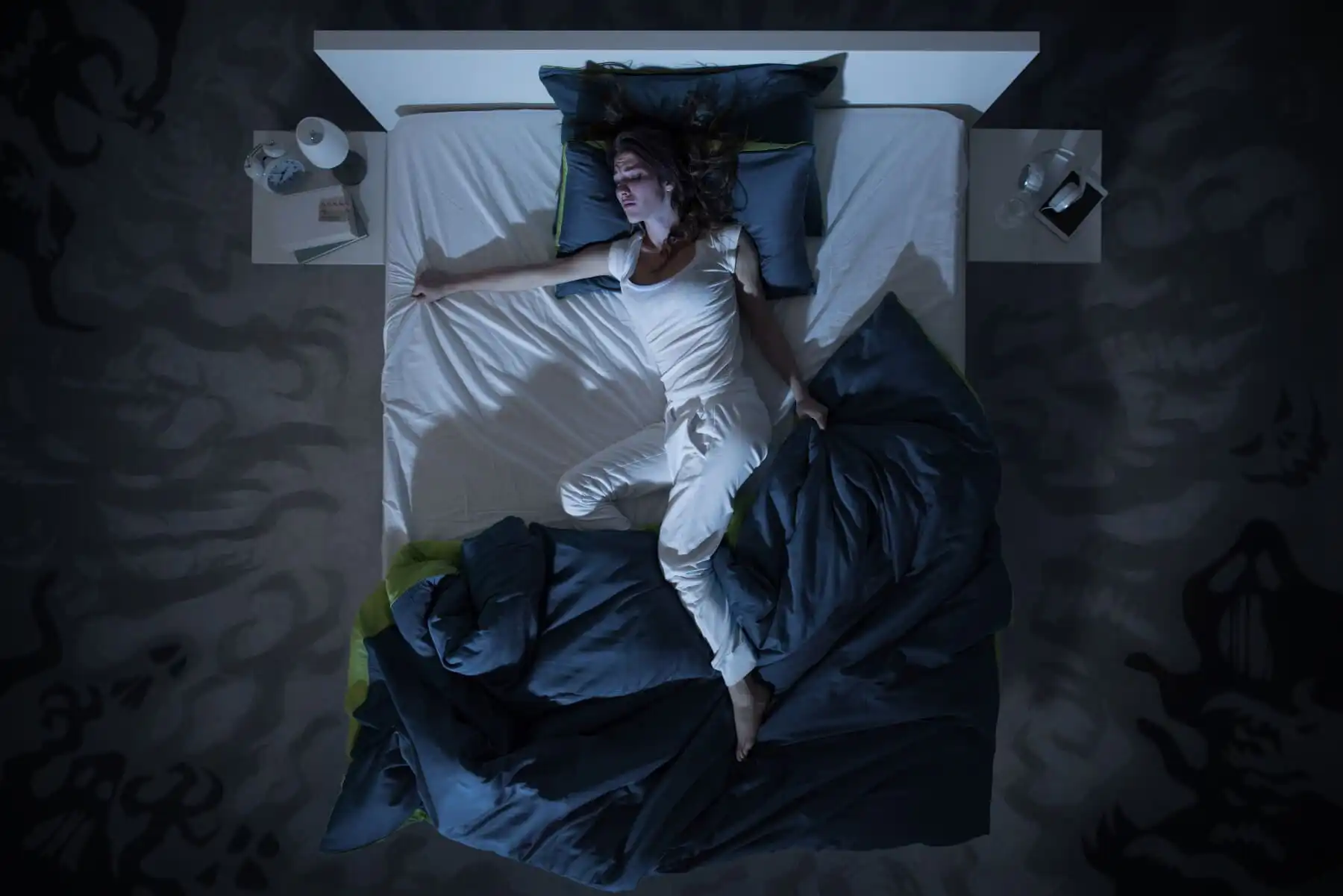
We all know how uncomfortable it is trying to sleep in a hot, stuffy room. Heat makes it harder to fall asleep, harder to stay asleep, and harder to reach the deeper sleep stages where real recovery happens.
A bedside fan feels like the obvious fix. But for a lot of people, it trades one problem for several smaller ones. And if you have ever woken up with a sore throat, dry eyes, or a stuffy nose after a night with the fan running, you already know what those smaller problems feel like.
So is sleeping with a fan on bad for you? Not exactly. But it is doing more than most people realize. Here is what a fan is doing to your sleep environment that you might not be connecting to the fan itself.
Research suggests the sweet spot for restorative sleep is between 65 and 68ºF. When your room stays in this range, your body drops to its ideal sleeping temperature faster and holds it there. [1]
Is It Bad to Sleep With a Fan On?
For most people, flipping on a bedroom fan is a seasonal ritual. A simple, low-cost way to cope with a warm bedroom. And while a fan is not dangerous, it does come with a list of side effects of sleeping with a fan on you that can quietly work against your sleep quality.
Most of these are not serious on their own. But they add up. And they are noticeable enough to explain why you wake up feeling groggy, congested, or stiff when you thought you were doing something good for your sleep environment.
Cooler Sleeper. No Fan Needed
If you are tossing and turning because your mattress is running hot, a fan is not going to fix it. The Chilipad 2.0 gives you precise temperature control between 55 and 115 degrees Fahrenheit without the noise, the dry air, or the allergens.
8 Side Effects of Sleeping With a Fan On You
Here are just a few reasons why sleeping with a fan on can cause discomfort.
1. It’s an Allergy Machine
Fans do not just move air. They circulate everything in that air. As the blades spin, they pick up and distribute dust, pollen, and pet dander throughout the room. [2]
If you have not cleaned your fan blades recently, the blades may be collecting dust, and the fan can circulate dust, pollen, and other allergens straight toward your face for eight hours./p>
The result is the combination most fan sleepers recognize. Sneezing, congestion, and itchy eyes by morning. A runny nose and nasal congestion are also common overnight reactions.
Research confirms that seasonal allergens circulating in the sleep environment can trigger sleep disorders, worsen snoring, and reduce overall sleep quality. [3]
So can fans make you sick? Not directly. But if you already deal with allergies or respiratory sensitivity, a fan in your bedroom may trigger allergies, especially when triggers like pet dander or house dust mite are already present.
2. Chronic Sinus Irritation and Sore Throat
That constant breeze is drying. It pulls moisture from your nose and throat all night, which triggers your body to overproduce mucus to compensate. It also should not be blowing directly on your face while you sleep.
This is why many fan sleepers wake up stuffed up, with a sore throat, or with a headache that was not there when they went to bed.
If you keep waking up with a throat that is sore and cannot figure out why, the fan is often the first thing worth ruling out.
If you cannot part with the fan, running a humidifier at the same time can add moisture back into the sleep environment and soften the effect.
Keeping the fan 2 to 3 feet away from your bed can also reduce drying of the nasal passages.
3. Muscle Stiffness and Fan Neck
Have you ever woken up with a stiff neck after a night of the fan running? A cool breeze, or a breeze directly on one spot overnight, can leave you with stiff or sore muscles, muscle aches, or sore muscles by morning, particularly if the fan is aimed at your upper body or face.
The fix is simple if you still want the air movement. Point the fan toward a wall or ceiling instead of directly at the bed to reduce physical discomfort from cold airflow.
Or use oscillating fans if you want circulating air without the sustained targeted blast hitting your skin all night.
4. Skin and Eye Dehydration
Tight, dry skin in the morning. Red, gritty eyes. Both are common side effects of sleeping with a fan on you, and both come from the same source. Continuous airflow accelerates moisture loss from the skin and eyes overnight.
If you wear contact lenses, deal with eczema, or have sensitive skin, a fan running all night makes those issues worse in a predictable and consistent way.

5. Increased Congestion and Snoring
When your throat and nasal passages dry out from sustained airflow, the tissues can become irritated and inflamed. That irritation increases vibration in the throat during breathing, which can trigger or worsen snoring.
A sore throat from a fan and worsened snoring often travel together. If snoring is already a concern in your sleep environment, a fan aimed at the bed is not helping either problem.
6. The White Noise Trade-off
Some people genuinely sleep better with the sound of white noise in the background, and a fan delivers that. For some, it is more relaxing than complete silence, and the steady hum acts like a soothing sound that masks outside noise and can help with falling asleep.
That is a real benefit. Some research also linked fan use in infant rooms with a 72% lower risk of Sudden Infant Death Syndrome, but adult comfort and infant sleep guidance should not be treated as the same issue.
The trade-off is that even quiet fan models typically run around 50 or more decibels of ambient noise.
For light sleepers, the sound of white noise from a fan can cause brief wake-ups throughout the night that you might not remember in the morning, but repeated micro-awakenings can leave you feeling tired the next day.
If the sound of white noise is what you are after, a dedicated white noise machine gives you the masking benefit without the airflow, the allergens, or the dryness.
White-noise research also found 80% of babies fell asleep within 5 minutes, though that reflects white noise generally and is not a reason to rely on direct airflow. The Chilipad 2.0 runs at 41 to 46 decibels, quieter than most fans on their lowest setting.
7. Disturbed Sleep Cycles
Moving air itself can be a physical stimulant. Sudden airflow shifts from an oscillating fan can pull you briefly out of deeper sleep stages without fully waking you, not just because of sound or motion.
The thing you are running to improve sleep quality may be the thing keeping your brain in a lighter, more reactive state throughout the night.
8. Fans Don’t Cool the Room
This is the most important one. Fans cool people, not rooms. They create a wind-chill effect on the skin, which can improve body temperature comfort through airflow and support temperature regulation, but they do not lower the actual temperature of the space.
Compared with an air conditioner or full air conditioning, a fan is cheaper but offers less controlled room cooling.
On a hot night, a fan is moving warm air around. It offers the feeling of relief without addressing the underlying thermal problem. If your sleep environment is 78 degrees, it stays 78 degrees whether the fan is running or not. That is the ceiling of what a fan can do.
A ceiling fan has the same limitation, and the same problem applies to BedJet. It blows cooled air at the bed, which is better than a fan, but air cannot pull body heat away from the body efficiently when compared to a water-based bed cooling system like the Chilipad.
Water conducts heat roughly 25 times better than air. That is the physics behind why the Chilipad 2.0 works when fans and air-based systems hit their ceiling
Smarter Ways to Improve Sleep Quality Without a Fan
If you want to stop moving the problem around and start solving it, better sleep often depends on sleep health and stable body temperature, not just cooler room air.
The Chilipad 2.0 uses water-based technology to regulate your sleep surface directly, which is where your body's heat exchange with the bed happens. No blowing air. No noise.
It also avoids the potential side effects associated with overnight airflow, like waking up with a sore throat or dry eyes in the morning.
- Set your bed to a precise temperature between 55 and 115ºF and hold it there all night
- Runs at 41 to 46 decibels, quieter than most fans on their lowest setting
- Cools and warms the mattress surface directly instead of relying on circulating air or a gentle breeze around your face
For more on this, read our guide to staying cool at night and explore additional tips for increasing deep sleep naturally.
A few other changes that help your sleep environment:
- Switch to linen or bamboo sheets instead of synthetic blends that trap heat
- A lukewarm shower 60 minutes before bed helps your core temperature drop naturally
- Drink water throughout the evening so dehydration is not adding to the dryness overnight
- Keep your bedroom dark during the day to prevent heat from building up before you sleep
For more on this, read our guide to staying cool at night.
The Bottom L
Is it bad to sleep with a fan on? Not in an obvious way, and not inherently harmful. But the side effects of sleeping with a fan on you, the sore throat, the dry eyes, the congestion, the allergens, and the noise.
They all can still affect comfort and sleep health in ways that quietly work against the quality of sleep you are trying to get.
A fan is an inexpensive fix for a warm sleep environment, especially compared with air conditioning, but it is a less precise way to cool the room. It is not a sleep tool.
If you are waking up unrested and your room is still the same temperature as when you fell asleep, the fan is doing less than you think.
Cooling your body for sleep means addressing the surface you are lying on. That is where the difference shows up.
Frequently asked questions
Is Sleeping With a Fan On Bad for You?
Can Fans Make You Sick?
What Are the Side Effects of Sleeping With a Fan On You?
Is the Sound of White Noise From a Fan Good for Sleep?
What Is the Best Alternative to a Fan for a Better Sleep Environment?
Disclaimer: This blog is for informational purposes only and is not a substitute for professional medical advice, diagnosis, or treatment. Always talk to your healthcare provider about your symptoms, conditions, or treatment options.