Key Takeaways
The moisture level in your bedroom air shapes how well your body cools down at night, how fast you fall asleep, and whether you stay that way.
- 40% to 60% relative humidity is the range where most adults sleep best.
- Above 60%, sweat stops drying off your skin. Heat builds up. Sleep gets lighter and harder to hold onto.
- Below 30%, dry air starts pulling moisture from your nose and throat overnight. Snoring gets worse. Early waking is common.
- A hygrometer tells you where you actually stand. Most people are guessing, and guessing wrong.
- Temperature and humidity move together. Fixing one without the other leaves the problem half solved.
Short Answer
The best humidity for sleep is 40% to 60%. At those levels, your body can cool itself the way it needs to overnight. Go too high and heat traps against your skin. Go too low and your airways dry out. Both mess with your sleep, just in different ways.
Most people have fixed their room temperature and still wake up feeling off. The air itself is usually what they missed.
Humidity is how much moisture is in the air. It sounds like a small thing. It is not. Too much and your body can not cool down the way it needs to for deep sleep. Too little and you wake up at 4am with a dry throat and no idea why.
The best humidity for sleep is 40 to 60 percent. Here is what that range actually does for your body, and how to get there if yours is off.
What Does Bedroom Humidity Do to Your Sleep?
Your body has one main way to cool itself at night: sweat dries off your skin and takes heat with it. That process only works when the air has room for moisture.
When humidity is high, the air is already full. Sweat stays on your skin. Heat stays with you. Your body keeps working to cool down when it should be winding down.
Dry air flips the problem. It pulls water from whatever it can reach. Your nose, your throat, your lips. That kind of slow overnight drying is easy to sleep through until suddenly you are not sleeping anymore.
Both directions cost you sleep. The difference is when you feel it. High humidity tends to stop you from falling asleep. Low humidity tends to pull you out of sleep later in the night.
Your Room's Humidity Is Only Half the Equation
Your room's humidity is only half the equation. The Chilipad 2.0 controls the temperature of your mattress surface directly, so it handles the heat that builds up between you and the bed, too. Set your exact sleep temperature from 55 to 115º F.
The Ideal Humidity Level for Sleep
Most smart thermostats and home climate systems display indoor humidity alongside temperature. So, if yours does, aim for 45% to 50%.
That's where most people report sleeping best, within the broader 40% to 60% range that sleep research supports.
A few things shift the ideal number:
- Hot sleepers: Hot sleepers usually do better toward the lower end, around 40 to 45 percent. Less moisture means sweat dries faster. Understand why you sleep hot.
- Temperature: Temperature changes how humidity feels. Fifty percent at 65 degrees is very comfortable. Fifty percent at 76 degrees feels sticky and warm.
- Seasons: Seasons matter. Summer usually calls for a dehumidifier. Winter heating dries air out fast, so a humidifier often helps.
The number on a hygrometer is a starting point. How you feel in the morning is the real test.
What Happens When Humidity Is Too High?
High humidity is the more common problem for people who sleep hot. When the air climbs past 60 percent, sweat stops doing its job. Heat builds up against your skin. Your core temperature stays up when it needs to come down.
Research on sleep and body temperature shows that your core temp has to drop to fall asleep and stay in the deeper stages that actually restore you. Humidity gets in the way of that drop. A ceiling fan helps with airflow but does not fix the moisture itself. [1]
Signs that your humidity is too high at night:
- You tend to wake up multiple times: Light sleep in the second half of the night breaks easily when you are too warm.
- Sheets feel damp by morning: Sometimes that is from sweating. Sometimes the air is just too full of water to absorb anything from the fabric.
- You sweat more than the room temperature seems to warrant: High humidity makes a 70-degree room feel like 78.
High humidity also feeds mold and dust mites. For anyone with allergies or asthma, that is a separate reason to keep it in check.
What Happens When Humidity Is Too Low?
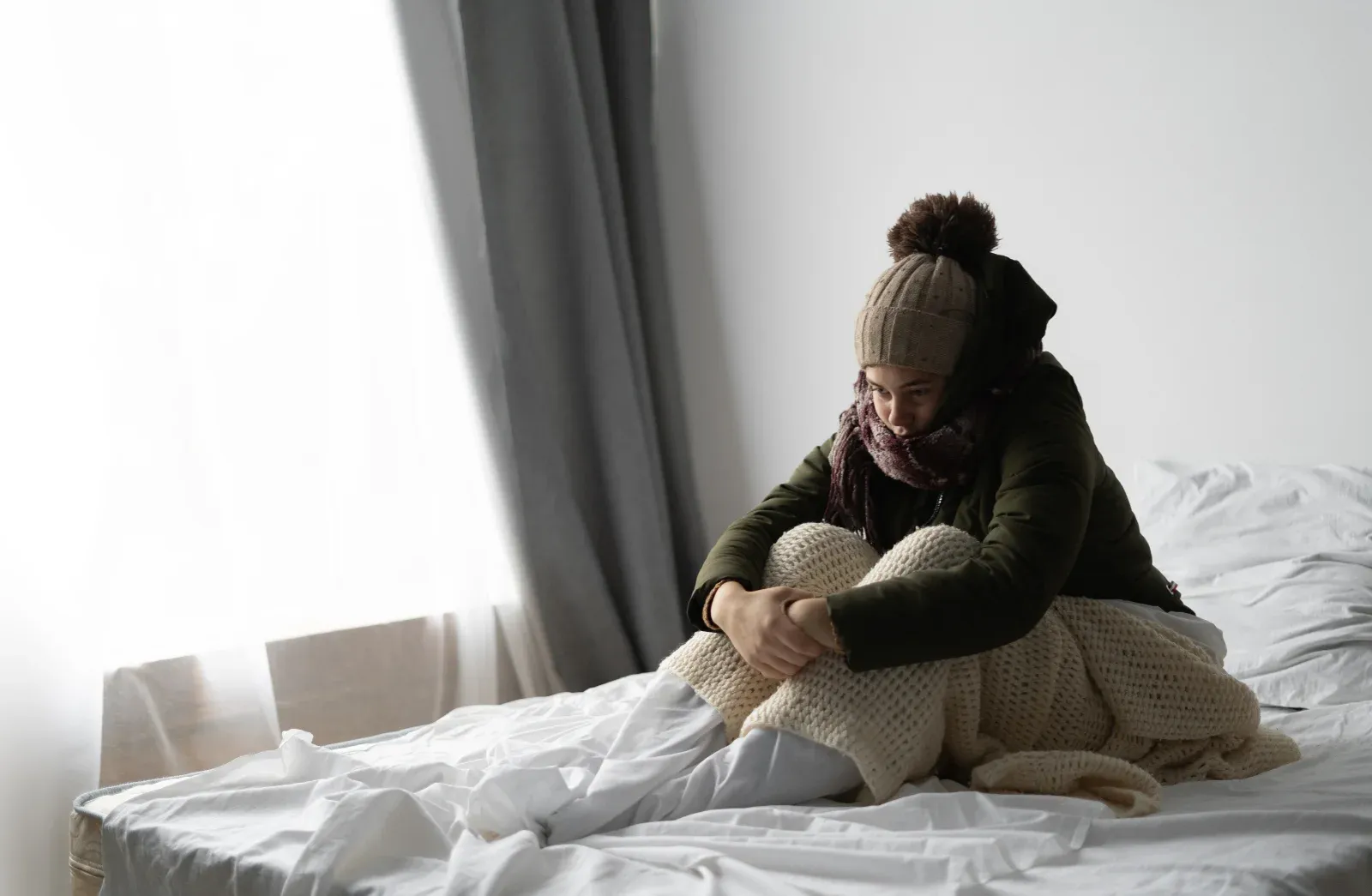
Dry air does not make you too hot. It dries you out. Below 30%, the air spends the whole night pulling moisture from your body.
This hits hardest in winter and in dry climates where indoor heating makes the air even drier than outside.
What it feels like:
- Dry nose and throat: The airway swells slightly. Snoring gets worse. Sleep apnea symptoms can flare.
- Waking up hoarse: Eight hours of dry air against your throat adds up. Common in winter and easy to confuse with getting sick.
- Cracked lips and dry skin: Uncomfortable enough to pull you out of sleep, usually in the early morning hours.
- More colds: Dry air weakens the lining in your nose and throat that helps block germs. [2]
Low humidity rarely stops you from falling asleep. It tends to cause waking around 3 to 5am, when REM sleep is deepest and the body has had the most time to dry out.
How Do You Fix Bedroom Humidity?
Humidity is one of the easier sleep variables to control. No renovation needed.
If Humidity Is Too High
- Run your AC: Air conditioning pulls moisture out of the air while it cools. It is the most effective tool most people already own.
- Add a dehumidifier: A small unit handles most bedrooms. Useful all summer in humid climates.
- Keep air moving: A ceiling fan stops moist air from settling around you while you sleep.
- Check for moisture sources: Plants, a bathroom next door, or poor kitchen ventilation can push your bedroom humidity higher than you expect.
If Humidity Is Too Low
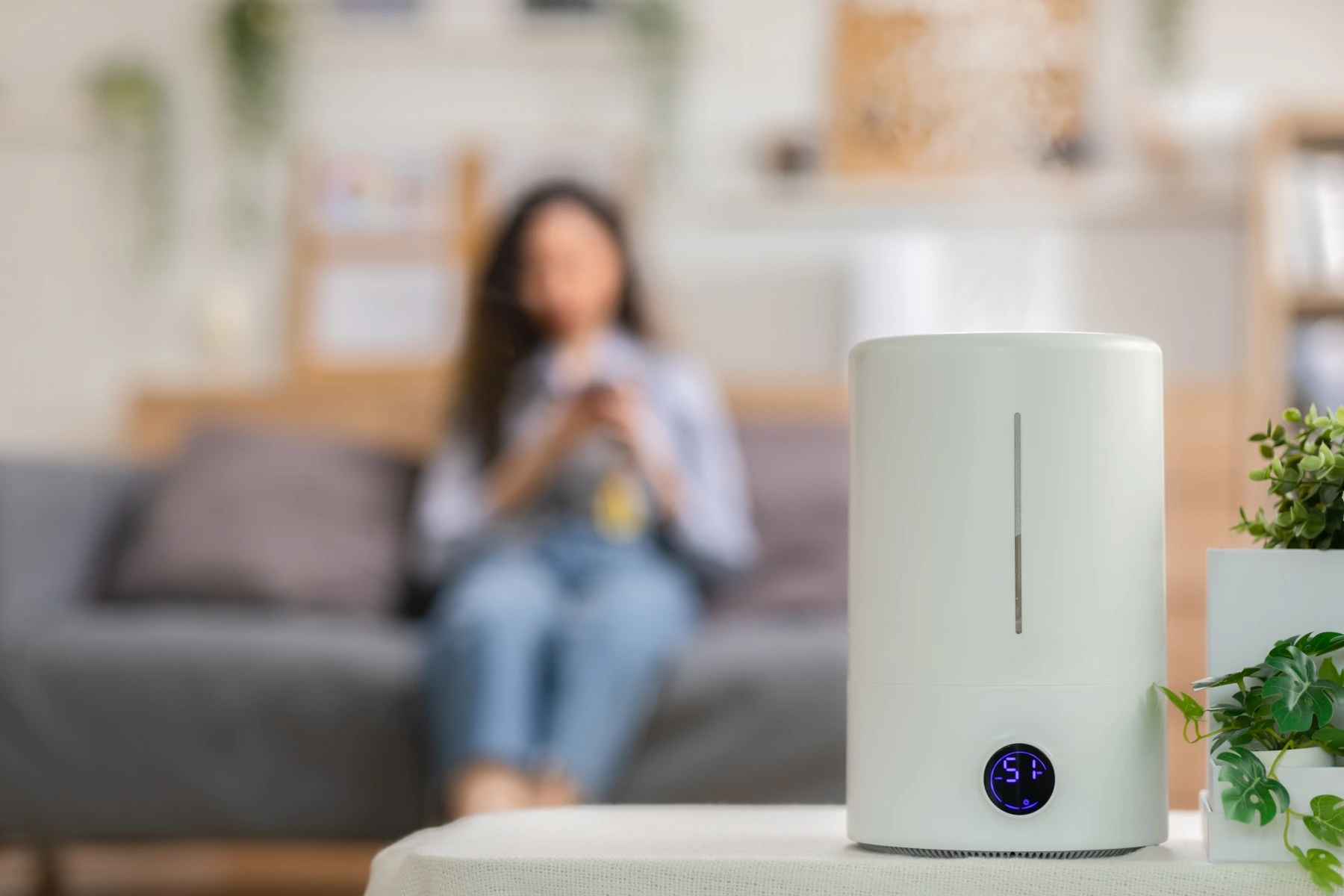
- Get a cool-mist humidifier: Set it to 40 to 50 percent and run it through the night.
- Place it near the bed, not pointed at it: Mist blowing on your face or pillow creates a clammy feeling that trades one problem for another.
- Clean the tank every few days: Humidifiers grow mold fast. A dirty one pumps that into the air all night.
- Drink water before bed: It helps a little. It is not a substitute for fixing the air itself.
How to Know Where You Stand
A digital hygrometer runs under twenty dollars and shows real-time temperature and humidity. Put it on your nightstand away from vents and windows where readings skew.
Some smart thermostats track humidity and can trigger connected humidifiers or dehumidifiers automatically when the room drifts out of range.
Why Humidity Alone Is Not the Whole Answer
Humidity and temperature are connected. A room at 55 percent humidity and 72 degrees will feel worse than the same humidity at 65 degrees.
A cool room with humid air still traps heat against your skin because sweat can not dry when the air is already full. You need both in range to feel the difference.
That is why people who dial in their room temperature and skip humidity often still struggle. The one they ignored is undoing the one they fixed.
For those who sleep hot at night, managing humidity is a real step forward. Your mattress and bedding still trap heat in ways that room air can not reach. Active cooling at the sleep surface handles what a dehumidifier cannot touch.
The Bottom Line
Get a hygrometer first. Know your actual number before you buy anything. Keep the room between 40 and 60 percent. Use a dehumidifier in summer, a humidifier in winter; let the AC do both when it can.
If you are still waking up hot after fixing humidity, the heat is coming from your mattress and bedding, not the air. That part needs a different fix.