
Key Takeaways
Staying warm in bed comes down to three things: heat retention, bedding choices, and sleep environment. The right setup helps your body stay warm without overheating or piling on blankets.
- Layering breathable sheets, thermal pajamas, and insulating blankets helps trap body heat while still allowing airflow for comfort.
- Temperature-controlled mattress pads like the Chilipad let you set your exact sleep surface temperature, keeping you warm without sudden heat spikes.
- A draft-free bedroom with rugs, insulated curtains, and sealed windows helps prevent heat loss throughout the night.
- Warming the body before bed with light movement or a warm shower helps relax muscles and signals the body that it is time to sleep.
- Consistent warmth supports deeper sleep stages, reduces nighttime wake-ups, and improves overall sleep quality.
As the days grow shorter and the nights get colder, there’s nothing quite like the warmth of a cozy bed to help you unwind. Whether you’re dealing with window drafts, trying to combat chilly sheets, or simply seeking a cozier night’s rest.
From simple tricks like layering blankets to more tech-savvy solutions, we’ll walk you through some of the best tips for creating a snug, inviting bed so you can drift off comfortably no matter how low the temperature dips outside this winter.
You’ll turn your bed into a cozy bed warmer, ensuring more comfortable and restful nights all winter long.
Why Room Temperature Matters for Staying Warm in Bed
Optimizing your room temperature matters because your body needs a slightly cooler environment to fall asleep and stay asleep.
The ideal bedroom temperature for most people is between 60 and 67 degrees Fahrenheit.
When the room is too warm, your body struggles to shed heat, leading to restlessness and frequent wake ups. When it is too cold, your body diverts energy toward staying warm instead of staying asleep.
Using alternative methods to warm your bed and bedroom, such as cooling and warming bed systems, electric blankets, bedroom heaters, or layering bedding, can help you stay comfortable without turning up the thermostat, saving both energy and money.
Once your bedroom temperature is dialed in, the next step is focusing on the bed itself. Even in a cool room, the right bedding and sleep setup can make your bed feel warm and comfortable all night long.
Related Blog: Benefits of Sleeping in Cooler Room Temperature.
A Smarter Way to Stay Warm (and Cool) All Winter
Chilipad 2.0 uses water-based heating and cooling to keep your bed at the exact temperature you want, from 55º to 115ºF, year-round. No electric coils, no hot spots, no overheating. Just the temperature you set, night after night.
How to Warm Your Bed Without Overheating the Room
Instead of turning up the heat and wasting money, you can keep things cozy exactly where you are with these simple swaps.
Using a Temperature Controlled Mattress Pad
For those chilly winter nights, the Chilipad 2.0 is our best cooling mattress topper, or the Cube, our original bed topper, can be a lifesaver. While known for keeping you cool in the hot summer months, they can also provide warmth during the cold weather.
These bed toppers can be used on a variety of mattresses, making them a versatile solution for year-round comfort.
The Chilipad, the best mattress pad for dual heating and cooling, lets you customize the temperature on each side of the bed. Whether you prefer a cool 60°F or a cozy 80°F, you can create your perfect sleep environment without disturbing your partner.
Bonus: The Chilipad is safer than a traditional heated or electric blanket. It uses water circulation to regulate temperature instead of electric heating elements. By doing so, it eliminates the risk of burns and fire hazards that are associated with electric coils.
Furthermore, electric blankets are riddled with electromagnetic frequency. Do we really want to sleep under a field of wires carrying electrical currents all night long?
Chilipad keeps your bed at the perfect temperature throughout the night so that you can sleep soundly, night after night.
Related: The Chilipad 2.0 delivers powerful temperature control without Wi-Fi or Bluetooth—just a direct connection for deeper sleep. Use it alongside airplane mode on your phone to create a low-EMF sleep setup, and explore our blog to learn more about how EMFs can affect your sleep.
For an extra layer of warmth, a fitted sheet made of flannel or jersey knit creates a warm base layer for bedding.
How Layering Bedding Helps You Stay Warm in Bed
Staying warm in bed can be accomplished by layering. It can be an effective strategy for most individuals. Layering with a top sheet as part of your bedding configuration can further enhance warmth and comfort.
Layering can also help achieve a good night’s sleep by maintaining the right body temperature.
Start with a cozy base layer like a wool or cotton long-sleeve shirt and pajama pants, or wear other warm clothes to help trap heat.
Then, add a warm blanket or a thick comforter. Placing a wool or fleece blanket over the top sheet provides extra insulation.
Not only will the pressure of layers help you feel warm all night, but they can also provide the benefits of a weighted blanket.
With layers, you can easily pull them off to help you sleep at the right temperature without overheating.
What Makes a Comforter Warm Without Trapping Heat
Choosing the right comforter can make a significant difference in your sleep quality. A comforter that is too thin or too thick can disrupt your body temperature and make it difficult to fall asleep.
A substantial comforter or duvet filled with down or a down-alternative material is typically used as the top layer in a bedding system.
Comforters are often filled with down, which is prized for its superior, lightweight insulation and fluffy feel. Down alternatives are also popular, offering similar warmth to down and serving as a good hypoallergenic option.
Look for a comforter made of breathable materials, such as cotton or wool, which help regulate your body heat.
When selecting a comforter, pay attention to the tog rating, which indicates its warmth. A higher tog rating is suitable for colder weather, while a lower tog rating is better for warmer weather. For winter months, a comforter with a higher tog rating will keep you snug and warm.
Sleeping Tip: If you and your partner have different sleep temperature preferences, consider a dual-zone mattress topper, such as our Chilipad system. It can be used as a warming mattress pad or for cooling, depends on the users preference.
Why Wearing Socks Helps You Stay Warm in Bed
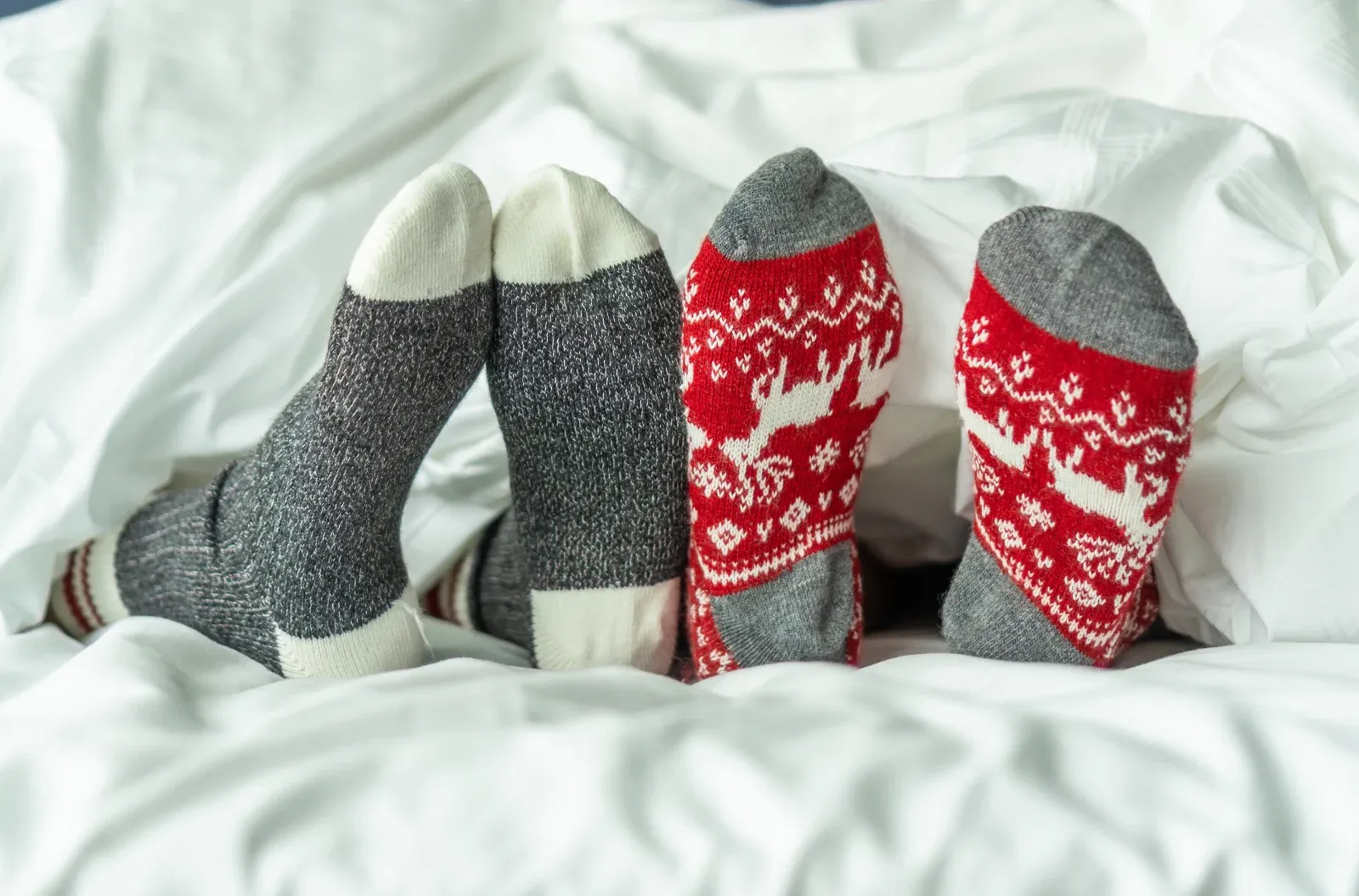
Wearing socks to bed can be a simple yet effective way to stay warm. Cover up those pesky cold feet! When you’re asleep, your body temperature naturally drops, and your feet, being far from your core, can get especially cold.
Wearing socks can help keep your feet warm, which in turn can help regulate your overall body temperature and lead to a good night’s sleep.
Did You Know: A recent study found that wearing socks to bed can help you sleep longer! Journal of Physiological Anthropology discovered that people who wore socks slept an average of 37 minutes more than those who didn’t. [1]
Choosing Pajamas That Help You Stay Warm at Night
Pajamas are a personal choice; some people love cozy PJs, while others prefer to sleep without them. But when the temperature drops, full-body pajamas can be a great way to stay warm.
Choose pajamas made from natural fabrics like wool and cotton. They provide excellent insulation to trap heat, and if it’s really cold outside, flannel pajamas add that extra layer of warmth.
How a Warm Bath Helps You Feel Warmer in Bed
Taking a warm bath before bed can help keep your body warm, making you feel cozy in bed.
Here’s how a warm bath works. The warm water increases your body temperature, and when you step out of the bath, your body starts to cool down gradually.
Cooling down triggers a natural response that makes your body want to conserve heat. As a result, you feel snug and warm under the covers when you are lying in bed.
Additionally, taking a warm bath can help prevent night sweats,because as your body overcompensates to drop its core body temperature from the warm bath, that cooling process triggers the onset of sleep more quickly, leading to improved sleep quality.
Electric Blankets: Are They Worth It?
Electric blankets can be a great option. They can keep you warm and cozy on those chilly winter nights. But, they do come with some risks including the possibility of overheating.
Even a well-maintained electric blanket can pose a risk if not used carefully.
Switching from traditional electric blankets to more energy-efficient solutions, like a bed cooling and warming system, can save you money over time by using less energy and reducing your heating costs.
Making the switch to a safer, modern heating solution can also improve both your safety and comfort.
Why not try a Chilipad mattress topper? It lets you control your sleep temperature, keeping you warm or cool, and it’s much safer.
To learn more, make sure you check out our blog that discusses the dangers of an electric blanket.
How to Keep Your Bedroom Warm Without Getting Hot
If your bedroom always feels a few degrees too cold, you don’t need a major renovation. These three items work together to block out the cold and keep your space feeling perfectly warm and toasty.
Using a Space Heater to Warm Your Bedroom Safely
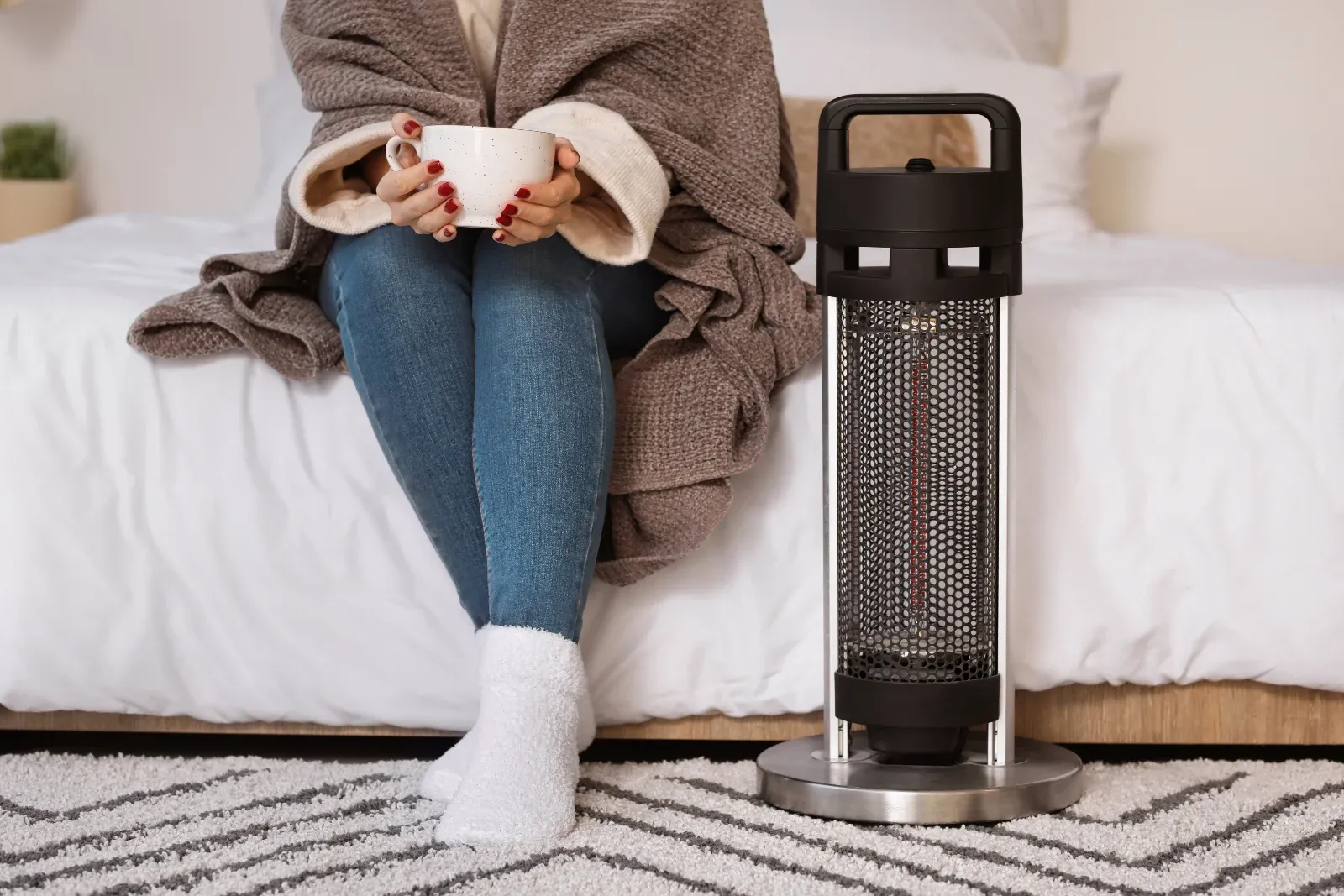
If you are searching for a more targeted and flexible heating solution, portable heaters can be a great option. It’s a great option to heat up the bedroom without the whole house.
A portable heater lets you aim the warmth exactly where you need it—whether that’s by your bed or in your dressing area.
Many newer models have adjustable thermostats, multiple heat settings, and even timers so you can easily customize the temperature to your liking.
They offer extra warmth without requiring complicated setup or venting, making them a popular option for renters or anyone looking to avoid large home projects to upgrade their heating systems.
After setting up your heater, be sure to follow all electrical and fire safety precautions. Keep it clear of any flammable items, never leave it running when unattended, and make sure your room is well-ventilated for safe use.
Simple Ways to Keep Cold Air Out of Your Bedroom
Take time to inspect your sleeping environment, which includes looking for any drafts sneaking in through windows or doors.
You can watch the movement of incense smoke around windows and doors to detect drafts—if the smoke wavers or is pulled in a certain direction, it can reveal hidden air leaks.
If you find any, make sure to seal them up to keep the cold air out and the warm air in.
It’s a simple fix that anyone can do. Also, there are door draft stoppers specially designed to block the air from entering the room from under the door.
For some, it can be difficult to limit the air entering from bedroom windows. By purchasing curtains or installing blinds, they can act as a barrier against the cold.
If you’re able to, moving your bed away from windows can also help reduce cold drafts and keep you warmer at night. Plus, insulating exterior walls is important to prevent heat loss and maintain a consistently warm sleeping environment.
How an Area Rug Helps Keep Your Bedroom Warm
A fluffy area rug can be a game-changer for your bedroom, especially as the temperature drops. It adds cozy warmth and a stylish touch, transforming the space into a more inviting and comfortable retreat.
Beyond aesthetics, a soft rug offers a practical layer of insulation, keeping your feet off the chilly floor and making those early mornings and late nights a little bit cozier.
How Indoor Humidity Helps You Stay Warm in Bed
Managing humidity and air circulation helps your bed feel warmer without turning your bedroom into a sauna.
Why it works: Dry winter air pulls moisture from your skin and bedding, which makes heat escape faster. Keeping indoor humidity between 30% and 50% helps your body hold warmth and makes the bed feel noticeably cozier.
What to do:
- Use a humidifier to add light moisture to dry winter air
- Block cold drafts but allow gentle airflow so warm air spreads evenly
- Avoid stagnant cold pockets near windows and doors
Extra warmth, fast:
- Pre warm your bed with a hot water bottle or heated mattress pad
- Switch to flannel or insulating sheets that hold heat better than cotton
- Layer blankets to trap warmth close to your body
A balanced mix of humidity, light airflow, and warm bedding keeps heat where it matters most, the bed, not the whole house.
How to Stay Warm in Bed All Winter
With these tips and tricks, you can transform your bed into a cozy sanctuary and stay warm in winter, no matter how cold it gets outside.
Remember the following can help you stay warm all winter long:
- Use breathable layers instead of one heavy blanket
- Wear socks to reduce heat loss through feet
- Pre warm your bed before getting in
- Block drafts near windows and doors
How to Sleep Warm in the Winter FAQs
Can a Bed Cooling System Also Warm the Bed in the Winter?
What’s the Safest Way To Stay Warm in Bed Without Overheating?
How Can I Make My Bed Warm?
How to Make Your Bedroom Warmer in Winter?
Disclaimer: This blog is for informational purposes only and is not a substitute for professional medical advice, diagnosis, or treatment. Always talk to your healthcare provider about your symptoms, conditions, or treatment options.