Key Takeaways
Wakefulness after sleep onset measures how long you spend awake after falling asleep. Keeping that number low is one of the best signs of truly restful sleep.
- WASO stands for wakefulness after sleep onset. It is the total time you spend awake between falling asleep and your final morning waking.
- A healthy WASO is under 20 minutes per night. Over 30 to 45 minutes is a sign of fragmented sleep.
- Sleeping too warm is one of the most common, and most overlooked, causes of high WASO.
- Stress, caffeine, alcohol, and sleep apnea also drive nighttime waking.
- Keeping your sleep surface cool throughout the night may help your body stay in the deep sleep it needs.
Short Answer
Wakefulness after sleep onset, or WASO, is the total time spent awake after first falling asleep and before your final morning waking. A healthy WASO is under 20 minutes. When it goes above 30 to 45 minutes regularly, it means your sleep is being broken up in ways that hurt your body and brain, even if the clock says you got 8 hours. Temperature, stress, alcohol, and sleep disorders are the most common causes.
What WASO Measures
Most people think about sleep in two ways.
Did I fall asleep, and how long did I sleep?
WASO adds a third question: how much of the night did I spend awake after that?
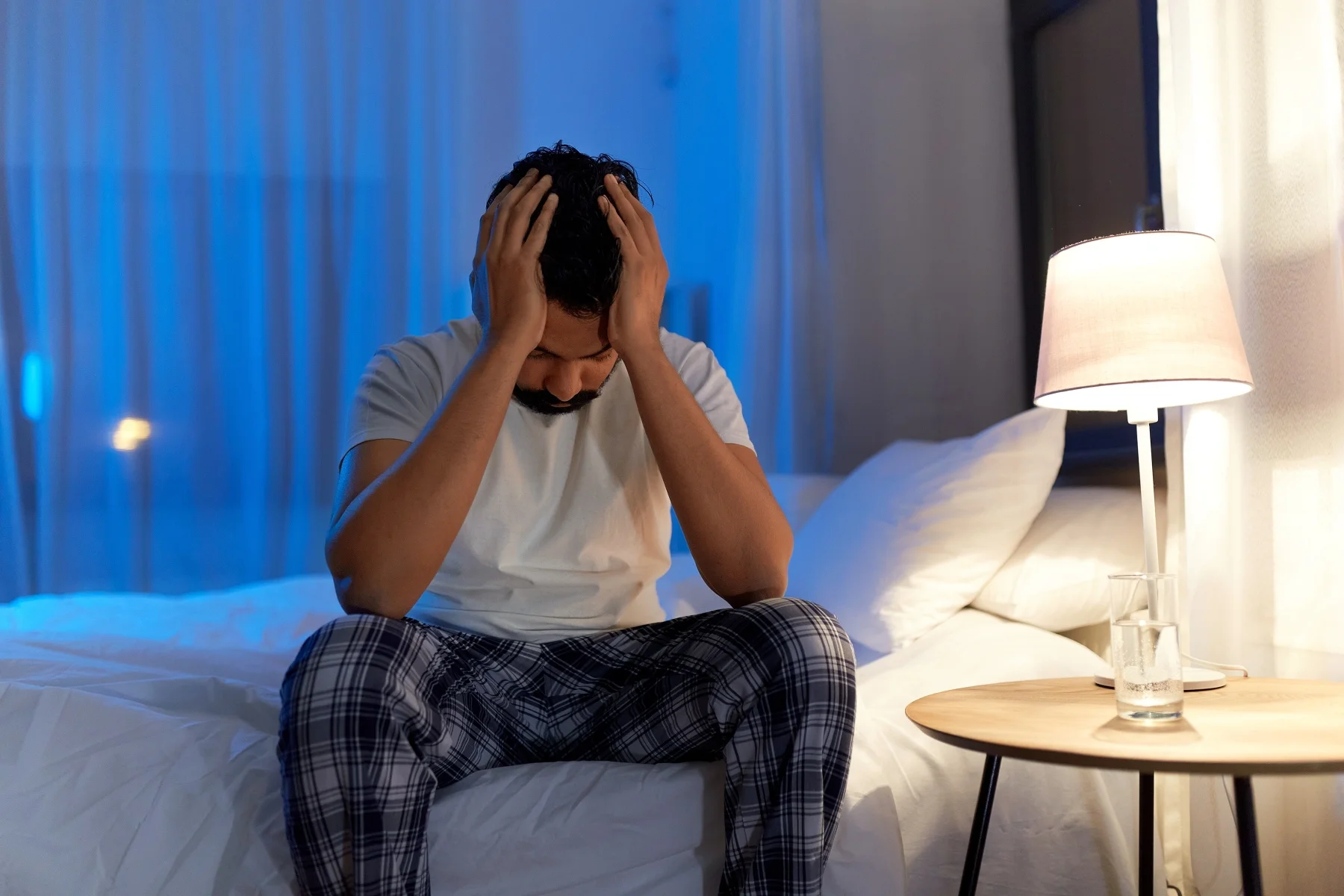
Here's a simple example. You fall asleep at 10:30 pm. You wake at 1 am for 20 minutes. You wake again at 4 am for 15 minutes. Your WASO is 35 minutes.
Your time in bed might look like 8 hours, but your sleep was broken twice.
That matters because every time you wake up, you break your sleep cycle. Your body misses out on the deep sleep and REM sleep it needs to recover. High WASO means those cycles keep getting cut short, night after night.
What is a Healthy WASO?
20 minutes or less per night is normal for most adults. [1] Brief wake-ups that you don't even remember happen to everyone and are fine.
The problem starts when wake-ups become long and frequent. Over 30 to 45 minutes consistently is where doctors and researchers flag it as a real issue. [1]
That is what poor sleep looks like, even if you technically spent 8 hours in bed.
Stop Waking Up at 1 AM, 3 AM, and 4 AM
If heat is driving your WASO up, the Chilipad 2.0 goes after the root cause. It keeps your sleep surface at a set temperature all night, so your body can stay in the deep sleep it keeps getting pulled out of. 55 to 115 degrees Fahrenheit. No subscription.
Why Do Hot Sleepers Wake Up More?
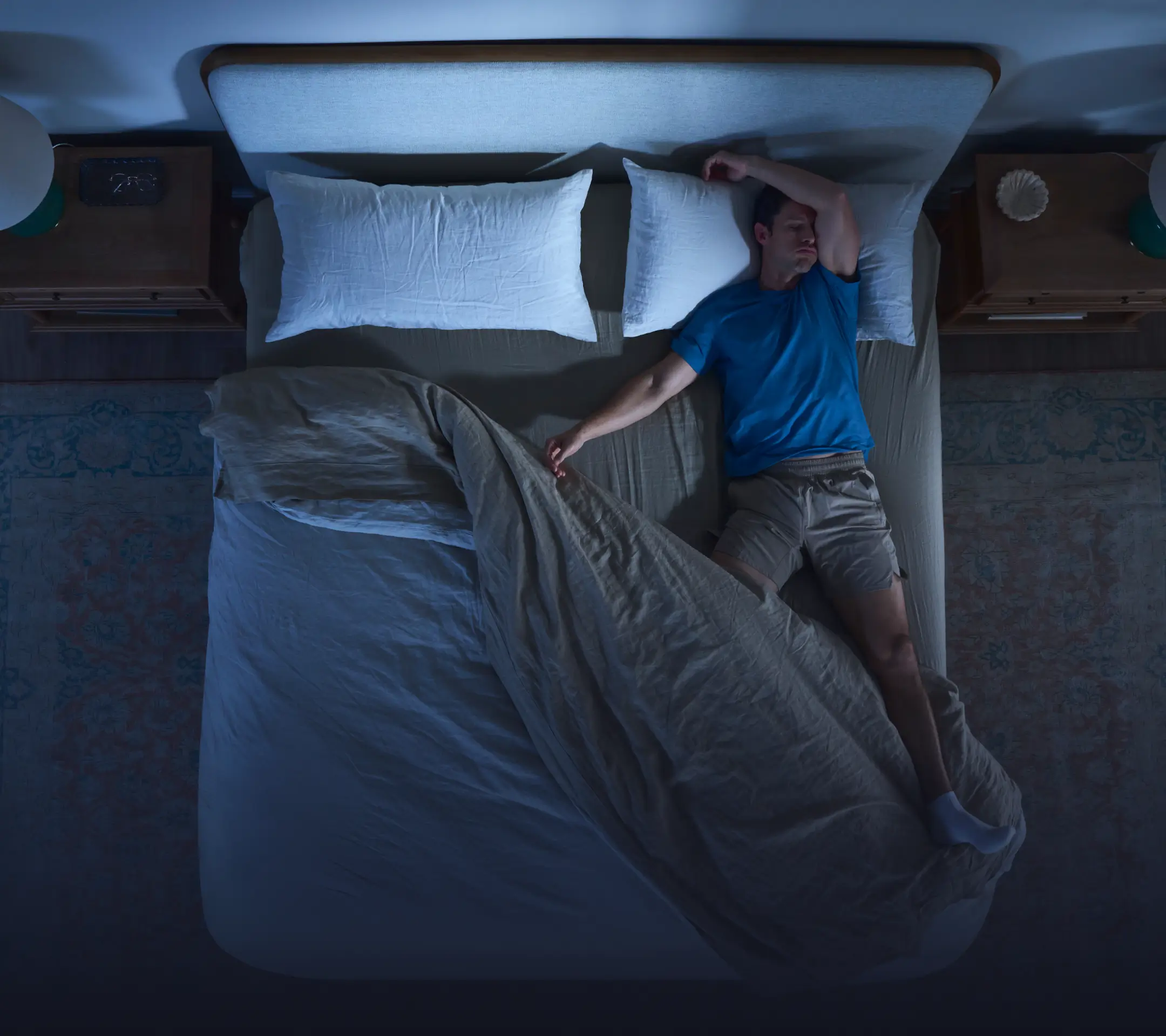
Your body has to cool down to fall into deep sleep. That's not a preference. It's biology. When you're too warm, your body struggles to make that shift and ends up stuck in lighter sleep. Lighter sleep is much easier to wake from. [2]
Research has found a clear link between high body temperature at night and high WASO. People who sleep the warmest wake up the most. [2]
This hits hot sleepers hard, but also people going through menopause, couples who share body heat, or anyone in a warm room.
Waking up hot feels so rough because your body is in the wrong state to go back to sleep. It's not just discomfort. It's a real barrier to getting back into deep sleep.
Here are some tips on how to stay cool while sleeping.
Other Common Causes of High WASO
- Stress and Anxiety: a wired brain stays in lighter sleep and wakes more often [1]
- Caffeine: the effects can linger into the night and break up your sleep even if you feel fine
- Alcohol: feels like it helps you sleep but breaks sleep up in the second half of the night as it wears off
- Sleep Apnea: breathing pauses cause wake-ups, many of which you won't remember in the morning
- Pain or Discomfort: anything that pulls you out of deep sleep adds to your WASO
- Restless Leg Syndrome: the urge to move your legs disrupts sleep throughout the night and is a common but underdiagnosed cause of high WASO
How Cooling Your Sleep Surface Can Help
If heat is waking you up, the fix isn't just turning down the thermostat. Your mattress and bedding trap heat right against your body all night. Bedroom temperature only does so much.
Active bed cooling systems, like the Chilipad 2.0, run cool water through a mattress cover to keep your sleep surface at a set temperature all night long.
The range is 55 to 115 degrees Fahrenheit, and you control it. Unlike cooling sheets that get hot after an hour or two, a water-based system keeps pulling heat away.
That steady cooling helps your body stay in the deep sleep it needs instead of bouncing back to lighter stages.
For hot sleepers, people with night sweats, or couples where one person runs warm, this kind of all-night temperature control goes after the root cause rather than just masking it.
Simple Ways to Improve Sleep and Lower Your WASO
Good sleep hygiene goes a long way toward reducing WASO.
- Create a constant sleep schedule. Go to bed and wake up at the same time.
- Stop caffeine by early afternoon
- Skip alcohol within 3 hours of bed
- Keep your bedroom between 65 and 68ºF
- If you think you have sleep apnea, see a doctor. It is one of the biggest WASO drivers and very treatable
The Bottom Line
Waking up once in a while is normal. Waking up over and over, lying there at 1 am, 3 am, 4 am, and never quite getting back into deep sleep, that's WASO adding up into something real.
If you run warm, that's one of the most fixable causes. Getting your sleep surface temperature under control is a good place to start.