Key Takeaways
Sleep is not passive rest. It is the most powerful performance variable an athlete can control.
- Deep sleep is when your body releases growth hormone, repairs muscle tissue, and consolidates motor skills learned during training.
- Sleep deprivation cuts reaction time, accuracy, and endurance before you ever feel "tired." Athletes are underperforming without knowing it.
- Core body temperature must drop to trigger and sustain deep sleep, making your sleep environment as important as your training environment.
- HRV, the gold-standard marker of recovery readiness, is directly improved by consistent, quality sleep.
- Elite athletes need 8 to 10 hours. Most get far less. That gap is where performance is lost.
Short Answer
Sleep is when muscle repair happens, motor skills get set, and growth hormone peaks. Athletes who consistently get 9 to 10 hours of sleep recover faster, react quicker, and get injured less often than those who get less sleep. No recovery tool can replace a good night's sleep.
You track your macros. You log your lifts. You spend more money on recovery tools than most people spend on rent.
But if your sleep is mediocre, your performance is too.
Sleep is not a passive thing that happens between training sessions. It is the session. The one where your muscles rebuild, your nervous system recalibrates, and your brain locks in every skill you practiced that day.
Skip it or compromise it, and no amount of protein, cold plunges, or foam rolling will get it back.
Below is what the science says about sleep and athletic performance, and what you can do about it tonight.
Why Sleep Is the Foundation of Athletic Performance
Every physical adaptation from training happens during sleep, not during the workout itself. The workout is the stimulus. Sleep is where your body responds to it.
During deep sleep (slow-wave sleep), your pituitary gland releases the majority of its daily growth hormone output. That growth hormone drives muscle protein synthesis, fat metabolism, and tissue repair. Cut your sleep short, and you cut that window short.
During REM sleep, your brain consolidates motor patterns. Every lift, every stride, every technique drill you practiced gets encoded into long-term memory.
Athletes who get more REM sleep execute those patterns more consistently and more automatically under competition pressure
Research on collegiate basketball players found that extending sleep to 10 hours per night led to faster sprint times, improved shooting accuracy, and better reaction time over a five-week period. [1]
What Sleep Deprivation Does to an Athlete
The problem with sleep deprivation is that it cuts your performance before you feel tired. Athletes running on six hours feel fine. They are not fine.
- Physical Output Declines. Strength, power, and endurance all decline with even mild sleep restriction. Muscle glycogen replenishment slows, meaning your fueling strategy becomes less effective on poor sleep.
- Reaction Time Tanks. Studies on sleep-deprived athletes show reaction time deterioration comparable to legal alcohol impairment. [2] For any sport with split-second demands, this is not a small problem.
- Decision-making Gets Worse. Complex plays, tactical reads, route adjustments in the moment. These are executive functions, and they are among the first casualties of sleep loss.
- Injury Risk Increases. Research tracking young athletes over an academic year found that those sleeping less than 8 hours per night were 1.7 times more likely to sustain an injury than those who slept 8 or more hours. [3] Sleep loss impairs proprioception, coordination, and the hormonal environment that keeps connective tissue healthy.
- Recovery Slows. Cortisol, the primary catabolic stress hormone, rises with insufficient sleep. Testosterone and growth hormone, the anabolic hormones that drive repair, fall. The physiological math does not work in your favor. We broke this down further with Dr. Nick Barringer on our Rest Factor podcast; it’s worth a listen.
Your Recovery Starts When You Close Your Eys
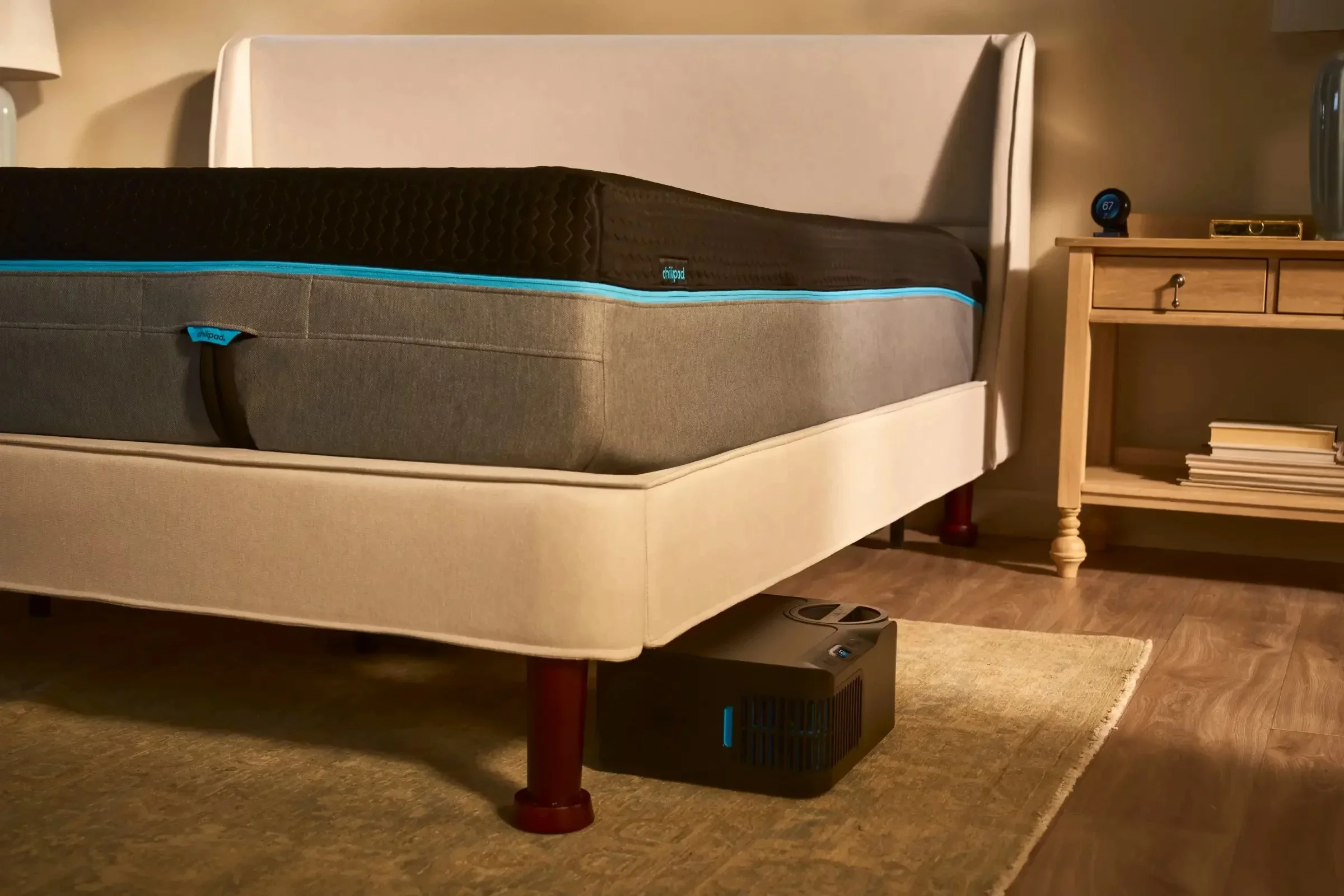
Chilipad keeps your bed at the exact temperature your body needs to get into deep sleep and stay there. More slow-wave sleep. Better HRV. Faster recovery. Every night.
The Sleep-Temperature Connection Athletes Miss
Most athletes optimize their training environment. Few optimize their sleep environment.
Your body cannot enter or sustain deep sleep without dropping its core temperature. The drop of 1 to 2 degrees Fahrenheit triggers the cascade of hormonal and neurological changes that make sleep restorative.
Sleep in a too-warm environment, and your body fights to cool itself all night instead of recovering.
Most adults sleep best somewhere between 60 and 67°F. For athletes with elevated baseline body temperatures from training, sleeping cooler is not a preference. It is a physiological requirement.
A cooler sleep environment supports:
- Faster sleep onset. Less time staring at the ceiling after a hard session
- More time in slow-wave sleep, where the physical repair actually gets done
- Better HRV scores the next morning
- Lower cortisol upon waking, so you start the day in a more anabolic state
This is where tools like Chilipad 2.0 do what no other recovery tool can. A cold plunge lowers your core temperature for minutes. A cooling mattress pad maintains your ideal sleep temperature for the entire night.

Understanding HRV
Heart rate variability has become the standard metric for tracking recovery readiness among competitive athletes.
- High HRV: Recovered, ready, primed to perform.
- Low HRV: Still catching up. Back off or risk digging a deeper hole.
The single most reliable way to raise your HRV over time is consistent, quality sleep.
When athletes have poor sleep, it elevates sympathetic nervous system activity (the fight-or-flight system) and suppresses parasympathetic activity (the rest-and-recover system).
HRV measures the balance between the two. When you sleep well, that balance shifts toward recovery. When you do not, it does not.
Athletes using wearables like Whoop, Oura, or Garmin Enduro should pay attention to the nights where HRV is lowest.
Poor sleep temperature, late-night training, and alcohol are the three biggest variables. Controlling your sleep environment directly controls your HRV trend line over weeks and months.
For a deeper look at improving your HRV, check out how to increase your HRV.
How Much Sleep Do Athletes Actually Need
The standard recommendation for adults is 7 to 9 hours. For athletes under significant training load, that amount moves up.
Elite sport organizations increasingly recommend 9 to 10 hours for athletes in active training blocks. The research backs this.
NBA player LeBron James and tennis player Roger Federer both reportedly sleep 10 to 12 hours per night during competition periods. That is not laziness. That is a recovery strategy.
The more important variable, often overlooked, is sleep consistency. An irregular sleep schedule disrupts circadian rhythm, which disrupts hormonal timing, which disrupts both performance and recovery.
Going to bed and waking at the same time every day, including off-days, is a sleep schedule that is more important than chasing a specific hour count.
Naps can supplement a solid sleep foundation, but they do not replace it. A 20- to 30-minute nap taken before 3 pm can restore alertness and improve reaction time without disrupting nighttime sleep.
Some elite athletes and programs use strategic napping as part of a structured recovery plan, particularly during two-a-day training blocks or when travel has disrupted the primary sleep window.
If your nighttime sleep is consistently short or poor, fixing that comes first. Napping on top of broken sleep is patching a leak rather than fixing the pipe.
Circadian Advantage
Most athletes think about how much sleep they get. Fewer think about when their sleep falls relative to competition.
W. Christopher Winter and his colleagues introduced the concept of circadian advantage in a 2009 paper tracking Major League Baseball over 10 seasons. [4]
The idea is straightforward. Athletes tend to perform better when competition happens at a time of day that matches their internal biological clock, and worse when it does not. Winter's team found this edge was not just anecdotal. It was measurable across a decade of games.
This matters most for travel and early starts. A west coast team playing a 1 PM east coast game is competing at what their body registers as 10 AM.
An athlete whose peak performance window falls in the late afternoon or evening is at a measurable disadvantage compared to one whose schedule happens to align with game time.
The practical implication is this. Protecting sleep timing is not just about recovery. It is about making sure your circadian rhythm peaks when your competition does.
Consistent sleep and wake times, even on travel days, keep that internal clock from drifting in ways that quietly cost you on game day.
 Sleep Strategies for Athletes
- Set your sleep environment to 65°F or below. If your bedroom runs warm, or if you sleep hot after late evening training, active cooling at the mattress level is the most direct solution.
- The Chilipad 2.0 lets you dial in a precise temperature that maintains optimal conditions throughout the night, including automated warm-wake functions that make morning training easier to get out of bed for.
- Protect sleep timing before competitions. Travel, time zone changes, and pre-competition anxiety are all documented disruptors of sleep architecture. Build a pre-competition sleep routine and start it earlier than you think you need to.
- Treat evening training carefully. High-intensity training within two to three hours of sleep raises core body temperature and cortisol, both of which delay sleep onset. A cooling shower after evening training, combined with a cooler sleep environment, accelerates the temperature drop your body needs.
- Monitor trends, not single nights. One bad night does not crater performance. Chronic restriction does. Track your sleep data over weeks and look for patterns that correlate with training load and recovery quality.
- Stop optimizing everything except sleep. If you are spending $400 on a massage gun and sleeping in a warm room on a hot mattress, you are optimizing at the margins and ignoring the variable with the highest return.
The Bottom Line
Sleep is not a wellness concept. For athletes, it is a performance input with a measurable return on every hour invested.
Your competitors are training hard. The ones sleeping harder are the ones adapting faster. That is not motivation. That is biology.
Sleep and Athlete Performance FAQs
How Does Sleep Affect Athletic Performance?
How Many Hours Of Sleep Do Athletes Need?
What Is The Best Sleep Temperature For Athletes?
Does Sleep Affect HRV?
Can You Recover From Poor Sleep Before A Competition?
Disclaimer: This blog is for informational purposes only and is not a substitute for professional medical advice, diagnosis, or treatment. Always talk to your healthcare provider about your symptoms, conditions, or treatment options.