
Key Takeaways
Sleeping in a cold room, ideally between 60 and 68 degrees Fahrenheit, supports melatonin production, faster sleep onset, deeper sleep, better metabolism, and stronger overnight recovery.
- The ideal sleep temperature for most adults is between 60 and 68 degrees Fahrenheit. For many people, 62 to 65 degrees is the sweet spot.
- Cooler rooms support melatonin production and help regulate your circadian rhythm, making it easier to fall asleep and stay asleep.
- Lower body temperature at night improves how fast you fall asleep and how long you stay in deep sleep.
- Sleeping in a cold room activates brown fat, which burns calories and supports blood sugar regulation overnight.
- Active mattress cooling gives more precise temperature control than room cooling alone and stays effective all night.
The Short Answer
Sleeping in a cold room, ideally between 60 and 68 degrees Fahrenheit, supports your body's natural core temperature drop at night. That drop is what triggers deeper sleep stages, more stable REM cycles, and better overnight recovery. Most people focus on how long they sleep. The bigger variable is the conditions your body experiences while it sleeps. Temperature is the one that moves the needle most.
Temperature is the core driver of restorative sleep. Your body is biologically wired to cool down at night.
When that cooling process is supported, deep sleep increases, REM stabilizes, and overnight recovery improves. When it is disrupted, sleep becomes lighter, more fragmented, and less restorative.
Here is what happens inside your body when you sleep in a cold room, and why the benefits go beyond just feeling comfortable.
According to the CDC's national sleep data, roughly 44% of Americans report a restful night's sleep almost every night. [1]
Why Does Your Body Temperature Drop at Night?
Your body temperature drops at night as a built-in signal from your circadian rhythm that it is time to sleep.
Your circadian rhythm is not just about light. It is about heat.
- Core body temperature naturally decreases in the evening.
- This drop triggers melatonin release.
- Lower temperature signals the body to transition into deeper sleep stages
If your mattress traps heat, or your bedroom stays warm throughout the night, that natural drop is delayed.
Even a small elevation in your core temperature can reduce deep sleep duration. This is not about preference. It is physiology.
Cool Your Bed. Not Your Whole House.
Cooling the entire room isn't always practical. Chilipad 2.0 puts temperature control exactly where it matters, right in your bed, from 55°F to 115°F. Precise, personal, and far more efficient than running the AC all night.
How Does Sleeping in a Cold Room Affect Deep Sleep and REM?
Sleeping in a cold room directly shapes your sleep architecture by supporting the core temperature drop your brain needs to move into deeper sleep stages.
When that cooling process is supported, both deep sleep and REM become more stable and restorative.
Deep Sleep
Cooler sleep environments are associated with:
- Longer slow wave sleep duration
- Stronger physical recovery and muscle repair
- Increased growth hormone release
Deep sleep is where your body rebuilds. Muscle repair, immune support, and physical recovery all depend on it. If you are consistently sleeping too warm, this stage often shortens without you realizing it.
The easiest way to see it? Look at your own data. Over time, devices like Fitbit, Oura Ring, Apple Watch, or WHOOP often reveal the pattern.
On warmer nights, deep sleep duration tends to shrink, and restlessness increases. When temperature is better controlled, deep sleep becomes more consistent and recovery metrics stabilize.
Your body may not send a dramatic signal, but your sleep tracker usually does. It is the easiest and fastest way to look at your sleep data.
REM Sleep
Stable nighttime temperatures also support healthier REM cycles by helping to:
- Prevent mid-cycle awakenings
- Reduce REM fragmentation
- Support cognitive recovery and memory consolidation
When your sleep surface overheats, micro awakenings increase. This can happen even with passive cooling materials such as gel toppers, foam, breathable toppers, or phase-change fabrics.
Those materials feel nice and cool at first, but they often absorb and retain heat as the night goes on. Once that trapped warmth builds up, your body has to work harder to regulate itself.
You may not fully wake up or remember it in the morning, but your sleep tracker often reveals the disruption through increased restlessness, shorter deep sleep windows, or fragmented REM.
Cooling is not just about comfort. It is about protecting the stages of sleep that matter most. Studies suggest that anywhere from 10 to 40% of people experience night sweats or sleep in hot environments. [2]
What Happens to Your Sleep When You Sleep Too Warm?
Sleeping too warm quietly disrupts the biological processes that support deep, restorative sleep without you always knowing it is happening.
When your body has difficulty cooling down, it stays in a more alert state. For many, this can result in increased fragmentation and reduced recovery.
It is known that overheating at night can contribute to:
- Increased heart rate variability instability
- More frequent awakenings, even if you do not remember them
- Night sweats or heat buildup under the covers
- Reduced time spent in deep and REM sleep
- Early morning wake ups around 3 to 4 AM
Many people think stress is the main culprit. Often, temperature is the hidden is
For more on what causes nighttime heat, read our guide on why you get hot when you sleep.
What Is the Ideal Sleep Temperature for a Cold Room?
For most adults, the ideal sleep temperature is between 60 and 68 degrees Fahrenheit, with 65 degrees as the most commonly cited target. Sixty-nine percent of people reported that sleeping in a cool or cold room affects their ability to get quality sleep. [3]
Your personalized sleep temperature is not one-size-fits-all. What feels perfect to one person may feel too cold or too warm to someone else.
Your sleep temperature can vary based on:
- Sleep stage progression throughout the night
- Body composition and metabolic rate
- Hormonal changes, including menopause or thyroid changes
- Climate and seasonal heat patterns
For a deeper look at the science behind it, the post on the best sleep temperature covers individual variation in more detail.
Research finds that the best temperature for sleep is between 60 and 68 degrees Fahrenheit, though it varies slightly from person to person. [4]
In warmer regions of the United States, especially during peak summer months, maintaining that ideal range with passive cooling alone can be challenging.
The goal is not just to make the room colder. It is to help your body stay at a comfortable, steady temperature from the time you fall asleep until your last REM cycle in the early morning.

What Is the Difference Between Passive and Active Cooling for Sleep?
Passive cooling makes the air around you cooler. Active cooling manages the temperature of the surface your body is actually lying on all night.
Fans, breathable sheets, and air conditioning definitely help, and you will likely feel the difference at first.
They mostly cool the air around you, not your body itself. As the night goes on and the heat builds up under the covers, that initial cool feeling fades away fast.
Passive cooling:
- Works early in the night
- Becomes less effective as bedding traps heat
- Does not adjust dynamically
Products include cooling gel toppers and foam mattresses, breathable cotton or bamboo cooling sheets, cooling pillows, bedroom fans, and air conditioners.
Active cooling:
Active cooling systems regulate temperature throughout the night. They adjust and maintain a consistent sleep-surface temperature rather than relying on materials that eventually warm up.
- Targets the sleep surface directly
- Adapts across sleep cycles
- Maintains consistent thermal conditions
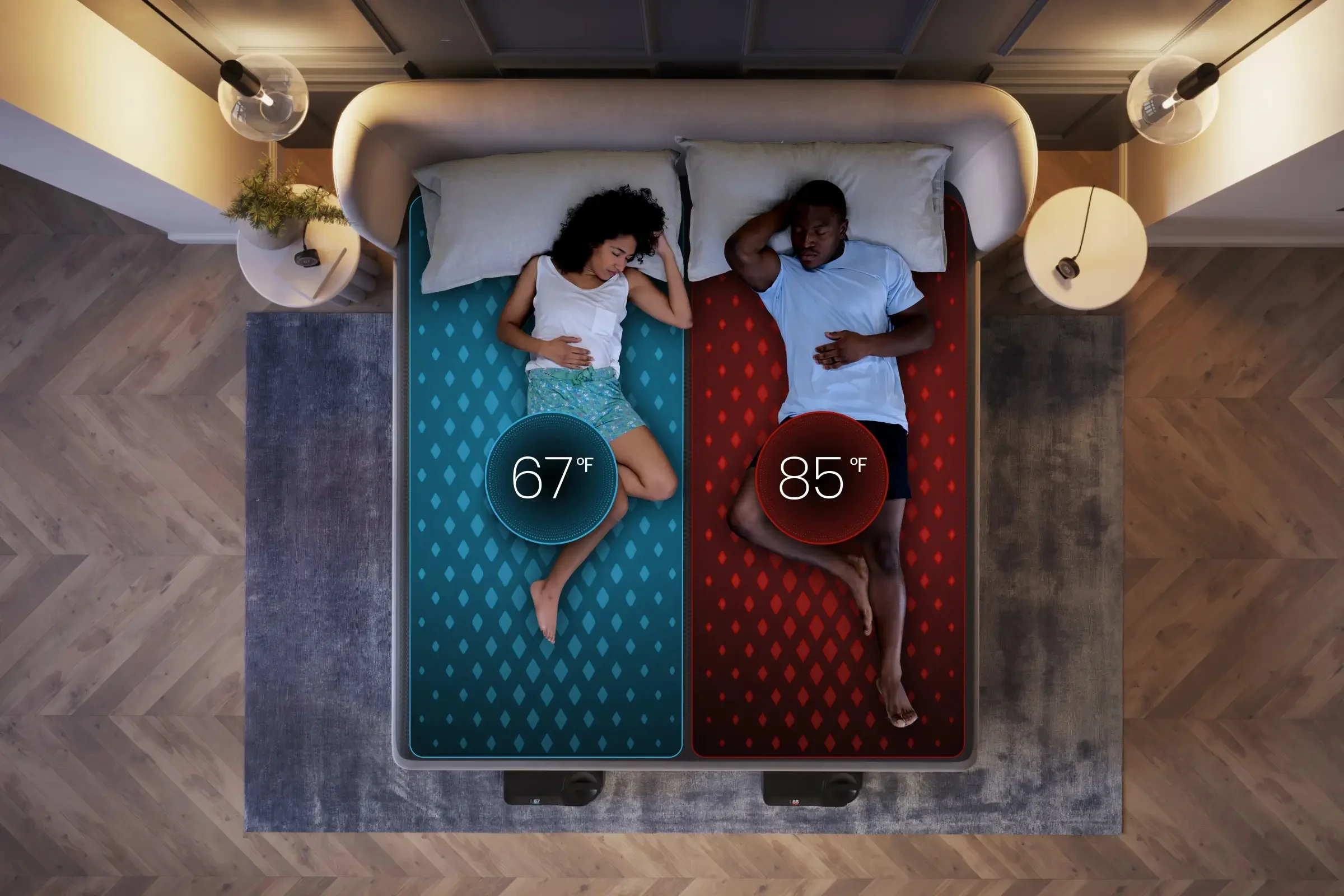
Products include water-based temperature-control bed systems, such as the Chilipad 2.0. These are dual-zone sleep systems that allow each side of the bed to be set to a different temperature independently.
Who Benefits Most from Sleeping in a Cold Room?
People who run warm, have hormonal fluctuations, or prioritize recovery tend to see the biggest difference when they sleep in a cooler environment.
Certain groups are more sensitive to nighttime heat:
- Athletes focused on muscle recovery
- Individuals experiencing night sweats
- Perimenopausal and menopausal women
- Naturally hot sleepers
- Couples with different temperature preferences
- Men focused on maintaining testosterone levels may also benefit. Research suggests that cooler sleep environments support the hormonal conditions that optimize testosterone production overnight, which is most active during deep sleep.
For these groups, the benefits of sleeping cool go beyond comfort and may support:
- Longer, more consistent deep sleep
- Fewer nighttime wake ups
- Reduced night sweats and overheating episodes
- Better physical recovery and muscle repair
- More stable REM cycles
- Improved next-day focus, energy, and performance
In a Chilipad study, women reduced hot flash severity by 50% and reported better overall sleep when their bed temperature was consistently controlled.
Can Sleeping in a Cold Room Support Metabolism?
Yes. Cooler sleep temperatures activate brown fat, a type of fat tissue that generates heat by burning calories. Unlike white fat, which stores energy, brown fat burns it.
When your body is exposed to cooler temperatures during sleep, brown fat activity increases, which supports calorie burning and helps regulate blood sugar overnight.
Research has linked higher brown fat activity to better insulin sensitivity and a lower risk of metabolic conditions. For people managing weight or blood sugar, the temperature of your sleep environment is a variable worth paying attention to.
Is Sleeping in a Cold Room Always Better?
Not for everyone. The goal is not the coldest possible temperature but a consistent, controlled temperature that matches your body's natural cooling rhythm.
Cranking your bed down as cold as possible is not the goal. The following can occur:
- Feel uncomfortable and make it harder to relax
- Increase muscle tension
- Delay falling asleep
Controlled cooling that matches your body's natural rhythm is what works. With a system like the Chilipad 2.0, you can adjust your bed temperature to what feels right for you and even schedule it to change throughout the night.
For example, you might start slightly cooler to fall asleep faster, then allow it to gradually adjust toward morning with the Warm Awake feature. This allows you to wake up naturally without an alarm clock.
It is not about making your bed feel freezing. It is about finding a steady, personalized temperature that keeps you comfortable and supported from the moment you fall asleep until you wake up.
The Bottom Line
Sleep is not just about how many hours you get. It is about the conditions your body experiences while you are asleep. Temperature plays a bigger role than most people realize.
When your sleep environment supports your body's natural cooling process, you are more likely to experience:
- Deeper, more restorative sleep
- More stable and uninterrupted REM cycles
- Better overnight physical recovery
- Fewer wake ups and less tossing and turning
If you regularly wake up feeling overheated at night, restless, or not fully recovered, temperature could be the missing piece. When your body can cool down the way it is designed to, better sleep often follows.
Disclaimer: This blog is for informational purposes only and is not a substitute for professional medical advice, diagnosis, or treatment. Always talk to your healthcare provider about your symptoms, conditions, or treatment options.