Key Takeaways
Yoga Nidra is a simple, guided practice that helps your body relax deeply while supporting calmer sleep and stress recovery.
- Yoga Nidra, often called “yogic sleep,” is a guided meditation where the body rests deeply while the mind stays gently aware.
- The practice encourages alpha and theta brainwaves, which are linked to relaxation, creativity, and improved sleep quality.
- Regular Yoga Nidra sessions can help lower stress, reduce anxiety, and support healthier cortisol balance.
- No experience or flexibility is required—just a quiet space and 20–40 minutes to lie down and listen.
- Pairing Yoga Nidra with a cool, comfortable sleep environment can support deeper rest and more consistent recovery.
The practice of yoga offers more than just physical postures and headstands. If you’re new to this ancient practice, you’re in for a treat!
Yoga Nidra, often called “yogic sleep,” is a deeply relaxing and meditative practice that can revolutionize how you rest and rejuvenate.
Finding true relaxation before bedtime can be challenging in our busy, fast-paced lives, but Yoga Nidra offers a peaceful escape to a state of serenity, peace and calm.
During this guided form, the body becomes completely relaxed while the mind remains alert and focused, helping you achieve a state of equilibrium and access your inner energy flow.
Below, we’ll investigate the essence of Yoga Nidra and how it can significantly enhance your sleep quality.
Whether you’re an experienced yogi or simply curious about improving your sleep patterns, this post will provide insights, tips, and practices to incorporate into your nightly routine.
Remember, don’t be intimidated by the types of yoga or their poses. Yoga is for everyone. We’ll look into the benefits, how to get started, and how it can help you sleep.
What is Yoga Nidra and How it Can Help Your Sleep?
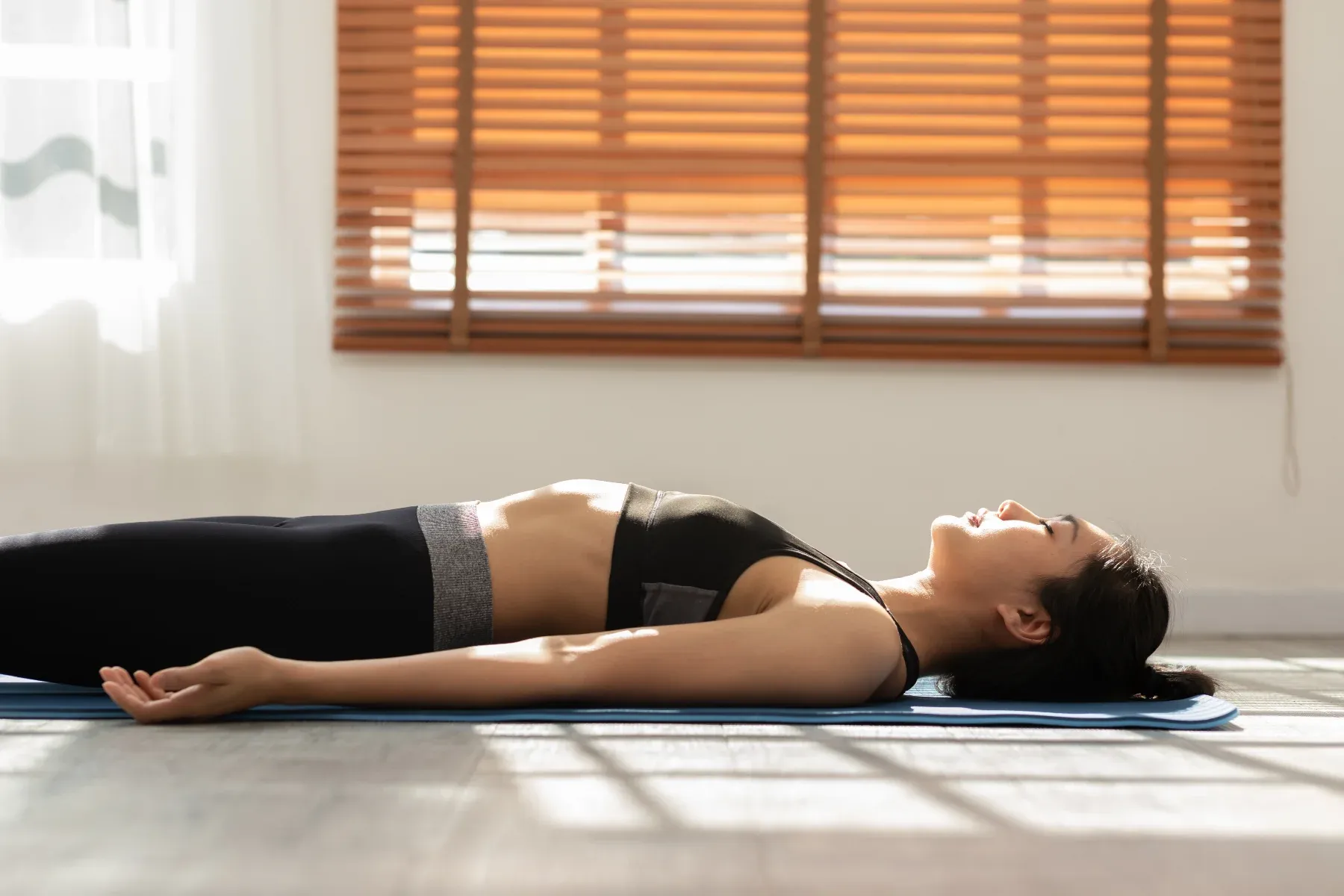
It’s an ancient relaxation method, involves guided mental visualizations while the individual lies on their back, known as Shavasana or the Corpse Pose.
Those who have experienced the widely practiced Hatha Yoga, characterized by its dynamic movements, might recognize Shavasana” as the concluding pose of the session.
The term “Yoga Nidra” originates from the Sanskrit language and is commonly translated as “yogic sleep.”
This technique aims to induce a state of relaxation similar to sleep while maintaining a conscious awareness of the surroundings. It’s often referred to as ‘psychic sleep’ due to its restorative qualities.
Scientific research shows that practicing this form of yoga can induce a hypnagogic state, resulting in slower brain waves.
Experts suggest that practicing it as a bedtime routine, it can lead to a state where the body is asleep, but the mind is aware. As a result, it can be beneficial in treating insomnia.
Related Blog: Understanding the Common Sleep Disorders
Yoga Nidra has its roots in ancient times, but it was introduced to the general public in the 1960s. Swami Satyananda Saraswati published writings that clearly outlined the steps involved in the practice.
Researchers often refer to these writings when investigating the effects of Yoga Nidra.
Take Your Yoga Nidra Practice to Bed
Yoga Nidra gets your mind right. The Chilipad 2.0 or Chilipad Cube gets your temperature right. Together, they create the kind of sleep environment where real rest actually happens.
Understanding the Practice
It’s often referred to as “yogic sleep” or “effortless relaxation,” is an ancient practice that originated in India.
This form of guided meditation involves deep relaxation, breath awareness, and visualization techniques to help you reach a state of consciousness that lies between wakefulness and sleep.
Practicing Nidra for sleep can be incredibly beneficial, helping to reduce stress, anxiety, and chronic pain, while also improving sleep quality, mental clarity, and overall well-being.
This practice works by activating the parasympathetic nervous system, which is responsible for promoting relaxation and reducing the symptoms of stress and anxiety.
By guiding you into a state of deep relaxation, yoga nidra allows your body and mind to rest and rejuvenate, making it an excellent tool for enhancing your overall health and well-being.
Preparing for Yoga Nidra
To prepare for the session, it’s important to find a quiet and comfortable space where you can lie down without any distractions.
You can use a yoga mat, blanket, or even your bed, and consider using a bolster or pillow to support your lower back and head.
It’s also a good idea to turn off any electronic devices and cover yourself with a blanket, as your body tends to cool down when you enter a state of deep relaxation.
Before starting the practice, take a few moments to breathe deeply and focus your attention inward. Allow yourself to let go of any tension or stress, creating a sense of calm and readiness for the session.
Incorporating Yoga Nidra practice into your daily routine can have a profound impact on your mental and physical health, helping to reduce symptoms of chronic stress, anxiety, and depression.
How Yoga Nidra Can Enhance Your Sleep
Several research studies suggest that practicing Yoga Nidra can help improve sleep quality, and ongoing studies continue to explore this topic further.
Current research indicates that Yoga Nidra can help individuals fall asleep faster and enjoy higher quality sleep.
The practice promotes deep sleep while reducing stress and pain, which could positively impact overall sleep health.
Practicing this guided technique may improve sleep by stimulating the parasympathetic nervous system and reducing activity in the sympathetic nervous system.
These components control numerous automatic processes of the body, such as blood pressure and digestion.
The sympathetic nervous system triggers the body’s stress response, while the parasympathetic nervous system helps the body restore itself.
Practicing Yoga Nidra can help relax the body and increase deep sleep by reducing sympathetic nervous system activity and increasing parasympathetic nervous system activity.
This practice works wonders for your sleep by guiding you into a state of profound relaxation, which is critical for getting a good night’s rest. When you practice Yoga Nidra, it’s like hitting the reset button on your stress levels.
Did You Know: Some feel that a 20-minute Yoga Nidra practice feels as restorative as a 4-hour nap.
This reduction in stress and sleep anxiety makes it easier for your body and mind to ease into sleep. Plus, it helps in regulating your sleeping patterns.
The deep relaxation technique of this practice allows the nervous system to calm down, promoting a more peaceful and uninterrupted sleep.
By incorporating this form of yoga into your routine, you’re not just relaxing deeply but setting the stage for a better, more rejuvenating sleep each night.
Yoga Nidra Benefits
Researchers suggest it can offer additional benefits in addition to improving sleep. It’s safe, affordable, noninvasive, and can be done remotely online.
Just as we gently rock a child to sleep to ease them into dreamland, adults also benefit from lying down and quieting the mind before bed.
Improve Blood Pressure & More
This type of yoga meditation feels good, but science also backs up its benefits. In two separate published papers, researchers found it improved blood pressure and hormone irregularities in women.
Researchers at Shyam Shah Medical College measured fewer fluctuations in blood glucose levels in people with type-2 diabetes after 30 consecutive days of Yoga Nidra practice.
It can also be tailored to address specific health concerns.

Boost Your Heart Rate Variability (HRV)
What is HRV? It stands for Heart Rate Variability, a measurement in milliseconds of the variations in time between each heartbeat.
This variation or irregularity, which is perfectly normal, even for a healthy heart, is governed by a section of your nervous system known as the autonomic nervous system (ANS), which impacts your breathing, blood pressure, digestion, and heart rate.
A research study showed that it causes improvement in HRV without the physical practice of postures. [6]
Related Blog: How to Improve Your HRV?
Reduce Stress & Anxiety
In another study, researchers analyzed short, 11-minute Yoga Nidra meditation for 30 days in a diverse sample of the population to measure its benefits.
The group given access to the short meditation showed “lower stress, higher well-being, and improved sleep quality after the intervention” compared to the group that did not.
Additionally, even six weeks later, the positive effects of the treatment remained stable. By simply taking a few minutes before bedtime to meditate and focus on mindfulness, you, too, can reap the benefits of this free, body-enriching exercise.
Yoga Nidra is also known to play a significant role in stress management, contributing to better mood and overall well-being.
Recent Yoga Study: It can be a helpful tool in reducing physiological and cognitive symptoms of anxiety.
Reduce Symptoms of Depression
According to research, practicing this type of yoga can help reduce anxiety and improve symptoms of depression in individuals with menstrual concerns.
However, the study only observed improvement in those with mild to moderate depression-related symptoms, while individuals with severe symptoms did not show any improvement.
Further research is necessary to determine if Yoga Nidra can help alleviate depression in the general population.
Improves Confidence and Self-Esteem
Regular practice can improve confidence and self-esteem. A recent study examined the effects of Yoga Nidra on life stress and self-esteem in university students.
The results showed that the group that practiced Nidra yoga showed remarkably decreased life stress intensity levels compared to the control group.
Reduces Pain Symptoms
According to several research studies, deep relaxation can be beneficial in healing and reducing pain and discomfort caused by various health conditions.
For instance, individuals suffering from inflammation in the lumbar vertebrae, migraines, tension headaches, and menstruation-related pain or cramping may find relief through consistent practice.
The practice is believed to work by minimizing the body’s stress response and promoting a state of relaxation.
This can help reduce muscle tension, alleviate pain perception, and provide a sense of calm that can benefit overall physical and mental well-being.
Enhance Focus
The benefit of enhanced focus comes from its unique ability to improve mental clarity and concentration by entering a state of deep relaxation while maintaining conscious awareness.
Meditation Yoga Nidra can further enhance focus by allowing you to reach a state of conscious awareness during deep relaxation, which differs from traditional meditation.
This process involves a guided journey that brings your attention to different parts of the body, breathing, and emotions, training your mind to focus without the usual distractions of everyday life.
By regularly practicing this focused relaxation, your brain becomes better at concentrating and staying present in other areas of your life.
This increased focus can lead to a clearer decision-making process, better attention to tasks, and a more grounded approach to life’s obstacles.
Over time, improved mental clarity and concentration can result in increased productivity, decreased stress, and better control over your thoughts.
Reducing Symptoms of Post-traumatic Stress Disorder
It has been proven to be an effective treatment for chronic stress and psychological issues, such as PTSD, beyond relieving everyday stress.
A 2011 study was conducted on military combat veterans who practiced Yoga Nidra weekly.
All 11 participants who completed the study reported experiencing positive benefits, including reduced feelings of rage, anxiety, emotional tension, and intrusive memories.
Other Benefits Include:
- Lowers Cholesterol Levels
- Reduces Addiction
- Strengthens the Immune System
- Recharges Your Energy
- Lower Blood Sugar Levels
- Slower Heart Rate
- Increased Alertness
- Lessened Anger
- Helps with a Weakened Immune System
- and more
To experience the following benefits, it’s recommended that you practice it regularly, ideally several times a week.
By incorporating it into your self-care routine, you can reap the rewards of this powerful practice and enjoy a more peaceful and fulfilling life.
Difference Between Yoga Nidra vs. Meditation
Yoga Nidra and meditation are distinct meditation practices, though both fall under the realm of mental and emotional wellness.
Meditation is a broad term encompassing various techniques that focus primarily on cultivating mental clarity and concentration.
It often involves sitting and directing attention to a singular element, such as breath, a mantra, or bodily sensations.
Yoga Nidra, on the other hand, specifically known as ‘yogic sleep,’ is a structured, guided meditation leading practitioners to a state between wakefulness and sleep.
Yoga Nidra differs from other meditation practices in that it is practiced while lying down and aims to induce a sleep-like state of conscious awareness.
Traditional meditation typically occurs in a seated position with a focus on directed attention.
The aim of Yoga Nidra is to reach a state of ultimate relaxation while maintaining a subtle degree of consciousness.
It is typically practiced lying down, following a sequence that promotes this unique state of conscious relaxation.
While both aim to enhance mental relaxation and focus, Yoga Nidra and traditional meditation differ in their approach and the state of consciousness they target.
The Bottom Line
It’s a simple practice. Additionally, a yoga teacher or instructor guides you through the exercise. It is a welcome practice, especially after a long day leading up to bedtime.
A qualified yoga therapist can significantly enhance the effectiveness of Yoga Nidra by offering personalized recommendations and support, thereby maximizing the therapeutic potential for improved mental, emotional, and physical health.
As with any exercise, yoga has its risks. Practicing yoga should be done with respect and care, easing the chance of injury.
Before starting this or another form of yoga, it’s best to consult your doctor or a medical professional. However, adding this practice into your everyday routine will allow you to experience deep rest.
Frequently Asked Questions About Yoga Nidra and Sleep
What Happens during Yoga Nidra?
What Is 30 Minutes of Yoga Nidra Equivalent To?
How to Get Started With Yoga Nidra?
How Is It Different From Regular Meditation?
Do I Need to Be a Yoga Pro to Try Yoga Nidra?
Disclaimer: This blog is for informational purposes only and is not a substitute for professional medical advice, diagnosis, or treatment. Always talk to your healthcare provider about your symptoms, conditions, or treatment options.